Annual DWP Benefits Statistics Compendium: 2026
Published 15 September 2026
Applies to England, Scotland and Wales

© Crown copyright 2026
This publication is licensed under the terms of the Open Government Licence v3.0 except where otherwise stated. To view this licence, visit nationalarchives.gov.uk/doc/open-government-licence/version/3 or write to the Information Policy Team, The National Archives, Kew, London TW9 4DU, or email: psi@nationalarchives.gov.uk.
Where we have identified any third party copyright information you will need to obtain permission from the copyright holders concerned.
This publication is available at https://www.gov.uk/government/statistics/annual-dwp-benefits-statistics-compendium-2026/annual-dwp-benefits-statistics-compendium-2026
The Annual DWP Benefits Statistics Compendium is an Accredited Official Statistics release which summarises the benefits administered by the Department for Work and Pensions (DWP). In addition to this summary document, data have been published on Stat-Xplore, where users can create their own tables. The next release will be on 21 September 2027 on both GOV.UK and Stat-Xplore.
Changes to this release
This release introduces a new format for DWP Benefits Statistics.
Following the recent public consultation, and as set out under Proposal 2 of the consultation outcome update on GOV.UK, this statistical release has been renamed the Annual DWP Benefits Statistics Compendium and is now published once a year, covering data to the end of the previous financial year (March). The move to annual publication also covers the Benefit Combinations statistics and applies to both the HTML statistical commentaries and the data tables published on Stat-Xplore.
As part of this change:
-
quarterly reporting has moved to financial-year-aligned reference points (June, September, December and March), instead of the previous reporting schedule (May, August, November and February)
-
underlying quarterly (and, where available, monthly) data are still produced and remain available through Stat-Xplore, but are now released together annually
This is the first release under the new structure and represents a transition from the previous publication model. Because of this change, comparisons with the latest data reference point, March 2026, use the most recently published data under the previous schedule:
-
the previous-quarter comparisons are based on November 2025
-
the previous-year comparisons are based on February 2025
This one-off difference in comparison points reflects the move to financial year reporting. It does not represent a gap in the underlying data or in the method used to generate the statistics, and analysis suggests that results are not materially affected by the choice of reference month.
Future releases will compare March-to-March for annual comparisons on a consistent basis.
1. Headlines
The main headline figures for the DWP benefits in this report
Move to Universal Credit is close to being complete, with primarily those customers who require time to find an appointee left to complete the process. Universal Credit is replacing income-related Employment and Support Allowance, income-based Jobseeker’s Allowance and Housing Benefit for Working Age claimants. The movement of claimants to UC affects trends for these legacy benefit statistics presented in this release.
Comparisons in this release use a one-off set of reference months as part of the move to financial year reporting – see “Changes to This Release” above, for details.
From February 2025 to March 2026:
-
the number of people receiving the State Pension increased by 2.0% to 13 million
-
Employment and Support Allowance fell by 39.0% to 810,000 claimants
-
Jobseeker’s Allowance fell by 5.0% to 77,000 claimants
-
Housing Benefit fell by 23.2% to 1.4 million claims
Universal Credit has been replacing some Working Age benefits covered in this release, including income-based Jobseeker’s Allowance (JSA), income-related Employment and Support Allowance (ESA) and Housing Benefit (HB). The latest Universal Credit Official statistics show, there were 8.3 million Universal Credit claimants at March 2026.
People can claim more than one DWP benefit at a time. Benefit Combinations statistics show:
25 million people claimed some combination of DWP benefits at March 2026 (of the 16 benefits included in these statistics). Of these:
-
13 million were of State Pension Age (including those in receipt of their State Pension)
-
10 million were of Working Age
-
910,000 were under 16 (and in receipt of Disability Living Allowance as a child)
Figure 1: DWP benefits by number of claims at March 2026
| Benefit | Number of claimants |
|---|---|
| State Pension | 13,308,000 |
| Universal Credit | 8,289,000 |
| Personal Independence Payment | 3,980,000 |
| Attendance Allowance | 1,803,000 |
| Housing Benefit | 1,447,000 |
| Carer’s Allowance | 1,408,000 |
| Disability Living Allowance | 1,404,000 |
| Pension Credit | 1,382,000 |
| Employment and Support Allowance | 812,000 |
| Jobseeker’s Allowance | 77,000 |
Source: DWP Stat-xplore
Figures in the above table are rounded to the nearest thousand.
Attendance Allowance, Carer’s Allowance, Personal Independence Payment and Disability Living Allowance exclude figures for Scotland. Please see notes on Scottish Devolution for details.
While statistics presented above represent the caseload at March 2026, data covering later periods is available on Stat-Xplore for Universal Credit and Personal Independence Payment.
Figure 2: Number of live claims of DWP benefits at March 2026, with changes against the last published quarter (November 2025) and previous year (February 2025)
| Benefit | Number of claimants | Change Since November 2025 | Change Since February 2025 |
|---|---|---|---|
| State Pension | 13,307,800 | +54,700 | +256,400 |
| Universal Credit | 8,289,200 | -13,600 | +774,100 |
| Personal Independence Payment | 3,979,900 | +87,400 | +292,500 |
| Attendance Allowance | 1,803,200 | +34,200 | +114,900 |
| Housing Benefit | 1,446,900 | -30,100 | -438,000 |
| Carer’s Allowance | 1,408,000 | +17,400 | +56,800 |
| Disability Living Allowance | 1,403,700 | +17,100 | +81,400 |
| Pension Credit | 1,381,700 | -7,200 | -14,200 |
| Employment and Support Allowance | 811,800 | -34,100 | -518,300 |
| Jobseeker’s Allowance | 76,900 | +7,700 | -4,000 |
Source: DWP Stat-Xplore
Figures in the above table are rounded to the nearest thousand.
Attendance Allowance, Carer’s Allowance, Personal Independence Payment and Disability Living Allowance exclude figures for Scotland. Please see notes on Scottish Devolution for details.
While statistics presented above represent the caseload at March 2026, data covering later periods is available on Stat-Xplore for Universal Credit and Personal Independence Payment.
2. What you need to know
This release covers DWP benefits in Great Britain.
This is the first edition of DWP Benefits Statistics to be published as an annual release, following the reduction in publication frequency from quarterly to annual. The release has been renamed the Annual DWP Benefits Statistics Compendium and provides an overview of benefit caseloads up to March 2026.
The move to an annual, financial-year-based release aligns the latest reference point with the end of the financial year and with other government reporting.
This release compares the latest available data (March 2026) with:
-
the last published quarter (November 2025)
-
the most recent comparable point from the previous year (February 2025)
These comparisons reflect a one-off transition to the new reporting cycle. In future releases, annual comparisons will be made on a consistent March-to-March basis.
More detailed breakdowns for the statistics covered in this summary are available through Stat-Xplore. This is an online tool that lets you create and download customised statistical tables or view the results as interactive charts. Previously published statistics remain available for users who require historical comparisons based on the earlier publication schedule.
Benefit Combinations statistics are also now released annually as part of the Annual DWP Benefits Statistics Compendium release, which explore how benefits are claimed in combination for claimants of all ages.
More information on how these statistics are produced is available through the Methodology statement and Quality statement.
Move to Universal Credit
Move to Universal Credit (UC) is close to being complete, with primarily those customers who require time to find an appointee left to complete the process. Between January 2026 and the end of April 2026, just over 2,000 migration notices had been sent, compared with 340,000 in the same period in 2025.
UC has been available in all parts of the UK and for all eligible households since December 2018 for people who make new benefit claims, who claim because their circumstances change (“natural migration”) or who choose to move from legacy benefits to UC (“voluntary migration”).
All remaining legacy benefit claimants of Income-related ESA, income-based JSA, Working Age Housing Benefit, Income Support, Working Tax Credit, and Child Tax Credit have been or are being contacted by DWP as part of the Move to UC Programme and informed that they must claim UC to continue to receive means-tested support (“managed migration”). Move to UC started at a small scale in May 2022, enabling DWP to learn, iterate and improve its approach as the programme scaled up from mid-2023.
UC is replacing income-related ESA, income-based JSA and Housing Benefit for Working Age claimants. The movement of claimants to UC affects trends for these legacy benefit statistics presented in this release.
Move to UC statistics are also published by DWP on a quarterly basis and can be accessed via Stat-Xplore.
Scottish Devolution
The Scotland Act 2016 devolved responsibility for certain disability and carer benefits from the UK Government to the Scottish Government.
Between 2021 and 2025, the Scottish Government replaced Attendance Allowance (AA), Carer’s Allowance (CA), Disability Living Allowance (DLA) and Personal Independence Payment (PIP) with new, Scotland-only benefits. All Scottish recipients of AA, CA, DLA and PIP have now been transferred from DWP to Social Security Scotland and DWP no longer administers these benefits in Scotland.
DWP caseload statistics do not include recipients of Scottish disability and carer benefits administered by Social Security Scotland. As a result, DWP statistics for AA, CA, DLA and PIP no longer represent the full caseloads of equivalent benefits across Great Britain.
DWP caseload statistics may continue to show some recipients of AA, CA, DLA and PIP living in Scotland after case transfers completed because entitlement can continue temporarily under cross-border rules. Users should therefore interpret these as temporary cases where entitlement to the DWP benefit continues under the cross-border rules described in the background information note.
DWP continues to administer Severe Disablement Allowance and Industrial Injuries Disablement Benefit in Scotland under Agency Agreements and, as such, the statistics presented here will still include Scottish recipients of these benefits.
Statistics, charts and commentary in the statistical summary document primarily reflect where DWP is responsible for paying a particular benefit. Users making comparisons over time should use the breakdowns available within Stat-Xplore for AA, CA, DLA and PIP statistics. The category “DWP ownership” represents claims for which DWP is responsible. The category “Devolved to Scotland” represents claims where competence has transferred to Scottish Ministers.
Social Security Scotland publish Official Statistics for the Scottish disability and carer benefits. Further information, including the key transfer milestones and detailed interpretation guidance, is available in the background information note.
3. Pensions
State Pension
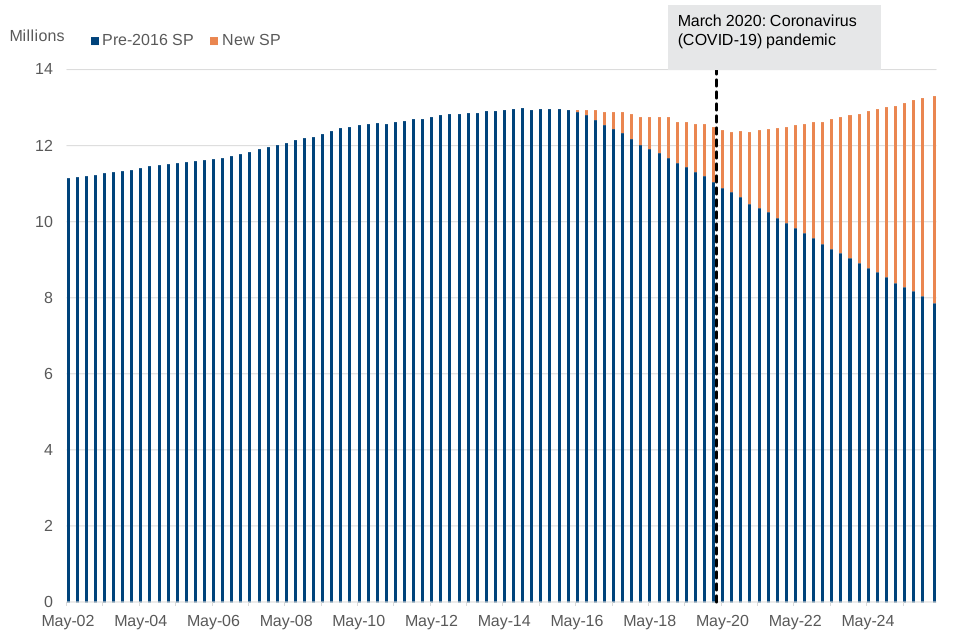
Figure 3: People receiving State Pension, by pension type, to March 2026
Source: DWP State Pension dataset on Stat-Xplore
The State Pension caseload has increased modestly over the last year. There were 13 million people receiving the State Pension at March 2026, an increase of 260,000 compared to February 2025. In December 2018, the State Pension age was raised above 65 for both men and women, initially resulting in fewer new claims. Both men’s and women’s State Pension age reached 66 in October 2020. Under the Pensions Act 2014, State Pension age will gradually increase from 66 to 67 between 2026 and 2028. Read further information on the State Pension age timetable.
The new State Pension (nSP) was introduced for people reaching State Pension Age from 6 April 2016. At March 2026 there were 5.4 million people receiving nSP, an increase of 780,000 compared with February 2025.
New State Pension
Figure 4: Comparison of average weekly amounts of State Pension by type and gender at March 2026
| State Pension scheme | Male | Female |
|---|---|---|
| New State Pension | £217.99 | £214.54 |
| Pre-2016 State Pension | £225.11 | £195.97 |
Source: DWP State Pension dataset on Stat-Xplore
At March 2026 the average (mean) weekly payment for people receiving a State Pension (both nSP and pre-2016 State Pension claimants) was £211.31, an increase of £8.69 since February 2025.
The nSP mean weekly payment was £216.42 at March 2026 (including any Protected Payments). Under the pre-2016 system the mean amount was £207.78 per week.
The introduction of nSP has evened out some of the gap between the average weekly payments for men and women, as women tend to get more under the new rules than under the Pre-2016 rules. However, due to earlier timetabled increases in women’s State Pension age, fewer women have joined the nSP than men.
Pension Credit
At March 2026, there were 1.4 million people receiving Pension Credit, representing a total of 1.5 million beneficiaries including partners.
Figure 5: A comparison of Pension Credit recipients by payment type and gender at March 2026
| Type of Pension Credit | Male | Female |
|---|---|---|
| Guarantee Credit only | 297,000 | 536,000 |
| Savings Credit only | 52,000 | 99,000 |
| Both Guarantee Credit and Savings Credit | 119,000 | 279,000 |
Source: DWP Pension Credit dataset on Stat-xplore
At March 2026, two thirds (66.1%) of people getting Pension Credit (PC) were women. There were 14,000 fewer recipients, both male and female, than there were in February 2025. A long-term downward trend in the PC caseload has been due to the raising of the State Pension Age and the introduction of new State Pensions (nSP) in April 2016, among other factors. From February 2022, the PC caseload stabilised until November 2024 where an upward trend began.
Users should note that eligibility for Winter Fuel Payment (WFP) changed during the period covered by these statistics. For winter 2024 to 2025, households in England and Wales were only entitled to WFP if they received PC or certain other means-tested benefits. From winter 2025 to 2026, all people of State Pension age and over were entitled to receive WFP. The PC statistics in this release show the number of claimants receiving PC on the last day of March 2026.
4. Housing
Housing Benefit
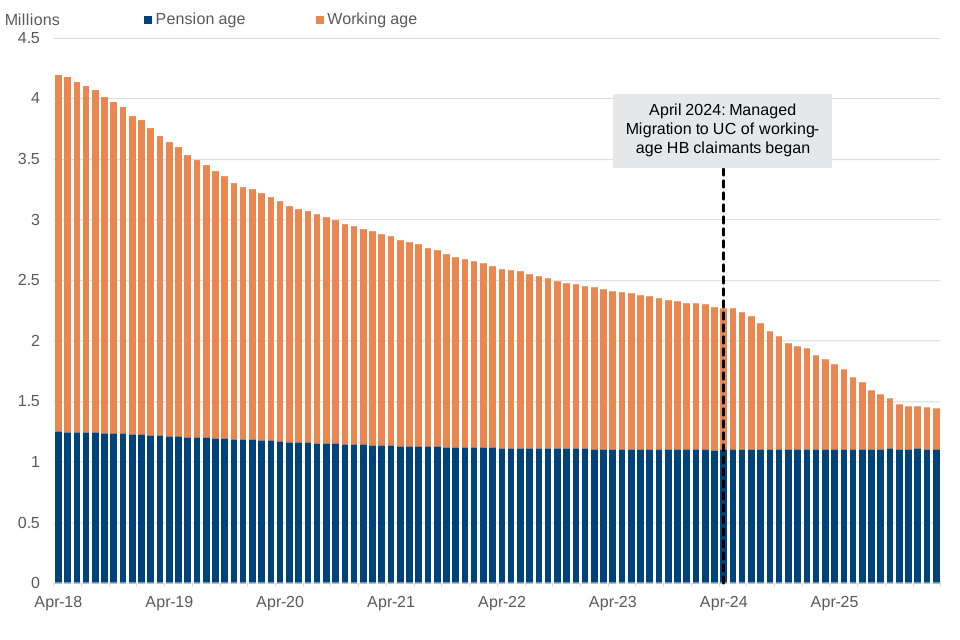
The number of Working Age HB claims has fallen as claimants move to Universal Credit. This affects trends in the HB statistics presented in this section. Further information is available in the what you need to know section of this release.
Figure 6: Housing Benefits claims by age group to March 2026
Source: DWP Housing Benefit dataset on Stat-Xplore
At March 2026, there were 1.4 million claims receiving Housing Benefit (HB), a decrease of 440,000 against February 2025. There were 1.1 million Pension Age and 340,000 Working Age claims at March 2026. The number of Working Age recipients will continue to fall as claimants move to Universal Credit (UC). By comparison, 4.5 million households had a housing element as part of their UC assessment, of which 4.3 million were in payment at March 2026.
Figure 7: Housing Benefit claims by sector at March 2026
| Sector | Number of claims |
|---|---|
| Private Rented Sector | 260,000 |
| Social Rented Sector | 1,180,000 |
Source: DWP Housing Benefit dataset on Stat-Xplore
81.8% of HB claims (1.2 million) were tenants in the Social Rented Sector and 18.1% were in the Private Rented Sector (260,000).
Average HB awards in the private rented sector have gone up by £12.93 from February 2025 to March 2026. The average weekly award for private rented claims was £162.37 at March 2026. This compares to £162.28 for the social rented sector.
As of March 2026, 1.3% (4,400) of Working Age HB claims had a reduction to their weekly award amount due to the Removal of Spare Room Subsidy scheme. This is where tenants in social housing whose accommodation is deemed to be larger than they need may lose part of their HB award. The average reduction amount was £39.06.
5. Health, disability and care
Attendance Allowance, Carer’s Allowance, Personal Independence Payment and Disability Living Allowance
Responsibility for certain disability and carer benefits has transferred from the UK Government to the Scottish Government. Between 2021 and 2025, equivalent Scottish benefits replaced Attendance Allowance (AA), Carer’s Allowance (CA), Disability Living Allowance (DLA) and Personal Independence Payment (PIP) in Scotland. As a result, DWP statistics no longer represent the full caseloads of equivalent benefits across Great Britain. Users making comparisons over time should use the “DWP ownership” and “Devolved to Scotland” options within the National geography breakdowns available within each Stat-Xplore dataset. Further information on Scottish devolution of disability and carer benefits in available in the what you need to know section of this release.
Personal Independence Payment and Disability Living Allowance
Statistics, charts and commentary in this section primarily reflect Personal Independence Payment (PIP) and Disability Living Allowance (DLA) claims under DWP ownership. They do not include recipients of Adult Disability Payment, Child Disability Payment or Scottish Adult Disability and Living Allowance administered by Social Security Scotland. Further information on Scottish devolution of disability and carer benefits in available in the what you need to know section of this release.
Figure 8: Disability Living Allowance and Personal Independence Payment cases with entitlement, by ownership, at March 2026
| Ownership | DLA | PIP |
|---|---|---|
| DWP ownership | 1,403,700 | 3,979,870 |
| Devolved to Scotland | 160 | 1,500 |
| All claims administered by DWP | 1,403,850 | 3,981,360 |
Source: DWP DLA Cases with Entitlement and PIP cases with Entitlement dataset on Stat-Xplore
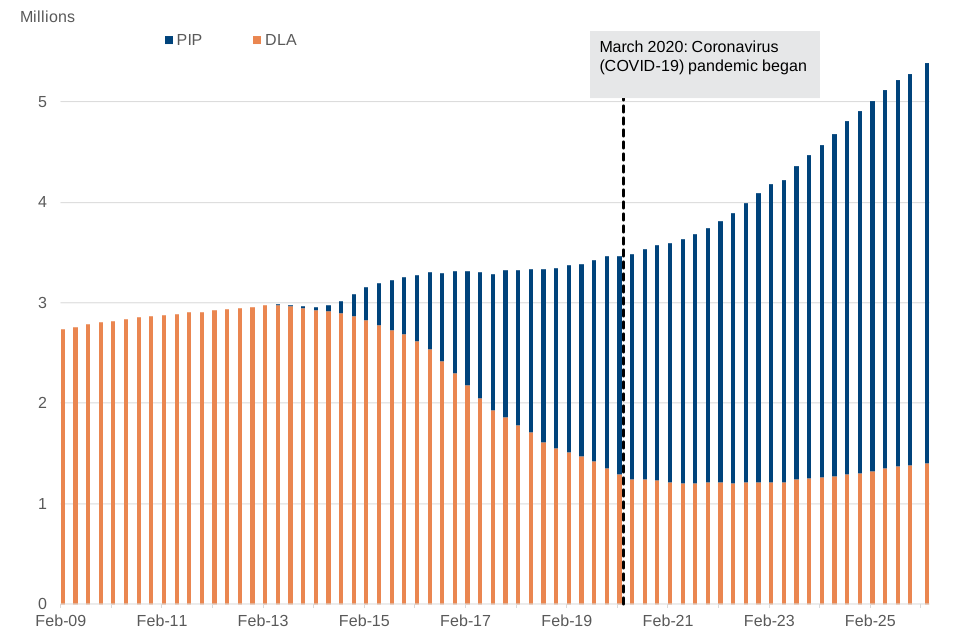
There were 5.4 million people claiming either Personal Independence Payment or Disability Living Allowance under DWP ownership at March 2026, an increase of 370,000 against February 2025.
Figure 9: The number of people claiming Personal Independence Payment or Disability Living Allowance under DWP ownership to March 2026
Source: DWP DLA Cases with Entitlement and PIP Cases with Entitlement datasets
Since 2013, Working Age adults have been moving from DLA to PIP. This has led to an increase in the number of people claiming PIP and a decrease in the number of Working Age people claiming DLA over time.
At March 2026, there were 4 million people claiming PIP under DWP ownership. The number of claimants increased by 290,000 (7.9%) between February 2025 and March 2026.
There were 1.4 million people claiming DLA under DWP ownership, an increase of 81,000 between February 2025 and March 2026. Of these, a small number (7,100) were entitled to DLA but did not receive any payment. For example, payments can be temporarily suspended if the claimant is in hospital.
Attendance Allowance
Statistics, charts and commentary in this section primarily reflect Attendance Allowance (AA) claims under DWP ownership. They do not include recipients of Pension Age Disability Payment administered by Social Security Scotland. Further information on Scottish devolution of disability and carer benefits in available in the what you need to know section of this release.
Figure 10: Attendance Allowance cases with entitlement, by ownership, at March 2026
| Ownership | Number of Claims |
|---|---|
| DWP ownership | 1,803,190 |
| Devolved to Scotland | 580 |
| All claims administered by DWP | 1,803,770 |
Source: DWP Attendance Allowance Cases with Entitlement Dataset
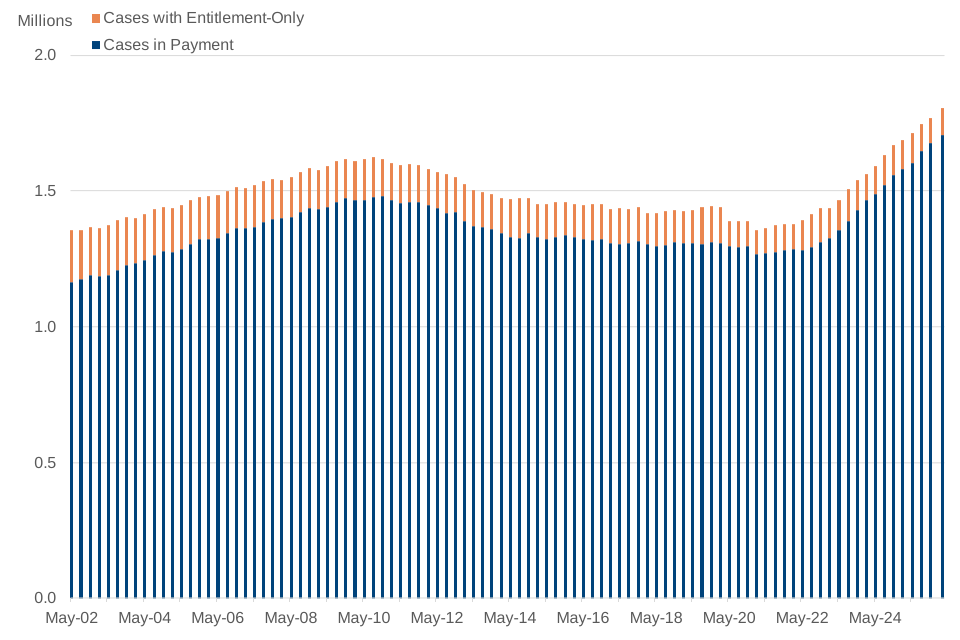
At March 2026 there were 1.8 million people claiming Attendance Allowance under DWP ownership, an increase of 110,000 from February 2025.
Figure 11: Attendance Allowance cases under DWP ownership, by payment status, to March 2026
Source: DWP Attendance Allowance Cases with Entitlement Dataset on Stat-Xplore
1.7 million claimants were receiving a payment under DWP ownership and 99,000 (5.5%) were entitled to the benefit but not receiving payment. As with DLA above, AA payments can be temporarily suspended. This can happen, for example, if the claimant is in hospital.
Employment and Support Allowance
The number of income-related ESA claims has fallen as claimants move to Universal Credit. This affects trends in the ESA statistics presented in this section. Further information is available in the what you need to know section of this release.
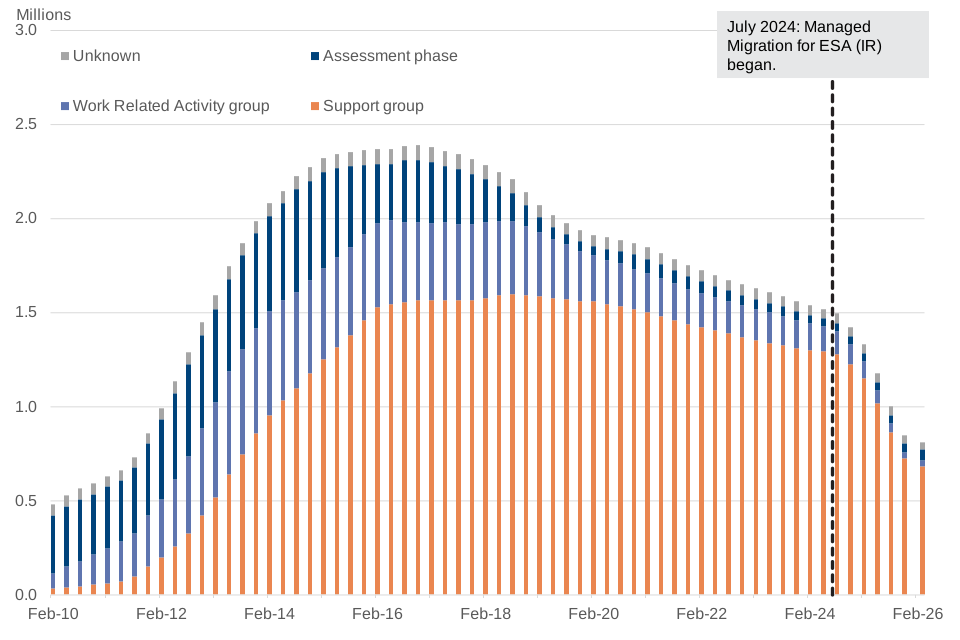
There were 810,000 people on Employment and Support Allowance at March 2026, a decrease of 520,000 since February 2025.
Figure 12: Employment and Support Allowance claims, by group, to March 2026
Source: DWP Employment and Support Allowance Dataset on Stat-Xplore
At March 2026, of the 810,000 Employment and Support Allowance (ESA) claimants:
-
680,000 were in the Support group
-
27,000 were in the Work-Related Activity group
-
58,000 were in the Assessment phase
-
300,000 are former Incapacity Benefit claimants who have been migrated
Over recent years, the number of ESA claims has been decreasing because UC has replaced ESA for new income-related claims on the grounds of incapacity. Move to Universal Credit is close to being complete, with primarily those customers who require time to find an appointee left to complete the process. Since February 2025, the number of people claiming ESA has decreased by 39% (520,000). The number of people claiming contributions-based ESA at March 2026 was 730,000, an increase of 250,000 against February 2025. The number of people claiming income-related ESA at March 2026 was 1,900, a decrease of 500,000 on February 2025. Remaining claimants either claim both contributions-based and income-related ESA, or receive credits only.
In March 2020, in response to the COVID-19 pandemic, changes were put in place to process claims and ensure those eligible received their benefit while keeping customers and staff safe. See the DWP Benefit statistics background information note for more information
Figures for other incapacity benefits are available on Stat-Xplore.
Carer’s Allowance
Statistics, charts and commentary in this section primarily reflect Carer’s Allowance (CA) claims under DWP ownership. They do not include recipients of Carer Support Payment administered by Social Security Scotland. Further information on Scottish devolution of disability and carer benefits in available in the what you need to know section of this release.
Figure 13: Carer’s Allowance cases with entitlement, by ownership, at March 2026
| Ownership | Number of Claims |
|---|---|
| DWP ownership | 1,408,000 |
| Devolved to Scotland | 940 |
| All claims administered by DWP | 1,408,940 |
Source: DWP Carer’s Allowance Cases with Entitlement Dataset on Stat-Xplore
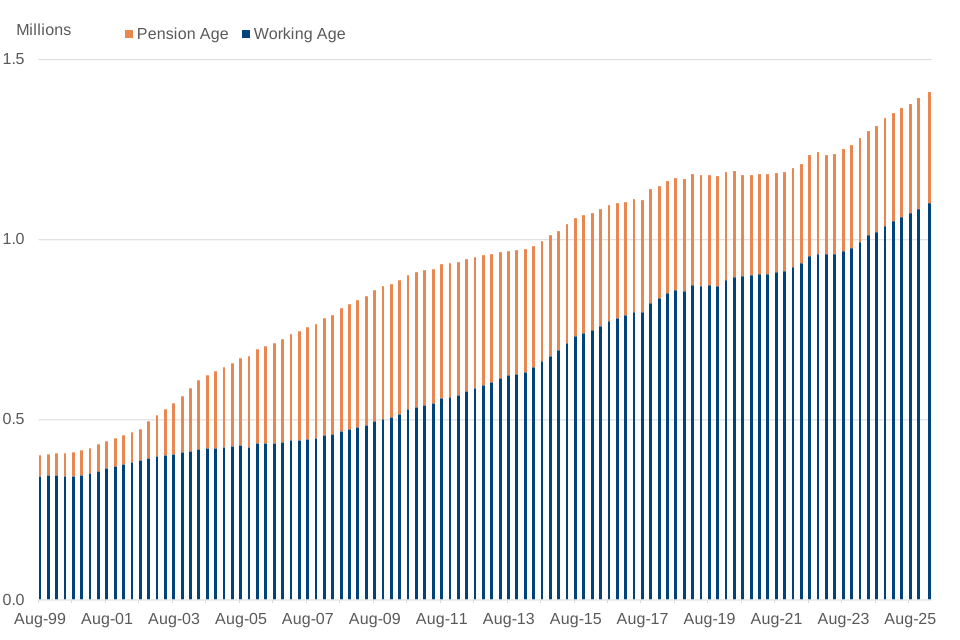
At March 2026, the total number of people claiming Carer’s Allowance under DWP ownership was 1.4 million, 4.2% higher than at February 2025.
Figure 14: Carer’s Allowance cases under DWP ownership, by age group, to March 2026
Source: DWP Carer’s Allowance Cases with Entitlement Dataset on Stat-Xplore
Of the total number claiming CA under DWP ownership at March 2026, 78.1% (1.1 million) were Working Age and 21.9% (310,000) were above State Pension Age. Of these claimants, 26.7% (380,000) were entitled to the benefit but did not receive payments. This is because they received another benefit (such as Incapacity Benefit for people of Working Age, or State Pension for people of State Pension age) which equalled or exceeded their weekly rate of CA. Where the overlapping benefit paid was less than the weekly rate of CA, only the amount of CA exceeding the amount of the overlapping benefit was paid.
Industrial Injuries Disablement Benefit
The latest available Industrial Injuries Disablement Benefit (IIDB) statistics are for December 2025. Other benefit statistics in this release, including those presented below in relation to the Pneumoconiosis (Worker’s Compensation) Act and the Mesothelioma Scheme, are generally presented to March 2026.
The total number of people claiming under the Industrial Injuries Scheme at December 2025 was 220,000.
The Industrial Injuries Scheme (IIS) provides non-contributory no-fault benefits for disablement because of an accident at work, or because of one of over 70 prescribed diseases known to be a risk from certain jobs. Please see the IIDB technical guidance for more information on the scheme.
Of the total number claiming under this scheme at December 2025, 160,000 claimed Industrial Injuries Disablement Benefit (IIDB) alone, 29,000 claimed IIDB with Reduced Earnings Allowance and Retirement Allowance and 27,000 claimed Reduced Earnings Allowance and Retirement Allowance only.
In the quarter ending December 2025 there were 680 new claims under the IIS and 670 assessments were completed. Of the completed assessments, 330 resulted in a payable award.
In March 2026 under the Pneumoconiosis (Worker’s Compensation) Act 1979, £2.9 million was awarded to 210 claimants. Under the 2008 Mesothelioma Scheme, £1.3 million was awarded to 50 claimants.
Further breakdowns are available on Stat-Xplore.
6. Other Working Age benefits
Jobseeker’s Allowance
The number of income-related JSA claims has fallen as claimants move to Universal Credit. This affects trends in the JSA statistics presented in this section. Further information is available in the what you need to know section of this release.
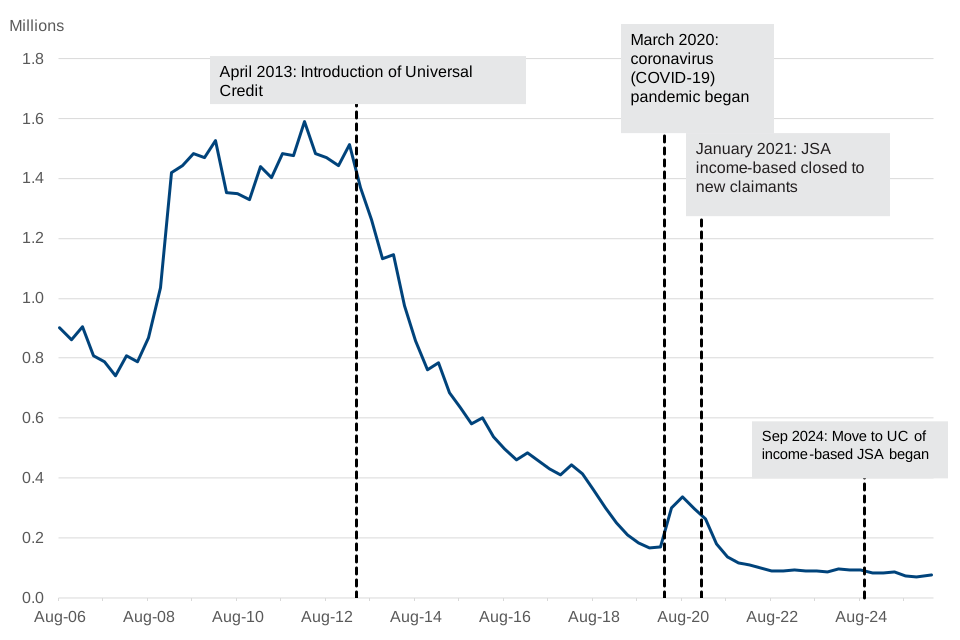
Figure 15: The number of people claiming Jobseeker’s Allowance to March 2026
Source: DWP Jobseeker’s Allowance Dataset on Stat-Xplore
Between August 2012 and March 2020, the number of people claiming Jobseeker’s Allowance (JSA) fell substantially. Universal Credit has been replacing income-based JSA since April 2013. The JSA scheme is now only open to contributory-based claims called New Style JSA. New Style JSA awards have a maximum duration of 182 days.
During the coronavirus (COVID-19) pandemic, claims for JSA went up substantially, but have since fallen below pre-pandemic levels. There were 77,000 JSA claimants at March 2026.
A methodological improvement was introduced, affecting data from August 2025 onwards, to remove inactive claims from the JSA caseload. This resulted in a reduction of 13,000 claims in August 2025.
Income Support
Income Support volumes are now minimal and will not increase. We are no longer providing Income Support statistics; November 2025 was the final release of IS statistics.
Bereavement Support Payment
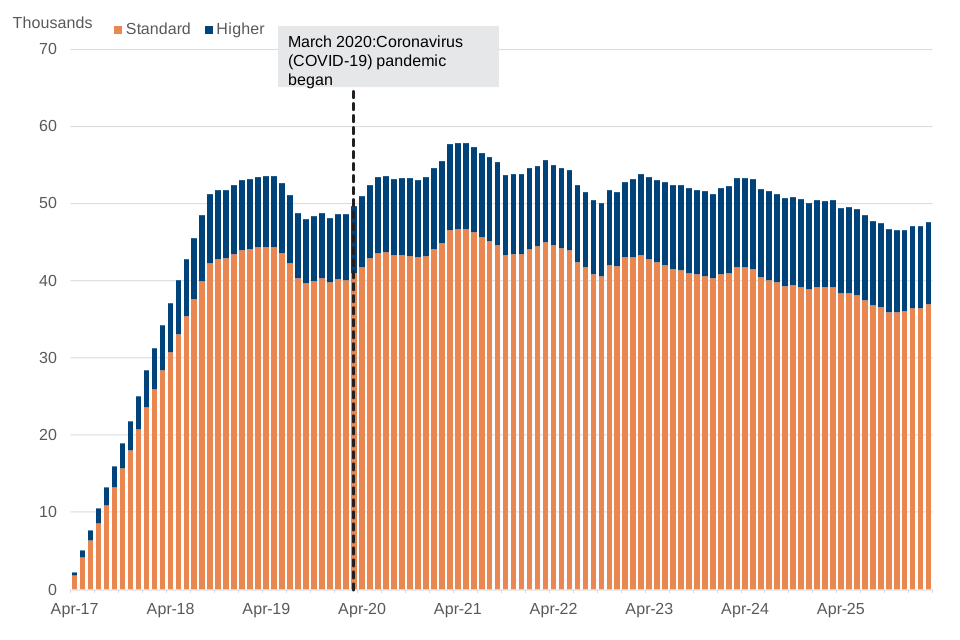
Figure 16: Bereavement Support Payment recipients by rate of payment to March 2026
Source: DWP BSP: Claims in Payment Dataset on Stat-Xplore
Since April 2017, the Bereavement Support Payment (BSP) increased steadily, peaking at 58,000 recipients in April 2021. At March 2026, there were 48,000 people receiving BSP. 37,000 (77.5%) were receiving the standard rate of BSP, while 11,000 (22.5%) were receiving the higher rate. The higher rate is paid to claimants entitled to Child Benefit. BSP was introduced in April 2017 and replaced Widowed Parents Allowance, Bereavement Allowance and the Bereavement Payment.
On 9 February 2023, Bereavement Support Payment eligibility was extended to unmarried cohabiting parents bereaved on or after 6 April 2017 who were living together on the date of death. Previously it was only available to eligible bereaved parents who were married or in a civil partnership. Depending on the circumstances of the claim, newly eligible claimants may receive a backdated lump sum payment back to 30 August 2018 (the date that eligibility was extended back to). For more information on the extension of Bereavement Benefits eligibility, see DWP’s press release.
7. About these statistics
This is a summary of the latest Accredited Official Statistics about the benefits administered by DWP. Data are released on an annual basis in September.
Figures in this bulletin are rounded in accordance with the DWP rounding policy for statistics, details of which can be found in the “Rounding” section of the Background information note. Unrounded figures from the underlying data available on Stat-Xplore or in accompanying tables may not sum exactly to the rounded totals accordingly.
These Accredited Official Statistics were independently reviewed by the Office for Statistics Regulation in November 2020. They comply with the standards of trustworthiness, quality and value in the Code of Practice for Statistics and should be labelled ‘Accredited Official Statistics’. The designation of ‘Accredited Official Statistics’ is in accordance with the Statistics and Registration Service Act 2007 and signifying compliance with the Code of Practice for Statistics.
The statistics in the DWP benefits statistics release, and those used in this statistical summary, are all Accredited Official Statistics, except:
-
Universal Credit (Official Statistics)
-
Benefit Combinations (Official Statistics)
-
Housing Benefit Flows (Official Statistics)
-
Industrial Injuries Disablement Benefit (Official Statistics)
-
Bereavement Support Payment (Official Statistics)
Official Statistics are produced in accordance with the Statistics and Registration Service Act 2007 and the Code of Practice for Statistics and meet high standards of trustworthiness, quality and public value.
Related Statistics
Where to find out more
Find previous releases of this data.
More detailed statistical tables covering all Accredited Official Statistics for DWP benefits can be found using Stat-Xplore. This is an online tool that lets you create and download customised statistical tables, and view the results in interactive charts.
Data tables are provided where data is not available on Stat-Xplore.
Benefit Combination Statistics are included as part of the Annual DWP Benefits Statistics Compendium and allow users to view the combinations of benefits that people claim at a point in time for almost all benefits administered by DWP. The latest release published on 15 September 2026 can be found on Stat-Xplore.
Read our policies and statements for background information on DWP Accredited Official Statistics and Official benefits statistics, including some of the processes involved in developing and releasing these statistics.
Known issues, changes and revisions
For details of substantial changes to this release, including the move to annual publication and changes to reference periods, see the “Changes to This Release” section at the top of this page.
The statistics in this publication are affected by the introduction of Universal Credit. See the information on the move to Universal Credit in the what you need to know section of this release for further information.
8. Contact information and feedback
For more information about this release, contact: benefits.statistics@dwp.gov.uk.
DWP would like to hear your views on our statistical publications. If you use any of our statistics publications, we would be interested in hearing what you use them for and how well they meet your requirements. Email benefits.statistics@dwp.gov.uk with your feedback.
You can also join the Welfare and Benefit Statistics community on StatsUserNetwork. DWP announces items of interest to users in this forum, as well as replying to users’ questions.
Authors: M Brown, G Mclean and J Easter
Lead statistician: C Mejury
ISBN: 978-1-78659-986-5