
High Voltage Battery Systems Risk to Accident Investigation Activities
Published 11 September 2026

© Crown copyright 2026
This publication is licensed under the terms of the Open Government Licence v3.0 except where otherwise stated. To view this licence, visit nationalarchives.gov.uk/doc/open-government-licence/version/3 or write to the Information Policy Team, The National Archives, Kew, London TW9 4DU, or email: psi@nationalarchives.gov.uk.
Where we have identified any third party copyright information you will need to obtain permission from the copyright holders concerned.
This publication is available at https://www.gov.uk/government/publications/high-voltage-battery-systems-risk-to-accident-investigation-activities/high-voltage-battery-systems-risk-to-accident-investigation-activities
1. Introduction
Aviation technology is rapidly evolving. There are numerous projects running worldwide to develop new and innovative aircraft power and propulsion systems. These include battery and hybrid power source electric aircraft.
There are electric-powered light General Aviation (GA) aircraft and large electrically-powered unmanned air systems already operating. Figure 1 shows an example of an intact relatively small lithium-polymer battery removed from a glider, one of two fitted to a power sustainer motor.
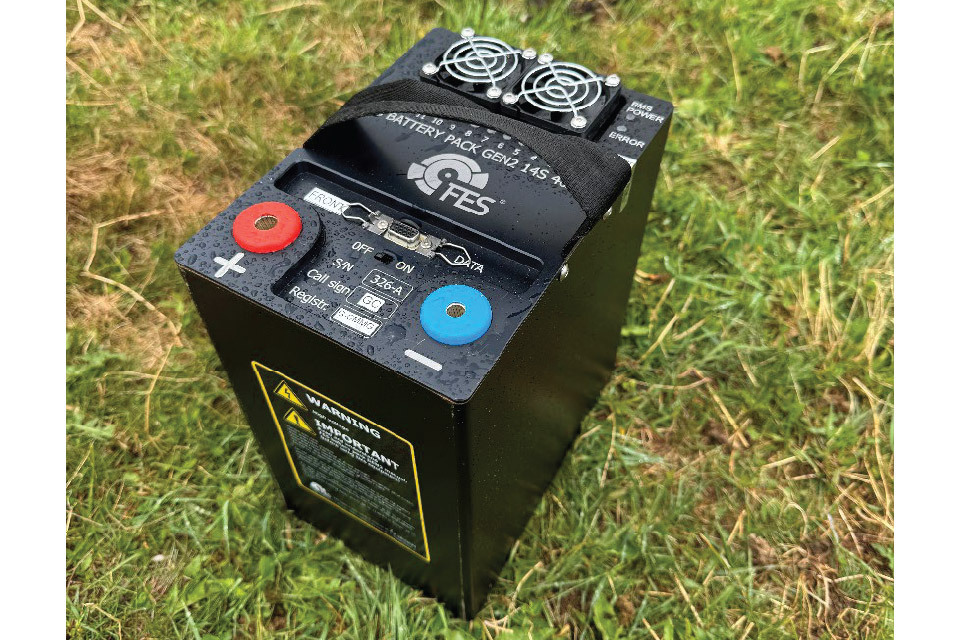
Figure 1 - Lithium polymer battery example
At the same time there are projects underway to develop urban air mobility systems, often referred to as eVTOL, which will be powered electrically.
As with all aspects of aviation there will be accidents and serious incidents which will be investigated by the AAIB. Over recent years the AAIB has been developing its staff skills and experience with these new technologies by visiting manufacturers, investigating accidents and serious incidents that have already taken place and by attending forums and seminars with subject matter experts.
2. The problem
The technology in many of these systems consists of large high-capacity batteries used to power electric motors. This motive and control technology is usually reasonably simple and straightforward. The problem particularly in adverse events is how the battery or battery array reacts. We are already seeing the sorts of problems that these batteries create within other modes of transport. For example, mischarging of e-scooters or e-bikes in the domestic environment with inferior or faulty equipment has led to house fires and personal injuries. The auto industry has also seen problems, although to a lesser extent, with battery reactions in road traffic collisions. Very recently a lorry carrying electrical waste including lithium batteries caught fire. The fire was substantial and resulted in the closure of a UK motorway for a whole day.
If similar batteries are being use in electro-flight aircraft, UAS and urban air mobility aircraft which are involved in serious incidents or accidents, the batteries can present a significant problem to first responders, investigators and recovery teams. Unlike conventional hydrocarbon fuels, which can be drained and transferred to safe containers, this is not an option for a large, charged battery.
The AAIB has developed and tested, along with a contractor and the UK Health and Safety Laboratory, portable steel carry cases designed to contain thermal runaway events in personal electronic devices such as mobile telephones or tablets. However, these do not have the size or capability to contain or ‘restrain’ large batteries used as main propulsion power sources in aviation.
3. Specific problems
These large batteries are designed to produce high operating voltages, 350 to 400 VDC is not unusual, and there are some capable of producing 800 VDC. These voltages are lethal by electrocution and are capable of generating extreme heat, enough to melt metals and alloys.
Thermal runaway is the ever-present risk with high density batteries. The CAA has recently published Civil Air Publication (CAP) 3203[footnote 1], which introduces an independent research paper titled ‘Battery Thermal Runaway in eVTOL Aircraft: Risks, Mitigations, and Firefighting Strategies’. The paper sets out in detail the chemistry, physical causes and effects of thermal runaway and techniques currently used and being developed by the emergency services to bring this phenomenon under control.
Thermal runaway is an uncontrolled chemical reaction between the compounds within a battery. The reaction can be caused by overcharging, internal and external short circuits, mechanical damage or external overheating. In an aircraft accident there is a high risk that external factors such as these will occur. This may happen during or in, the immediate aftermath of the accident.
Thermal runaway manifests itself by producing intense heat, flame and gas discharge. This reaction is very difficult to interrupt and requires specialist skills, equipment and knowledge to bring it under control.
However, there is a possibility that the battery does not react immediately. There may be cases where the battery has been damaged or heated and is now in an unstable condition such that if first responders or investigators subsequently disturb the battery, it will then transition into thermal runaway.
Even when a battery is undamaged and stable, there is the additional risk of initiating a thermal runaway if the supply cables are damaged and short circuit if they become disturbed whilst rescue or recovery work is going on.
If batteries, cabling and associated insulating materials are damaged or degraded in an accident, it may not be immediately possible to identify what and where that damage is. This introduces the risk of inadvertent short circuits being created through metallic or carbon structure causing components that are not normally associated with electrical systems becoming live.
4. Practical demonstration
During an investigation[footnote 2] into a glider battery fire, the AAIB investigator conducted an experiment on a relatively small lithium polymer battery pouch and the results were spectacular.
In order to create a cell internal short circuit under controlled conditions, the AAIB conducted a series of tests in which fully charged cells were penetrated with a 2.0 mm diameter steel nail. The nail, which was ground to a sharp point at both ends, was positioned between two cells and the cells were then moved together until the nail penetrated the cells. The testing showed that the nail initially penetrated only one of the cells and that shortly after cell penetration occurred, electrical arcing took place with ejection of sparks from the penetrated cell pouch due to the internal short circuit of that cell’s electrodes.
The electrical arcing was immediately followed by rapid inflation of the cell pouch and the ejection of light grey smoke, followed shortly by flames. The fire continued for approximately two minutes until the gel electrolyte polymer, which was the main fuel source involved in the fire, was fully consumed. The sequence is shown in Figure 2.
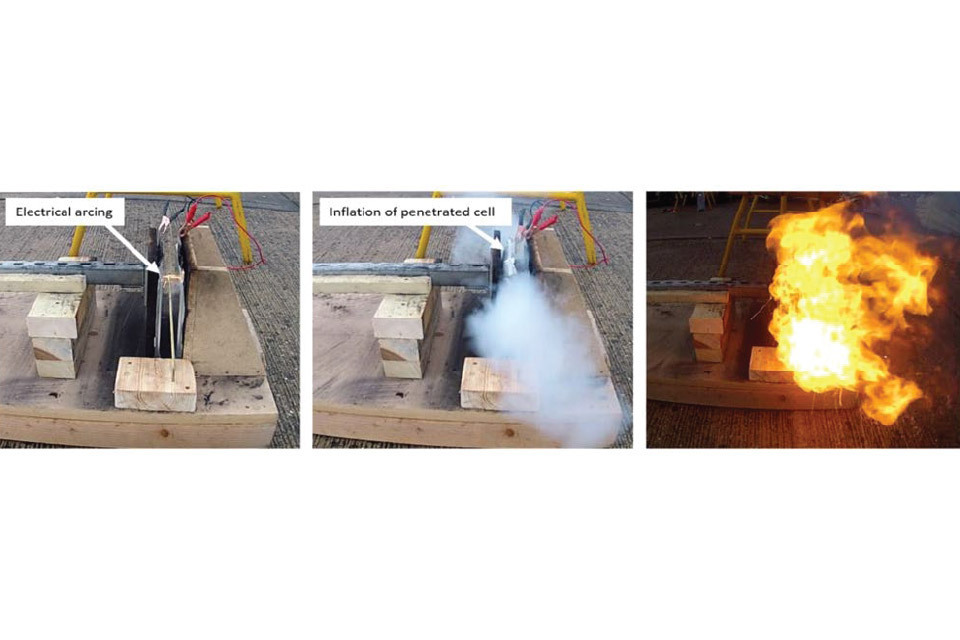
Figure 2 - Electrical arcing following cell penetration leading to thermal runaway
Although this was a single cell with a small fire and was under controlled conditions, it clearly showed the ferocity of the reaction. In a larger system of cells and an uncontrolled environment there will be a health and safety risk as well as the risk of damage to the surroundings. This introduces the potential for further damage or the complete destruction of evidence thus hindering the investigation.
5. AAIB response
Battery power technologies pose a clear and present risk to investigators examining the wreckage in the immediate aftermath of an accident. Accordingly, the AAIB is taking steps to mitigate the risks. Outlined below are a set of considerations and techniques the AAIB are developing to achieve this, and these are as follows.
- Gather information to understand the impact protection provided for batteries and how this may be compromised during an accident.
- Undertake training and gather information from manufacturers to understand the type and design of battery in use.
- Understand the monitoring systems on aircraft and how they may indicate the condition of a battery.
- Build a database of manufacturer’s aircraft power systems and specifications and certification information.
- Work closely with the emergency services and first responders drawing on their experience of electric vehicle accidents and e-bike/scooter incidents.
- Develop protocols and techniques to transport and safely secure the batteries held as evidence in an investigation.
In practical terms on an accident site the AAIB will aim to carry out the following risk mitigation techniques.
- From a safe distance, if possible, visually identify the wreckage and the size, and location of the battery and power distribution system without disturbing it.
- Use thermal imaging devices to identify hot spots. Thermal imaging devices may be handheld or an airborne UAS.
- Consider the environment and surroundings. Beware of water on structure, wet ground or puddles.
- Formulate a robust dynamic risk mitigation plan.
- Wear electrically-safe PPE, insulated gloves and face protection.
- Earth metallic and carbon composite structure.
- Locate and identify flammable materials and substances on, or in the vicinity, of a battery, its terminals and HV cabling.
- If possible, with an intact system, use the aircraft’s own isolation devices.
- If this is not possible, formulate a plan to disconnect or cut individual power supply cables using 1000 volt insulated tooling with the appropriate PPE.
-
CAP3203: Battery Thermal Runaway in eVTOL Aircraft: Risks, Mitigations, and Firefighting Strategies UK Civil Aviation Authority [accessed January 2026]. ↩
-
HPH Glasflugel 304 eS, G-GSGS [accessed January 2026]. ↩