FSA Science Council Annual Report 1 April 2025 – 31 March 2026
Published 13 October 2026

© Crown copyright 2026
This publication is licensed under the terms of the Open Government Licence v3.0 except where otherwise stated. To view this licence, visit nationalarchives.gov.uk/doc/open-government-licence/version/3 or write to the Information Policy Team, The National Archives, Kew, London TW9 4DU, or email: psi@nationalarchives.gov.uk.
Where we have identified any third party copyright information you will need to obtain permission from the copyright holders concerned.
This publication is available at https://www.gov.uk/government/publications/fsa-science-council-annual-report-1-april-2025-31-march-2026/fsa-science-council-annual-report-1-april-2025-31-march-2026
1. Foreward
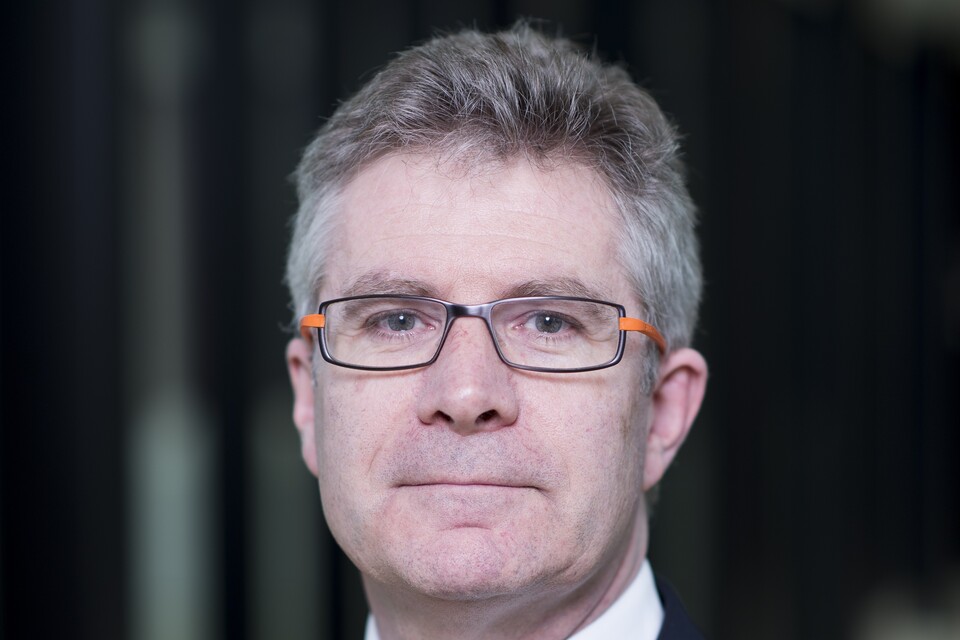
Professor John O'Brien, Chair, FSA Science Council
This report provides a summary of the Science Council’s activities in its ninth year (1 April 2025 – 31 March 2026) and reflects on its successes and challenges as well as a forward look into future activities.
In October 2025, the Council published the final report of our review into the use of Artificial Intelligence (AI) in food safety systems. An expert elicitation workshop with industry, academic and AI specialists highlighted growing uncertainty among food producers about AI use, particularly given that legal responsibility for food safety ultimately rests with individuals. Among its six recommendations, the Science Council (SC) advised the Food Standards Agency (FSA) to support industry-led standards for responsible AI use, monitor uptake of AI tools, promote data validation and alignment, and consider behavioural impacts. A key overarching theme was that, while AI can be a valuable tool, human oversight must remain central to food safety decision-making.
Throughout the year, the Council provided ongoing support to the FSA across a range of areas, including identifying future research and evidence priorities, advising on actions to better understand the reasons for rising foodborne disease rates, liaising with other Scientific Advisory Committees (SACs), and responding to ad hoc requests throughout the year. Looking ahead, a key priority will be to examine the impact of supply chain disruptions on food safety.
In line with our goal to maximize the dissemination of the Science Council outputs, a paper on our work on future research needs in food safety completed last year was published in March 2026 in Trends in Food Science & Technology (Burton et al. Identification of evidence gaps and future research needs in food safety; DOI 10.1016/j.tifs.2026.105544). A scientific paper on our work on AI in food safety and authenticity has been submitted.
I am most grateful to my Science Council colleagues for their continuing commitment and enthusiasm as well as our Secretariat, in particular Dr Kathleen Mooney and Paul Nunn, for their unwavering commitment to support delivery of our work portfolio. I would also like to take this opportunity to thank the outgoing FSA Chief Scientific Advisor (CSA), Professor Robin May, who has been supportive of Science Council’s work and welcome Professor Ian Young as the incoming CSA.
Prof John O’Brien, Chair of the FSA Science Council
2. Introduction
This report provides a summary of the Science Council’s activities in its ninth year (1 April 2025 – 31 March 2026) and reflects on its successes and challenges over that period as well as a forward look into future activities.
The Science Council is an independent expert committee of the Food Standards Agency (FSA), which consists of (at full membership) 10 to 12 expert members, including one Chair across a range of specialisms.
It provides high-level, expert strategic insight, challenge, and advice to the FSA’s Chief Scientific Adviser and to the Board and executive of the FSA on the FSA’s use of science to deliver FSA objectives.
The purpose of the Science Council is to help ensure that the FSA identifies, sources, integrates, and uses the best scientific evidence and expertise from all relevant disciplines to inform and deliver its work. FSA defines science in a broad and inclusive way, including the life, social and economic, digital and data sciences. This means the Science Council takes a multidisciplinary approach to deliver and inform its recommendations.
The Council meets four times a year in full plenary as well as ad-hoc meetings to project manage science reviews.
This year the Council completed a project on the “Artificial Intelligence (AI) Applications in Food Safety and Authenticity” to explore the issues that are associated with the use of AI in food safety and authenticity systems.
The Council also initiated a new project to examine the impact of system disruptions on food safety, which is expected to be completed in the Autumn of 2026.
The terms of reference for Science Council can be found on the Science Council website.
2.1 Changes in Membership
An addendum to the 24/25 Science Council Annual Report: a new member, Professor Steven Cummins, was accepted onto Science Council as of 27 February 2025. His details are available in Appendix I.
There were no changes in Science Council membership up to the end of the reporting period (31 March 2026).
3. Science Council Work Programme
This section sets out the reviews and workshops which have been ongoing or completed by the Science Council over the period of this report.
3.1 Artificial Intelligence Applications in Food Safety and Authenticity
The FSA tasked the Science Council with evaluating the implications of AI on food safety and authenticity. Specifically, the Council explored how emerging AI technologies intersect with these areas, identifying key concerns for industry practitioners, civil society, and regulators.
While AI applications have impacts across many industries and in society, this project focused on food safety and food authenticity implications arising from use of AI tools in food production, manufacturing, distribution, and retail systems. In particular, the FSA sought to develop an understanding of the assurance aspects of AI applications in such systems. The project did not include an assessment of AI applications in the regulatory environment.
The project lead was Prof Simon Pearson supported by a project team comprising Prof John O’Brien, Prof Peter Gregory and Ms Claire Nicholson. The wider Science Council membership was regularly consulted on decisions and outputs.
The project team examined safety by design opportunities associated with new technology introduction as well as the potential for unintended consequences (benefits and risks). A one-day workshop to gather and assess the available evidence, was held in June 2025, to harness expertise in AI technology and invite perspectives from food safety and authenticity application specialists in food production, food processing/manufacturing, food distribution/retailing, and the AI technology providers.
Phases
-
Scoping phase based on identification of technical experts and a survey to identify the major AI tools, current and potential future applications in food production, manufacturing, distribution, and retail including safety assurance, regulatory compliance, and validation verification processes. (March-May 2025).
-
Workshop to ascertain the current evidence and identify gaps in understanding associated with AI applications in food systems from production to retail. (June 2025).
-
Final report preparation. The project duration was 8 months from kick-off to final report. (June-October 2025).
The final report was published in October 2025 and had 6 recommendations for the FSA, which were in summary:
- Publish Guidance on Responsible Use of AI to Assure Food Safety and Regulatory Compliance
- Establish Ongoing Monitoring of AI Systems and Potential Impacts
- Promote Data Assurance, Validation, and Standards Alignment
- Support the Development of Standards and an Industry-Led Code of Practice for Assuring AI in Food Safety
- Engage with Broader Regulatory and Policy Perspectives
- Commission Research on Human Behaviour and Interaction with AI in Food Safety Contexts
The FSA has agreed to address the recommendations and will be reporting this activity back to Science Council over the next 12 months.
3.2 Science Council member advisory work
Science Council are engaged throughout the year to advise on the direction and detail of the FSA Research and Evidence Programmes and members are paired with other food related Scientific Advisory Committees (SACs)[footnote 1] as observers where they provide their own insights if asked by the SAC Chair.
Science Council members have also joined the foodborne disease programme to advise FSA officials on how to address the increasing rates of foodborne disease in the UK.
Specific ad-hoc advice provided over the year includes:
May–June 2025
- SC provided rapid input on the FSA strategic assessment project specification and supported external engagement, including a request for representation at an AI-focused agri‑food symposium.
July–August 2025
- Activity centred on AI and outreach: attendance requests for an AI workshop, participation in a food misinformation and disinformation advisory meeting, promotion of a recruitment opportunity, and support to an FSA-supported AI research project via interview engagement.
September 2025
- SC reviewed a draft FSA research specification on per- and polyfluoroalkoxy substances (PFAS) PFAS-in-food project, contributing expert feedback.
October 2025
- Peak activity: contributions to horizon scanning, feedback on multiple FSA Research and Evidence Programme (REPs), and participation in a workshop shaping the FSA strategic assessment.
November 2025 – March 2026
- Targeted expert input, including advice on system disruption planning and review of a draft FSA PFAS-in-food report.
Overall:
Support combined rapid reviews, expert advice, and strategic engagement, with the heaviest input in October
4. Future Work
Science Council consulted the FSA Board in October 2024 and 2025 to establish key priority areas of work for the Science Council and since then have refined this in discussion with the Chief Scientific Adviser, Chief Executive and FSA Chair. Several possible areas of interest were identified. These included, for example, novel food contact materials and the food safety implications of using food by-products as raw materials in food production. As the food safety landscape is rapidly changing, the above areas are considered as of potential interest only as the Science Council aims to be flexible enough to rapidly address new concerns and priorities as they emerge. Ideally each project would last about 6-9 months.
Science Council will be taking forward a project on food safety and system disruptions. This project will be a broad review of a range of disruption scenarios (e.g. pandemic-driven workforce disruption, extreme weather leading to flooding and crop contamination and global conflict) to find key actions that reduce food safety impact.
The centrepiece of the project will be an expert elicitation workshop in the summer of 2026 drawing together key expertise on food supply, safety and system disruption to consider a range of scenarios and draw out key actions to minimise impact and no-regret preventative measures that can be broadly applied to avoid or minimise impact in such situations.
A report with recommendations for the FSA is planned for publication in Autumn 2026.
5. Annual Costs
The operation of the Science Council is funded by the FSA. For the financial year 1 April 2025 to 31 March 2026 – covering project costs, members’ expenses (travel, subsistence, and accommodation) and fees and administrative costs for meetings– total costs:
Total Science Council spend
(rounded up to nearest pound) £40,640.00
Information on fee rates and expenses guidance which applied during this period can be found in the Science Council Code of Practice (fees/honorarium) and in the FSA SAC Guidance on Committee fees and expenses (travel, accommodation/subsistence claims).
6. Appendix I: Who are the Council Members?
The FSA’s Science Council is an independent expert committee comprising up to 10-12 members including a Chair. It was established in April 2017, and its role is to provide high-level, expert strategic insight, challenge, and advice to the FSA’s Chief Scientific Adviser (CSA), the Board and Executive on the FSA’s use of science to deliver its objectives. The membership during this reporting period were:
Prof John O’Brien (Chair)
Prof J O’Brien is Founder of the Food Observatory, UK and a Visiting Prof at Ulster University, Coleraine. In his previous career to 2018 he led the Nestlé global competence centre for Food Safety & Quality and the company’s Food Safety and Integrity Research Programme in Lausanne, Switzerland.
Claire Nicholson
Claire Nicholson is the Science Council member representing the consumer interest and has held a range of roles representing consumer interests including having been an Independent Director to represent Consumer Interests on the Board of Red Tractor.
Prof Jonathan Wastling
Prof Wastling is Deputy Vice-Chancellor at Brunel University, London. He is a Prof of Infection Biology specialising in human and animal infectious diseases with a long-standing interest in food security.
Prof Peter Gregory
Prof Gregory is Emeritus Prof of Global Food Security at the University of Reading having previously been Prof of Soil Science at the same university. He is chair of the Recommended List Board for the AHDB and the board of Crops for the Future UK CIC.
Prof Michael Tildesley
Prof Michael Tildesley is a Prof in the Zeeman Institute for Systems Biology and Infectious Disease Epidemiology Research at the University of Warwick. His research focuses upon the development of models of infectious diseases and their utility as predictive tools.
Prof Simon Pearson
Prof Simon Pearson is Prof of Agri-Food Technology and Founding Director of the Lincoln Institute of Agri-Food Technology at the University of Lincoln. He specialises in interdisciplinary research that spans the agri-food system, including agri-food robotics, use of digital systems in food manufacturing, the application of AI across the food chain and data governance in complex systems.
Prof Peter Borriello CB
Prof Peter Borriello CB has had a long career in research and has led human and veterinary national institutions. These have included the Public Health Laboratory Service Central Public Health Laboratory, the Health Protection Agency Centre for Infections, the Veterinary Laboratories Agency, and most recently Chief Executive of the Veterinary Medicines Directorate.
Prof Tom Oliver
Prof Tom Oliver is the Research Dean for Environment at the University of Reading and a Prof of Applied Ecology. He has advised Defra in the UK government, helping them to set up a ‘Systems Research Programme’, and the Cabinet Office on ‘chronic risks’ to complement the UK National Security Risk Assessment.
Prof Richard Smith
Prof Richard Smith is Prof of Public Health Economics and Deputy Pro Vice Chancellor for the Faculty of Health and Life Sciences at the University of Exeter. He was previously the University’s Deputy Vice-Chancellor for Strategy Integration and Resources, and prior to Exeter was Dean of the Faculty of Public Health & Policy at the London School of Hygiene and Tropical Medicine.
Jacqueline Healing
Jacqueline Healing is a Food scientist with over 40 years’ experience directing and leading food safety programmes for food retailers globally.
Prof Emily Burton
Prof Emily Burton is Prof of Sustainable Food Production and co-lead for Nottingham Trent University Sustainable Futures Research Theme. She has worked alongside the poultry industry on research programmes for 25 years and now leads the University’s Poultry Nutrition Research Unit.
Prof Steven Cummins
Steven Cummins is Professor of Population Health and NIHR Senior Investigator in the Department of Public Health, Environments & Society at the London School of Hygiene & Tropical Medicine. His research interests include the role of the food environment in determining diet-related health and health inequalities, the evaluation of food system policies and interventions and complex systems thinking.
Members’ interests are recorded in the Science Council register of interests which can be found in the membership section of the Science Council website. A snapshot of the register of interests for December 2025 is attached as Appendix III.
7. Appendix II: Science Council self-assessment against good practice guidelines for the independent scientific advisory committees
Twenty-nine principles of good practice in the FSA Good Practice Guidelines for Science Advisory Committees (SACs) have been developed by the Chairs of the SACs that advise the FSA. These were reviewed and updated in 2012.
Different committees have different duties and discharge those duties in different ways. Therefore, not all the twenty-nine principles set out below will be applicable to all of the committees, all of the time. This list of principles is considered by each committee annually as part of the preparation of its annual report and is attached as an Appendix to it.
Response by the FSA Science Council for the period of its Annual Report (from 1 April 2025 to 31 March 2026)
The role of the Science Council is to provide high-level, expert strategic insight, challenge and advice to the FSA’s Board and executive of the FSA and Chief Scientific Adviser (CSA) on the FSA’s use of science to deliver FSA objectives. Its role does not require it to carry out risk assessments or detailed investigations of scientific dossiers on specific risks, products, or processes.
It does, however, engage with experts to consider the requirements to assess wider impacts in risk-based food safety assessment, and in doing so, sought to abide by the principles of good practice developed by the FSA and Government Office for Science.
7.1 SAC Principles
Defining the problem and approach
1. The FSA will ensure that issues it asks a SAC to address are clearly defined and take account of stakeholder expectations in discussion with the SAC Secretariat and where necessary the SAC Chair. The SAC Chair will refer back to the FSA if discussion suggests that further iteration and discussion of the task is necessary. Where a SAC proposes to initiate a piece of work, the SAC Chair and Secretariat will discuss this with the FSA to ensure the definition and rationale for the work and its expected use by the FSA are clear.
Complies: The FSA’s CSA attends most Science Council meetings and discusses the rationale for the questions posed to or by the Council with them. The Science Council Chair also has regular meetings with the FSA’s CSA, Chair, and the Chief Executive where any questions from the FSA or initiated by the Council are considered further. FSA contributions to the Science Council’s work portfolio (such as meetings with staff who lead on relevant policy/science areas and contributions to meetings) enables ongoing discussion and clarification.
Seeking Input
2. The Secretariat will ensure that stakeholders are consulted at appropriate points in the SAC’s considerations. It will consider with the FSA whether and how stakeholder views need to be taken into account in helping to identify the issue and frame the question for the committee.
Complies: Science Council engages with expert communities where required for its work, and especially where that work takes investigations outside the range of expertise represented by Science Council members. Specifically for the review of the use of artificial intelligence (AI) in food safety and authenticity systems in June 2025 Science Council engaged with key experts in a workshop scenario to discuss factors that needed consideration using several case studies/scenarios. This had been agreed in discussion with the FSA Chair and CSA.
3. Wherever possible, SAC discussions should be held in public.
Complies: Science Council plenary meetings over this reporting period were not held in public, although external experts were invited to a workshop for the AI in food safety and authenticity project. The majority of meetings held by Science Council are closed but relate to projects which have their final reports published online (such as the report of the aforementioned review on the Science Council website).
4. The scope of literature searches made on behalf of the SAC will be clearly set out
Complies: The Science Council’s work over the last year has not required structured literature searches as this has largely been workshop based. Statements of fact or evidence are all supported by literature sources where appropriate and the full list of references is provided at the end of these reports.
5. Steps will be taken to ensure that all available and relevant scientific evidence is rigorously considered by the committee, including consulting external/additional scientific experts who may know of relevant unpublished or pre-publication data.
Complies: The Science Council does not routinely consider detailed primary scientific documents, but it does rigorously examine the evidence that is presented. Members and the Secretariat are expected to bring relevant additional materials to the attention of the Council. An example of this is again the expert elicitation workshop on AI in food safety. During the scoping of the planned project on food safety and system disruption Science Council brought in an expert who had looked at system disruption effect on food supply to learn lessons from their recent research.
6. Data from stakeholders will be considered and weighted according to quality by the SAC.
Complies:The Science Council weighs all relevant information according to quality, irrespective of its source. Experts engaged with for the AI in food safety workshop were selected based on their type and degree of expertise, consulting with Science Council and FSA officials to find the best fit.
7. Consideration by the Secretariat and the Chair (and where appropriate the whole SAC) will be given to whether expertise in other disciplines will be needed.
Complies:The Science Council kept this principle under review, and it has the option to co-opt or invite external input where necessary, through mechanisms such as the FSA’s Register of Specialists.
As mentioned earlier the AI in food safety workshop brought in expertise that was not present in the Council.
8. Consideration will be given by the Secretariat or by the SAC, in discussion with the FSA, as to whether other SACs need to be consulted.
Complies: Science Council consults the FSA SACs as appropriate when carrying out its work. The Council has regular engagement with other FSA SACs and, as well as the Council Chair attending the regular workshops of SAC Chairs and the cross-government Chairs of SACs, Council members are paired with a SAC relevant to their expertise, for regular updates and cross-engagement. The ACSS has been frequently consulted on the social science aspects of Science Council work, including their Chair Julie Hill who observes plenary meetings of Science Council. The Council is working with ACMSF to support the FSA foodborne disease (FBD) programme’s investigation into possible solutions to the recent upturn in UK FBD cases.
Validation
9. Study design, methods of measurement and the way that analysis of data has been carried out will be assessed by the SAC.
10. Data will be assessed by the committee in accordance with the relevant principles of good practice, e.g. qualitative social science data will be assessed with reference to guidance from the Government’s Chief Social Researcher
11. Formal statistical analyses will be included wherever appropriate. To support this, each SAC will have access to advice on quantitative analysis and modelling as needed.
12. When considering what evidence needs to be collected for assessment, the following points will be considered: the potential for the need for different data for different parts of the UK or the relevance to the UK situation for any data originating outside the UK; and whether stakeholders can provide unpublished data.
13. The list of references will make it clear which references have been subject to external peer review, and which have been peer reviewed through evaluation by the Committee, and if relevant, any that have not been peer reviewed.
9-13. Science Council complies, to the extent these criteria apply to its work: The Science Council does not generally consider the type of detailed risk assessment and analyses of scientific data that are the primary focus of these criteria. However, it does advise on foresight, best practice, governance, and assurance of the FSA’s use of science.
Uncertainty
14. When reporting outcomes, SACs will make explicit the level and type of uncertainty (both limitations on the quality of the available data and lack of knowledge) associated with their advice.
15. Any assumptions made by the SAC will be clearly spelled out, and, in reviews, previous assumptions will be challenged.
16. Data gaps will be identified and their impact on uncertainty assessed by the SAC.
17. An indication will be given by the SAC about whether the evidence base is changing or static, and if appropriate, how developments in the evidence base might affect key assumptions and conclusions.
14-17. Science Council complies to the extent these criteria apply to its work:
The Science Council does not generally consider the type of detailed risk assessment and analyses of scientific data that are the primary focus of these criteria. However, it does advise on foresight, best practice, governance, and assurance of the FSA’s use of science. In reporting the results of its strategic reviews, the Science Council always seeks to be clear about limitations on data informing conclusions and any caveats on their conclusions.
Drawing Conclusions
18. The SAC will be broad-minded, acknowledging where conflicting views exist and considering whether alternative interpretations fit the same evidence.
Science Council complies to the extent these criteria apply to its work: This is implicit in the Science Council’s role to provide high-level, expert strategic insight, challenge, and advice to the FSA’s Board and executive and CSA on the FSA’s use of science to deliver FSA objectives. In reporting the AI in food safety work the Council ensured the report gave a full and rounded view of the range of opinions expressed by experts as well as drawing out key themes.
19. Where both risks and benefits have been considered, the committee will address each with the same rigour, as far as possible; it will make clear the degree of rigour and uncertainty, and any important constraints, in reporting its conclusions.
Science Council complies to the extent these criteria apply to its work: The Science Council does not carry out formal assessments of risk and/or benefits as such. It would consider the advantages and disadvantages of different options in making its recommendations. The Science Council will always make clear any caveats or limitations on its advice.
20. SAC decisions will include an explanation of where differences of opinion have arisen during discussions, specifically where there are unresolved issues, and why conclusions have been reached. If it is not possible to reach a consensus, a minority report may be appended to the main report, setting out the differences in interpretation and conclusions, and the reasons for these, and the names of those supporting the minority report.
Science Council complies to the extent these criteria apply to its work: This is covered explicitly in the Science Council Code of Practice.
21. The SAC’s interpretation of results, recommended actions or advice will be consistent with the quantitative and/or qualitative evidence and the degree of uncertainty associated with it.
Science Council complies to the extent these criteria apply to its work: Science Council aims to follow this principle. When reporting Science Council clearly caveats its recommendations, setting out the uncertainty and limitations on the conclusions it has reached given the evidence (qualitative or quantitative) it used to reach them.
22. SACs will make recommendations about general issues that may have relevance for other committees.
Science Council complies to the extent these criteria apply to its work: This is implicit in the Science Council’s role to provide high-level, expert strategic insight, challenge and advice to the FSA’s Chief Scientific Adviser, the Board and the executive of the FSA on the FSA’s use of science to deliver its objectives.
Communicating SAC’s conclusions
23. Conclusions will be expressed by the SAC in clear, simple terms and use the minimum caveats consistent with accuracy.
Science Council complies to the extent these criteria apply to its work: Given the high-level strategic advice the Science Council provides; this tends to lend itself to minimal use of jargon and technical terms and it aimed to make its reports clear and concise to the lay audience. The Science Council’s published papers and reports are reviewed against accessibility criteria so that the Council’s work is inclusive.
24. It will be made clear by the SAC where assessments have been based on the work of other bodies and where the SAC has started afresh, and there will be a clear statement of how the current conclusions compare with previous assessments.
Science Council complies to the extent these criteria apply to its work: Science Council reports, meeting papers and minutes made clear the origin of issues under discussion. It puts its conclusions in the context of other work where appropriate.
25. The conclusions will be supported by a statement about their robustness and the extent to which judgement has had to be used.
Science Council complies to the extent these criteria apply to its work: The Science Council made clear the basis for its recommendations and any assumptions and caveats.
26. As standard practice, the SAC Secretariat will publish a full set of references (including the data used as the basis for risk assessment and other SAC opinions) at as early a stage as possible to support openness and transparency of decision-making. Where this is not possible, reasons will be clearly set out, explained and a commitment made to future publication wherever possible.
Science Council complies to the extent these criteria apply to its work: The Science Council did not carry out risk assessment or assessment of detailed scientific data of the type that is the focus for this criterion. However, it does include a list of references in its review reports (e.g. AI in food safety).
27. The amount of material withheld by the SAC or FSA as being confidential will be kept to a minimum. Where it is not possible to release material, the reasons will be clearly set out, explained and a commitment made to future publication wherever possible.
Science Council complies to the extent these criteria apply to its work: The Science Council followed this criterion.
28. Where proposals or papers being considered by the FSA Board rest on scientific evidence produced by a SAC, the Chair of the SAC (or a nominated expert member) will be invited to the table at the Open Board meetings at which the paper is discussed. To maintain appropriate separation of risk assessment and risk management processes, the role of the Chairs will be limited to providing an independent view and assurance on how their committee’s advice has been reflected in the relevant policy proposals, and to answer Board Members’ questions on the science. The Chairs may also, where appropriate, be invited to provide factual briefing to Board members about particular issues within their committees’ remits, in advance of discussion at open Board meetings.
Science Council complies to the extent these criteria apply to its work: This did not apply directly, since the Science Council did not carry out full risk assessments or detailed reviews of scientific evidence. This is because the Science Council reviews topics of strategic science interest and presents recommendations based on those reviews but does not carry out risk assessment or assessment of detailed scientific data.
However, the Science Council Chair does normally present an update on its activity annually to the FSA Board, this year at a closed Board retreat where it presented the results of the Science Council AI in food safety project. Final reports of Science Council projects are presented to the CSA before publication.
29. The SAC will seek (and FSA will provide) timely feedback on actions taken (or not taken) in response to the SAC’s advice, and the rationale for these.
Science Council complies to the extent these criteria apply to its work: The FSA typically provides an initial response and action plan once it has received recommendations at the end of a Science Council review and provides feedback on delivery against that action plan (typically 12 months from the review report being presented to the FSA). The AI and food safety report was published during this reporting period and the FSA provided an action plan of how it intended to address the recommendations in that report.
8. Appendix III: Science Council register of interests on 18 December 2025.
8.1 Professor John O’Brien
Updated: December 2024
Current Interests
Personal
| Direct employment. | The Food Observatory, Founder and Director (2018-present). |
| Consultancies and other fee-paid work. | Scientific Advisory Board, Danone Food Safety Centre, Utrecht, Netherlands (2018-present) . Elsevier Ltd, Editor, Trends in Food Science & Technology (2021-present). Yakult Honsha Co. Ltd - Consultancy on probiotic products (Oct 2024-Oct 2026). |
| Shareholdings. | None. |
| Clubs, other organisations and advocacy groups. | Member, Policy & Engagement Committee, Institute of Food Science & Technology (IFST) (UK). Chair, External Advisory Board, Nutrition Innovation Centre for Diet and Health (NICHE),University of Ulster. |
| Other personal interests. | None. |
Non personal interests
| Fellowships. | Royal Society of Chemistry. Institute of Food Science and Technology. Society of Toxicology. Institute of Food Technologists. Society for Risk Analysis. Society of Chemical Industry. Association of Official Analytical Chemists. International Association for Food Protection. Advisory Council Member, Campden BRI. |
| Indirect support. | None. |
| Trusteeships. | None. |
| Land and property. | None. |
| Other public appointments. | None. |
| Other non-personal interests. | Strategic Advisory Committee. Need For Nutrition Education/Innovation Programme (NNEDPRO), Cambridge, UK. |
Historic Interest
Personal
| Direct employment. | Nestlé SA, Head of Food Safety & Integrity Research Programme (until 2018). |
| Consultancies and other fee-paid work. | Book Reviewer. Johns Hopkins University Press, Baltimore, USA (2019), ThermoFisher Scientific Inc. USA (2018-2022) Crème Global, Dublin, Ireland, Consultancy project on food factory risk management (2019). Arthur D. Little, Consultancy on Food Quality Management (2021) |
| Shareholdings. | Nestle SA. |
| Clubs, other organisations and advocacy groups. | None. |
| Other personal interests. | Spouse worked for Johnson & Johnson Inc. (until 2020). |
Non personal interests
| Fellowships. | None. |
| Indirect support. | None. |
| Trusteeships. | Board Member, Campden BRI (2015-2023). Trustee: Institute of Food Science & Technology, UK (2020-2023). Member, International Scientific Advisory Board, Queens University Belfast (2013). Executive Advisory Board, Institute for Food Safety & Health, Chicago (2015-2017). Chair, International Life Sciences Institute (ILSI) Europe Branch (2013-2017). Trustee, ILSI, Washington (2014-2018). Trustee, Feeding Tomorrow, Institute of Food Technologists (IFT), Chicago (2014-2017). |
| Land and property. | None. |
| Other public appointments. | None. |
| Other non-personal interests. | None. |
8.2 Professor Peter Borriello
Updated: December 2024
Current Interests
Personal
| Direct employment. | None. |
| Consultancies and other fee-paid work. | Bill and Melinda Gates Foundation- consultancy on improving veterinary medicines regulation in SSA (8/6/22-present). Chair of RUMA Independent Scientific Panel (1/9/23 present). Co-opted onto the Council of the British Society of Antimicrobials and Chemotherapy (BSAC). |
| Shareholdings. | None. |
| Clubs, other organisations and advocacy groups. | Microbiology Society Applied Microbiology International (Fellow). Member of Advisory Board of BactiVac. Member of Hong Kong Expert Committee on Antimicrobial Resistance (AMR) |
| Other personal interests. | None. |
Non personal interests
| Fellowships. | University College London. |
| Indirect support. | None. |
| Trusteeships. | Safe Medicines for Animals (SMArt). |
| Land and property. | None. |
| Other public appointments. | None. |
| Other non-personal interests. | None. |
Historic Interest
Personal
| Direct employment. | Chief Executive Officer (CEO) of Veterinary Medicines agency (retired 2021). |
| Consultancies and other fee-paid work. | Review of Irish Medicines Agency (August 2023-May 2024). World Bank (September 2023-June 2024) on AMR. World Organisation on Animal Health (March 2024-July 2024) on AMR. |
| Shareholdings. | None. |
| Clubs, other organisations and advocacy groups. | British Infection Society. |
| Other personal interests. | None. |
Non personal interests
| Fellowships. | None. |
| Indirect support. | None. |
| Trusteeships. | None. |
| Land and property. | None. |
| Other public appointments. | None. |
| Other non-personal interests. | None. |
8.3 Professor Emily Burton
Updated December 2024
Current Interests
Personal
| Direct employment. | Nottingham Trent University (NTU) . |
| Consultancies and other fee-paid work. | August 2025: Consultant for Kemin Industries (Animal Feed Additives) July 2022: Consultancy for Avara Foods Ltd – conducted through my current employer (NTU): Independent review of their trial data. |
| Shareholdings. | Shareholdings in Si Active Ltd - Company number 06932163. |
| Clubs, other organisations and advocacy groups. | Director: Egg and Poultry Industry Conference Ltd . World’s Poultry Science Association (WPSA). European Working Group on Poultry Nutrition, UK representative. WPSA UK branch member. |
| Other personal interests. | Husband is lay member of Food Standards Agency (FSA) Committee on Toxicology. |
Non personal interests
| Fellowships. | None. |
| Indirect support. | Travel costs paid to speak at conferences for the following organisations: Animal Nutrition Association of Canada; European Federation of the World’s Poultry Science Association; South African Feed Manufacturers’ Association. |
| Trusteeships. | Bleasby Boost Fund (primary school fund-raising charity); Trustee Gordon Memorial Trust; Trustee British Poultry Science Trust. |
| Land and property. | None. |
| Other public appointments. | FSA Advisory Committee on Animal Feedingstuffs, Member. |
| Other non-personal interests. | The commissioning of research or other work by, or advice from, staff who work in a unit for which a member is responsible. Research commissioned for Avara Foods Ltd, 2 Sisters Food Group, ForFarmers, ABAgri, Kemin, Danisco, Alltech, Arden Biotech, Premier Nutrition, Deepbranch Biotech; Green Plains, Clonbiotech. |
Historic Interest
Personal
| Direct employment. | MARS UK, University of Nottingham. University of Nottingham. |
| Consultancies and other fee-paid work. | None. |
| Shareholdings. | None. |
| Clubs, other organisations and advocacy groups. | Councillor for British Society for Animal Science. |
| Other personal interests. | None. |
Non personal interests
| Fellowships. | None. |
| Indirect support. | None. |
| Trusteeships. | None. |
| Land and property. | None. |
| Other public appointments. | None. |
| Other non-personal interests. | None. |
8.4 Professor Steven Cummins
Updated: April 2025
Current Interests
Personal
| Direct employment. | The London School of Hygiene & Tropical Medicine. |
| Consultancies and other fee-paid work. | I undertake occasional work for government research funders (Swiss National Science Foundation, Swedish Research Council, National Institute for Health and Care Research (NIHR)) for which an honorarium is paid. |
| Shareholdings. | None. |
| Clubs, other organisations and advocacy groups. | None. |
| Other personal interests. | I am an active researcher in food and food policy as applied to public health and author papers and reports, as well as present findings at conferences, seminars and to politicians and civil servants. |
Non personal interests
| Fellowships. | I am a current holder of a NIHR Senior Investigator award. |
| Indirect support. | None. |
| Trusteeships. | I am a trustee of Townley Grammar School, with a remit for school food. |
| Land and property. | None. |
| Other public appointments. | None. |
| Other non-personal interests. | None. |
Historic Interest
Personal
| Direct employment. | None. |
| Consultancies and other fee-paid work. | None. |
| Shareholdings. | None. |
| Clubs, other organisations and advocacy groups. | None. |
| Other personal interests. | None. |
Non personal interests
| Fellowships. | Previously held fellowships from NIHR & Medical Research Council (MRC) with a focus on diet and food. |
| Indirect support. | None. |
| Trusteeships. | None. |
| Land and property. | None. |
| Other public appointments. | Previously a member of the Food Standards Agency’s (FSA) Social Science Research Committee (now Advisory Committee for Social Science). |
| Other non-personal interests. | None. |
8.5 Professor Peter Gregory
Updated: December 2024
Current Interests
Personal
| Direct employment. | None. | |
| Consultancies and other fee-paid work. | Chair, Recommended List Board, Agriculture and Horticulture Development Board (AHDB). | |
| Shareholdings. | None. | |
| Clubs, other organisations and advocacy groups. | Referee/external advisor | Biotechnology and Biological Sciences Research Council (BBSRC) and Department for Environment, Food and Rural Affairs (Defra). Director, Crops For The Future CIC |
| Other personal interests. | Honorary Fellow National Institute of Agricultural Botany (NIAB). Deputy Chair, Science Advisory Board. Leibniz Centre for Agricultural Landscape Research (ZALF), Germany. Member, Genetic Improvement Networks (GIN) Science Advisory Committee, Defra. |
Non personal interests
| Fellowships. | None. |
| Indirect support. | None. |
| Trusteeships. | None. |
| Land and property. | None. |
| Other public appointments. | None. |
| Other non-personal interests. | None. |
Historic Interest
Personal
| Direct employment. | University of Reading. |
| Consultancies and other fee-paid work. | None. |
| Shareholdings. | None. |
| Clubs, other organisations and advocacy groups. | None. |
| Other personal interests. | None. |
Non personal interests
| Fellowships. | None. |
| Indirect support. | None. |
| Trusteeships. | None. |
| Land and property. | None. |
| Other public appointments. | None. |
| Other non-personal interests. | None. |
8.6 Mrs. Jacqueline Healing
Updated December 2025
Current Interests
Personal
| Direct employment. | Member of Food Standards Agency (FSA) Science Council (March 2024 - present). |
| Consultancies and other fee-paid work. | Independent Food safety consultant and expert witness (July 2023 - present). |
| Shareholdings. | J Sainsbury plc and Coles Australia. |
| Clubs, other organisations and advocacy groups. | Board Director SOFHT (Society of Food hygiene and Technology) (October 2023 - present). Non executive Director SALSA (Safe and Local supplier approval) (September 2025 - present). Fellow Institute of Food Science & Technology (IFST) (December 2023 - present). |
| Other personal interests. | Magistrate and Justice of the Peace (October 2025 - present). Member of our local sailing club Royal Victoria Yacht Club, where I advise on food safety matters relating to their in house catering operation. |
Non personal interests
| Fellowships. | IFST. |
| Indirect support. | None. |
| Trusteeships. | None. |
| Land and property. | None. |
| Other public appointments. | None. |
| Other non-personal interests. | None. |
Historic Interest
Personal
| Direct employment. | Director of Consulting and Technical services, NSF International, (August 2016- July 2023). General Manager Responsible Sourcing, Quality and Product Technology, Coles Supermarkets, Australia (May 2006- Nov 2015). |
| Consultancies and other fee-paid work. | None. |
| Shareholdings. | J Sainsbury plc and Coles Australia. |
| Clubs, other organisations and advocacy groups. | None. |
| Other personal interests. | None. |
Non personal interests
| Fellowships. | None. |
| Indirect support. | None. |
| Trusteeships. | None. |
| Land and property. | None. |
| Other public appointments. | None. |
| Other non-personal interests. | Husband is a retired chef. |
8.7 Ms. Claire Nicholson
Updated: December 2025
Current Interests
Personal
| Direct employment. | None. |
| Consultancies and other fee-paid work. | Lay/consumer member the British Pharmacopoeia. |
| Shareholdings. | My husband, Robert Toms is partner at Smedvig Ventures a small private equity company with direct investments in early stage tech companies primarily in Northern Europe, and indirect investments via buy-out funds globally. Smedvig Ventures has a portfolio of direct investments mainly in technology/software businesses. The full list can be viewed at https://smedvig.vc/portfolio/. |
| Clubs, other organisations and advocacy groups. | British Pharmacopoeia Commission (July 2024-present). |
| Other personal interests. | None. |
Non personal interests
| Fellowships. | None. |
| Indirect support. | None. |
| Trusteeships. | Trustee of The Reading Foundation, a small educational charity associated with Reading School (2017- Present). |
| Land and property. | None. |
| Other public appointments. | None. |
| Other non-personal interests. | My son Kieran Toms is a Medical Doctor, (formerly at Barts NHS healthcare trust) currently undertaking a PhD at Insitut Pasteur in Paris. His research is about the host and bacterial factors involved in Listeria monocytogenes invasion of the central nervous system. |
Historic Interest
Personal
| Direct employment. | Independent Director for consumer interests at Red Tractor Farm Assurance (2014- January 2020). |
| Consultancies and other fee-paid work. | Previously Lay/consumer member of Advisory Committee on Novel Foods and Processes (ACNFP) (2013-2020). |
| Shareholdings. | None. |
| Clubs, other organisations and advocacy groups. | None. |
| Other personal interests. | None. |
Non personal interests
| Fellowships. | None. |
| Indirect support. | None. |
| Trusteeships. | None. |
| Land and property. | None. |
| Other public appointments. | None. |
| Other non-personal interests. | None. |
8.8 Professor Tom Oliver
Updated: November 2025
Current Interests
Personal
| Direct employment. | University of Reading, Professor of Applied Ecology. |
| Consultancies and other fee-paid work. | None. |
| Shareholdings. | None. |
| Clubs, other organisations and advocacy groups. | None. |
| Other personal interests. | Author of popular science books with publisher Weidenfeld & Nicolson Ltd (W&N) “The Self Delusion: The Surprising Science of Our Connection to Each Other and the Natural World”. |
Non personal interests
| Fellowships. | None. |
| Indirect support. | None. |
| Trusteeships. | None. |
| Land and property. | None. |
| Other public appointments. | Office for Environmental Protection expert college member. |
| Other non-personal interests. | None. |
Historic Interest
Personal
| Direct employment. | None. |
| Consultancies and other fee-paid work. | None. |
| Shareholdings. | None. |
| Clubs, other organisations and advocacy groups. | None. |
| Other personal interests. | None. |
Non personal interests
| Fellowships. | None. |
| Indirect support. | None. |
| Trusteeships. | Trustee for Wild about Wallingford (2022 to 2025). |
| Land and property. | None. |
| Other public appointments. | None. |
| Other non-personal interests. | None. |
8.9 Professor Simon Pearson
Updated: December 2024
Current Interests
Personal
| Direct employment. | Head of School, Agri-Food Technology and Manufacturing. The University of Lincoln. Director, Freiston Associates Ltd. Director Fruitcast.AI Ltd. Director, Agaricus Robotics Ltd. |
| Consultancies and other fee-paid work. | None. |
| Shareholdings. | Fruitcast.AI. Frieston Associates Ltd. |
| Clubs, other organisations and advocacy groups. | None. |
| Other personal interests. | My wife is Director of CERES Agri-Tech at the University of Cambridge and Board Member of Horticulture Crop Protection Ltd. |
Non personal interests
| Fellowships. | Royal Agricultural Society of England (Honorable). Institution of Agricultural Engineers. Royal Society of Biology. |
| Indirect support. | Biotechnology and Biological Sciences Research Council (BBSRC), Engineering and Physical Sciences Research Council (EPSRC), Innovate UK (IUK), Research England, Natural Environment Research Council (NERC), Science and Technology Facilities Council (STFC), Horizon 2020 (H2020). |
| Trusteeships. | Douglas Bomford Trust. |
| Land and property. | House in Lincolnshire. |
| Other public appointments. | Advisory Group Chair IUK Bridge AI. |
| Other non-personal interests. | None. |
Historic Interest
Personal
| Direct employment. | None. |
| Consultancies and other fee-paid work. | Xihelm Ltd, Cibus Investments. |
| Shareholdings. | None. |
| Clubs, other organisations and advocacy groups. | None. |
| Other personal interests. | None. |
Non personal interests
| Fellowships. | None. |
| Indirect support. | None. |
| Trusteeships. | None. |
| Land and property. | None. |
| Other public appointments. | None. |
| Other non-personal interests. | None. |
8.10 Professor Richard Smith
Updated December 2024
Current Interests
Personal
| Direct employment. | Professor of Public Health Economics and Deputy Pro Vice Chancellor for the Faculty of Health and Life Sciences at the University of Exeter (2018 - present). |
| Consultancies and other fee-paid work. | None. |
| Shareholdings. | None. |
| Clubs, other organisations and advocacy groups. | None. |
| Other personal interests. | None. |
Non personal interests
| Fellowships. | None. |
| Indirect support. | None. |
| Trusteeships. | None. |
| Land and property. | None. |
| Other public appointments. | Non-Executive Director, South West Academic Health Science Network. Non-Executive Director, Cornwall & Isles of Scilly Integrated Care Board. |
| Other non-personal interests. | None. |
Historic Interest
Personal
| Direct employment. | None. |
| Consultancies and other fee-paid work. | Small consultancies for FSA (prior to appointment on Science Council) and the World Bank. |
| Shareholdings. | None. |
| Clubs, other organisations and advocacy groups. | None. |
| Other personal interests. | None. |
Non personal interests
| Fellowships. | None. |
| Indirect support. | None. |
| Trusteeships. | None. |
| Land and property. | None. |
| Other public appointments. | None. |
| Other non-personal interests. | Non-Executive Director, Royal Cornwall Hospitals Trust, Truro, (January 2019 - May 2022). |
8.11 Professor Michael Tildesley
Updated: December 2024
Current Interests
Personal
| Direct employment. | University of Warwick (2016 - present). |
| Consultancies and other fee-paid work. | None. |
| Shareholdings. | None. |
| Clubs, other organisations and advocacy groups. | None. |
| Other personal interests. | None. |
Non personal interests
| Fellowships. | None. |
| Indirect support. | None. |
| Trusteeships. | None. |
| Land and property. | None. |
| Other public appointments. | None. |
| Other non-personal interests. | None. |
Historic Interest
Personal
| Direct employment. | None. |
| Consultancies and other fee-paid work. | Consultancy for Department for Environment Food and Rural Affairs (DEFRA) on highly pathogenic avian influenza spread (2022/23). |
| Shareholdings. | None. |
| Clubs, other organisations and advocacy groups. | None. |
| Other personal interests. | None. |
Non personal interests
| Fellowships. | None. |
| Indirect support. | None. |
| Trusteeships. | None. |
| Land and property. | None. |
| Other public appointments. | None. |
| Other non-personal interests. | None. |
8.12 Professor Jonathan Wastling
Updated: December 2024
Current Interests
Personal
| Direct employment. | Brunel University, London |
| Consultancies and other fee-paid work. | None. |
| Shareholdings. | None. |
| Clubs, other organisations and advocacy groups. | None. |
| Other personal interests. | None. |
Non personal interests
| Fellowships. | None. |
| Indirect support. | None. |
| Trusteeships. | None. |
| Land and property. | Family farms; 400 acres mixed arable/ livestock in Cheshire and Shropshire. |
| Other public appointments. | None. |
| Other non-personal interests. | None. |
Historic Interest
Personal
| Direct employment. | None. |
| Consultancies and other fee-paid work. | None. |
| Shareholdings. | None. |
| Clubs, other organisations and advocacy groups. | None. |
| Other personal interests. | None. |
Non personal interests
| Fellowships. | None. |
| Indirect support. | None. |
| Trusteeships. | None. |
| Land and property. | None. |
| Other public appointments. | None. |
| Other non-personal interests. | None. |