Evaluation of the prisoner Universal Credit claim preparation tests
Published 3 November 2026

© Crown copyright 2026
This publication is licensed under the terms of the Open Government Licence v3.0 except where otherwise stated. To view this licence, visit nationalarchives.gov.uk/doc/open-government-licence/version/3 or write to the Information Policy Team, The National Archives, Kew, London TW9 4DU, or email: psi@nationalarchives.gov.uk.
Where we have identified any third party copyright information you will need to obtain permission from the copyright holders concerned.
This publication is available at https://www.gov.uk/government/publications/evaluation-of-the-prisoner-universal-credit-claim-preparation-tests/evaluation-of-the-prisoner-universal-credit-claim-preparation-tests
A report of in-house research carried out by the Department for Work and Pensions.
Summary
The Prisoner Universal Credit (UC) claim preparation tests aimed to improve timely access to UC for prison leavers by supporting them to prepare their claim while in custody and to submit this on the day of their release.
16 prisons in England and Wales, along with 2 in Scotland, tested approaches over a 12-month period, with the start date for prisons staggered between September 2022 and August 2023.
This evaluation assesses how effectively the tests were implemented and what impact they had on access to UC.
Over 4,000 prison leavers participated in the tests, with over 3,000 claims submitted on the day of release.
Feedback from prison work coaches was largely positive and their perception was that the approach has been welcomed by prison leavers and had a positive impact on them.
There was no evidence of any change in the proportion of prison leavers claiming UC.
There was evidence of improvements in the speed at which prison leavers claimed UC, with pre-test and non-test prison comparisons suggesting the test contributed:
-
around a 6 ppt increase in the proportion of UC claims made within 1 day (66% of claims)
-
around a 10 ppt increase in the proportion of UC advances approved within 1 day (52% of claims)
There were, however, various challenges faced in establishing the claim preparation process:
-
some were related to the facilities available within each prison – office space, wifi and managing access to prisoners
-
some were related to the high level of the prisoner population across the prison estate
These were generally resolved but levels of participation and the resultant outcomes of the tests varied considerably as a result.
1. Introduction
Policy context
Whilst leaving prison with a job and sustainable income is the best route out of crime, some prison leavers may not be able to secure employment immediately on release, and even those in employment may require additional support through Universal Credit. To prevent prison leavers relapsing into criminal activity, it is essential that they have timely access to benefits where appropriate.
Prisons Strategy White Paper (2021)
Individuals are not eligible for Universal Credit (UC) whilst in prison, although housing costs can continue to be paid for up to 6 months to reduce the risk of homelessness. In all other cases, any existing claim is closed when someone is sent to prison.
Prison leavers are encouraged where appropriate to make a claim as soon as possible after their release as claims will not be backdated. Prison work coaches (PWCs) provide advice about what evidence is required to make a claim and can also request the Jobcentre for an initial appointment to be made on the day of release (or shortly after).
The Department for Work and Pensions (DWP) and Ministry of Justice (MoJ) committed to testing approaches which would enhance the level of support the PWCs could provide and enable prison leavers to actively prepare their claim prior to their release.
Overview of the test process
12 weeks before release ( minus 12 weeks)
PWC meets with prison leavers to assess financial needs, ID and bank account status.
3 weeks before release (minus 3 weeks)
PWC meets with the prison leaver to discuss their claimant commitment and labour market aspirations.
PWC takes the UC claim as far as possible without submission. In most cases this was through a telephone claim, but 3 prisons also tested a process for making a digital claim.
Day of release / day of liberation
PWC submits the Universal Credit claim and (if eligible) applies for an advance payment.
PWC makes an appointment for the prison leaver to attend Jobcentre Plus (JCP).
In 11 prisons, a ‘warm handover’ was also trialled in which the PWC provided JCP with information about any labour market aspirations or barriers to work.
Coverage and eligibility
The test was implemented in 16 prisons (15 in England and 1 in Wales) with the selection including a range of different categories of prison, including 3 which held female prisoners.
The start date for each prison was staggered between September 2022 and August 2023, with a formal evaluation period covering 12 months from this date.
Prison leavers were eligible for the tests if they:
-
were not on remand
-
were not of state pension age
-
did not require an appointee
-
were not subject to immigration rules
-
would not already have a live UC claim on release
Justice in Scotland is devolved to the Scottish Government and prisons in Scotland are run by the Scottish Prison Service. Policy relating to DWP work coaches is reserved to the UK Government. Representatives from the Scottish Prison Service joined the working group for the project and 2 prisons in Scotland also tested the approach.
2. Evaluation aims and methodology
Research aims and approach
The aim of this research was to assess how effectively the approaches were implemented and what impact they had on access to Universal Credit following release from the test prisons. Understanding the issues faced and variations in outcome will help to inform future decisions about how to support prison leavers ahead of their release.
The research consisted of:
1) a process evaluation assessing the implementation of the test approach, including:
-
qualitative interviews with PWCs, JCP and prison staff
-
focus groups with PWCs
-
analysis of trackers completed by PWCs
2) an outcome evaluation assessing the impact of the test approach, including:
-
analysis of the timeliness of UC claims for leavers from test prisons in England and Wales based on a DWP / MoJ data share and using a difference in difference approach
-
equivalent data was not available for Scotland
This evaluation did not involve primary research with any prison leavers or benefit claimants due to security concerns.
Methodology
Qualitative research was carried out by DWP social researchers to understand how effectively the approach was being implemented in each of the prisons and to highlight any issues identified:
-
a series of focus group sessions were held with PWCs shortly after the test had started
-
face to face visits were conducted in 6 prisons in England following the completion of the test to interview PWCs and other staff from HM Prison and Probation Service (HMPPS)
All PWCs completed a tracker, recording information about the prison leavers they engaged with and whether or not they participated in the test.
Quantitative analysis was carried out using an analytical data-share between MoJ and DWP.
Primary measures analysed using a difference-in-difference approach were:
-
the proportion of UC claims made within 1 day of release
-
the proportion of advance payments approved within 1 day of release
Comparisons were made before and after the test and against non-participating ‘comparator’ prisons.
The accompanying technical note sets out the evaluation approach in more detail.
3. Participation and engagement
Levels of participation
Interactions with prison leavers were recorded by PWCs in each of the test prisons.
11,196 Prison leavers were recorded on the tracker
-
4,161 intended to claim UC through the test
-
2,934 successfully submitted a claim on the day of release (71%)
-
7,035 did not participate in the test
-
2,408 were considered ineligible (for example, existence of a live claim – 64% of cases)
-
4,627 were unable or unwilling to participate
-
2,113 were considered unsuitable (52%)
-
1,602 declined help (40%)
Prison leavers were deemed unsuitable for a variety of reasons, including:
-
safety concerns (for example, where there was a previous record of unacceptable behaviour)
-
lacking claim requirements (for example, identification documents or banking details)
-
insufficient time before release (for example, when the individual was transferred to or from another prison)
Perceptions of staff involved in the test
PWCs and prison staff noted several potential benefits of the tests for prisoners from:
-
having a UC claim successfully submitted on their day of release and receiving an advance payment
-
not having to visit the JCP on their day of release
PWCs were asked if the tests were an effective way of working. We heard a range of perspectives – including:
-
the tests have been successful and PWCs have enjoyed providing support
-
providing day of release support often had to be prioritised over activities
-
last minute releases were difficult, but could still be dealt with
-
the tests should be rolled out nationally – though with some consideration of each prison’s unique characteristics (for example, IT access, category type, available space, security)
Quotes from Prison Work Coaches in support of the approach
The tests are setting people up to succeed rather than fail – it removes that day one stress so they can sort out their housing and probation. It’s amazing, [prisoners] visibly relax, they say ‘why isn’t it happening everywhere?’. They say that if it wasn’t for the tests they’d be going straight out and committing a crime.
The prisoners love it, because they’re sorted when they get out. They say, ‘am I going to get my benefits?’
I see them for about 10 to 15 minutes in the departure lounge area – they’d be in the Jobcentre longer and would have to make their way there and back to whatever else they have to do that day.
4. Implementation
Overview of qualitative research undertaken
Research undertaken
Interviews and focus groups with prison work coaches during and after the test were used to capture information about how the approach was being implemented, along with any issues encountered and solutions found. Transcripts from these sessions were analysed to draw out key themes.
Aspects of the test process considered
We considered different aspects of the test process and summarise our findings relating to these:
-
prison logistics and how this affected activity: pre-release; on the day of release
-
activity undertaken: 12 weeks prior to release; 3 weeks prior to release; on the day of release
-
the warm handover to JCP tested within 11 prisons
-
preparation of digital claims tested within 3 prisons
The findings reported under ‘Prison logistics’ and ‘Test process’ below, are primarily based on prisons in England and Wales.
Prison logistics: pre-release
In some prison sites, PWCs provided pre-release support in small confined areas. Others shared rooms with other HMPPS staff, which, although not always confidential, felt safer and provided opportunities for more joined-up working. It was acknowledged that it would take additional work to identify private spaces for PWCs.
PWCs in some sites also carried out some pre-release support “on the wings”. This was typically done to mitigate issues of restricted movement across the prison site – for instance for vulnerable prisoners. While some PWCs did not express any concerns about visiting the wings, a small number of PWCs noted that visiting the wings included some additional safety risks and others would have preferred to use a dedicated space.
In some sites, PWCs had difficulty accessing wifi in offices located within the prison and/or in the departure lounge. In a few sites, PWCs had been given a portable mobile wifi device, which enabled them to access wifi in different parts of the prison. We also heard about issues accessing wifi while on the prison wings – possibly due to phone blockers implemented across the prison estate. A Head of Reducing Reoffending told us this meant PWCs were having to “double up” their work.
Prison logistics: day of release
Some prisons have a dedicated departure lounge located within or just outside the prison, where prison leavers can access support to help with their resettlement. PWCs were often able to take advantage of this facility where it existed.
The departures lounges were positively viewed, although some were relatively small and had limited access to wifi. If the prison leaver wanted to talk in a confidential space, then it wasn’t always possible to find somewhere suitable.
They get to sit and have a cup of coffee, it’s ideal. It gets a bit busy sometimes … in an ideal world I would like it to be a bit more private, but it can’t be.
Many sites did not have a dedicated departure lounge, with the admissions or reception areas often used instead. PWCs shared a range of experiences, with some facing issues of overcrowding, a lack of privacy and limited wifi access.
Test process:
At 12 weeks pre-release the PWC should:
-
contact all prisoners due for release by mailshot or internal messaging
-
meet with prison leavers to assess financial needs, ID and access to a bank account
At 3 weeks pre-release the PWC should:
-
meet with the prison leaver to discuss their claimant commitment and labour market aspirations
-
complete the early information gather
-
take the claim as far as possible without submission (either using telephone claim or digital claim)
-
share details of the local JCP with the prison leaver
-
book a ‘next steps appointment’
On the day of release, the PWC should:
-
conduct the “next steps appointment”, including verifying ID or making an appointment for an Initial Evidence Interview (IEI)
-
submit the Universal Credit claim
-
make a JCP appointment and make the prison leaver aware of the consequences of non-attendance
-
apply for an advance payment, where necessary
Test process: 12 weeks before release
There were no particular issues raised at this stage of the process, although some PWCs were first engaging with prison leavers at 6, 8 or 10 weeks prior to their release to better mirror the prisoner journey in their respective prisons.
Normally we see the pre-releases at 8 weeks in advance… I know there’s guidance on 12 weeks but between 12 and 8 weeks a lot can happen – they could get transferred or moved around.
They’re scheduled to see me 8 weeks pre-release […] then they are scheduled to see me again 3 weeks before release and we build the claim, then I see them on the day of release.
PWCs emphasised that it was important to allow enough time for a bank account to be set up, if needed.
It used to be 6 [weeks pre-release] and now it’s 8 as the officers need time. For example, bank accounts can take 8 weeks to sort out.
The prison can apply for a bank account, but it takes 6 weeks – if their release is sooner, we can’t do it (the test).
Test process: 3 weeks before release
PWCs generally aimed to conduct the final pre-release appointment at minus 3 weeks. They reported some issues with prison leavers not turning up to appointments – reasons varied from being busy, not wanting to come, being ill or not being collected by HMPPS staff. Some PWCs still tried to catch these individuals “on the wings” or on their day of release.
Works ok to a point, except not everyone brought over as they may be doing other things, may refuse to come, may not have been collected.
We say to them that if they don’t come to appointments, we will go and find them on the wings. If we can’t do that, then we tell them that we will see them in the departure lounge.
Only 5% of test participants (211) were recorded on the tracker as not attending the -3 week meeting.
-
26% could not be seen by the PWC at that time
-
22% declined help or failed to attend
-
21% were unable to prepare a claim (ID or banking issue or no address)
-
18% were unavailable due to transfer or early release
Test process: day of release
Day of release processes start early in the morning, with prison leavers having to complete a series of other checks and processes before they were able to meet the PWC.
PWCs found it easier when releases were staggered, rather than having lots of prisoners waiting at one time. Some PWCs divulged that where they were unable to see all prison leavers they had to prioritise “people who are easy to see”.
Appointments were usually taking between 15 to 30 mins to complete if the early information gather had already been completed. Some PWCs reported they had carried out information gathers on the day of release, but this was not a regular occurrence.
Release day starts early (7.45am) and can be busy if there are several people leaving. The appointments are supposed to be staggered but prison leavers want to come in as soon as possible to get their claim done.
To be honest, we’d like to do every claim for them, but they’re not prepared to wait on day of release, they want to be out that gate by 9am.
Test process: additional elements
Warm handover
In 11 prison sites, at 3-weeks pre-release, PWCs were asked to complete a warm handover form and send this to the prison leaver’s home Jobcentre. This should include information such as: labour market aspirations, any barriers to work, previous educational interventions conducted in custody.
Single Points of Contact (SPOCs) were established within Jobcentres close to participating prisons who were expected to manage the highest volumes of prison leavers.
Digital process
Three sites attempted to implement a digital process, through which the prison leaver would be supported to make an online claim.
Two sites were unable to implement the digital test. Much of this was due to issues with connectivity and setting up secure mail, although the capacity of 1 site was also affected by a high volume of transfers in.
Test process: warm handover
In many cases the handover was completed at minus 3 weeks, but it was sometimes left much closer to the day of release. PWCs were confident that their notes would be useful, though would have preferred more guidance over what to include.
There wasn’t a lot of guidance on what we should be sending for the handover so we created our own tool – like support groups they are engaging with, whatever would be helpful for the claimant commitment.
The information is so sketchy… if we were doing it on the day of release then it would be a completely different ball game.
The nature of the test meant that some prisoners were being released outside of the warm handover area and awareness of the test within JCPs was mixed.
We had a list of SPOCs drawn up who we could contact for handovers, but most of them aren’t in first thing or sometimes we’ll send a handover to them and they’ll not know what it is.
We normally get 3 weeks’ notice but some could land in a couple of days – we deal with them straightaway; we wouldn’t have an issue as we work closely with the prison work coaches.
We didn’t know anything. We had a random first commitments booked in on a Saturday when we were doing overtime, there was no handover.
Test process: digital claim
PWCs within the prison which did implement the digital process reported that:
-
the process of setting up a temporary e-mail address “is straightforward and works well.” If unable to set up a temporary e-mail address, the PWC made a telephone claim and raised a ‘to-do’ to convert the claim to digital once it is set up
-
IT limitations meant that prisoners completed the digital claim in the Employment Hub. The PWC described this as “busy” and “noisy” and inappropriate for discussing and handling personal information
While the digital approach was preferred for some prison leavers, PWCs reported that the most common reason for non-participation was a lack of confidence in digital skills. IT training would need to be offered to enable higher participation.
It benefits younger prisoners and anyone who is confident using a computer.
It’s nice to offer the choice but it feels like the roll-out is too soon unless prisons get their act together with IT.
Scottish prisons
Alongside the test in England and Wales, the approach was also fully implemented in two prisons in Scotland.
The tracker reflected different approaches between the two prisons:
-
one had a relatively high participation rate (more than 75%) but with only half the claims submitted on day of release (referred to as the day of liberation in Scotland)
-
the other had a lower participation rate (approximately 40%) but with 84% of these claims being submitted on day of liberation
PWCs were positive about the approach and the level of participation amongst prison leavers. They also believed it would benefit other agencies (for example, social workers, housing) given that the prison leaver had one less appointment to attend.
It’s going really well.
It’s the fact they don’t have to go to the Jobcentre and will get money in their bank that day that makes them want to take part.
PWCs in both prisons had to adapt to circumstances which meant they were not always able to engage with prison leavers as planned:
-
pre-liberation activity generally happened at minus 3 weeks but was often rescheduled due to prison lockdowns (for example, drug related), Home Detention Curfews (HDCs) and covid outbreaks among staff and large release volumes (in one prison)
-
one PWC reported that test participation is on a first come first serve basis and they were having to cap at 2 releases per day, due to lack of available space on the day of liberation: “it’s physically impossible to see them”
-
PWCs expressed frustration at not being able to finish off the process for prisoners transferred to a prison not running the test
The warm handover to JCP could not be fully implemented:
-
PWCs were concerned about poor awareness of the tests in JCPs and service centres and one reported that the SPOC list for the warm handovers is out-dated
-
one prison was unable to complete the Initial Evidence Interview and was therefore unable to complete the warm handover
5. Impact
Overview of quantitative research undertaken
Data from MoJ and DWP has been used to assess whether access to Universal Credit has improved for prisoners released from prisons participating in the test. Data are only available from the 16 prisons in England and Wales, so this analysis does not include outcomes for the Scottish prisons.
We monitored the speed at which new claims for UC are made by leavers from each prison. Claims made by all prison leavers are included in this analysis as we are unable to identify specific individuals who participated in the test.
The primary measures we have analysed using a difference-in-difference approach are:
-
the proportion of UC claims made within 1 day of release
-
the proportion of advances approved within 1 day of release
Sets of non-participating Comparator prisons were created to evaluate the contribution of the test.
We have looked at outcomes for the different types of prison involved in the test: 6 Category B prisons, 5 Category C prisons, 2 Category D prisons and 3 Female prisons.
We also report on the partial information we have about ongoing engagement with the UC system following release.
Figure.1: The Test contributed to around a 6 percentage point (ppt) increase in UC claims made within 1 day across the participating prisons
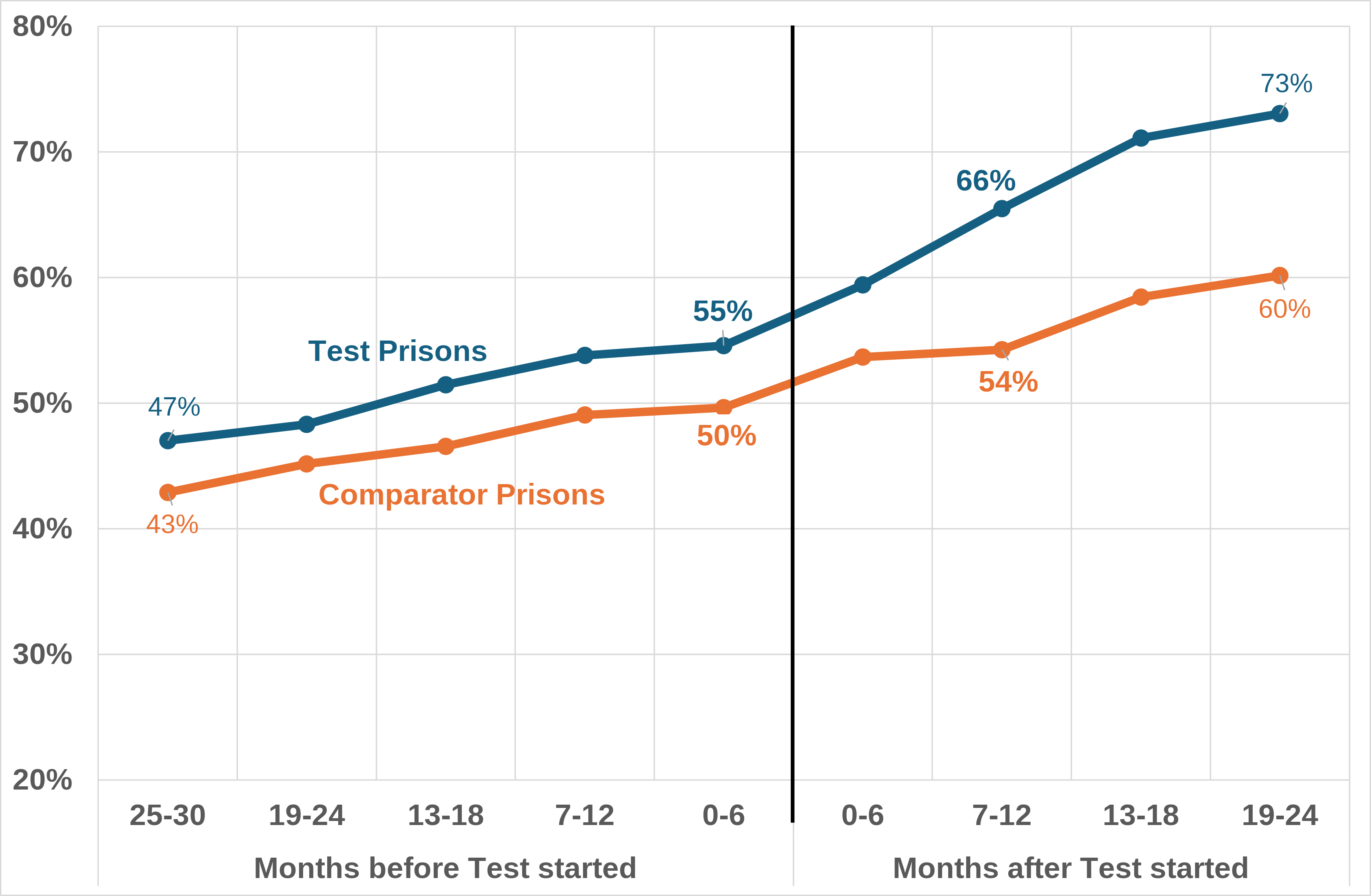
Prior to the test, there had been a gradual increase in UC claims made within 1 day for releases from both the test and comparator prisons.
During the test, the proportion of claims made within 1 day increased by 11.1 ppts in the test prisons compared with 4.7 ppts across the comparator prisons (+6.4 ppts)
This difference has been maintained in the months following the test.
Figure.2: The Test contributed to around a 10 percentage point (ppt) increase in advances approved within 1 day across the participating prisons
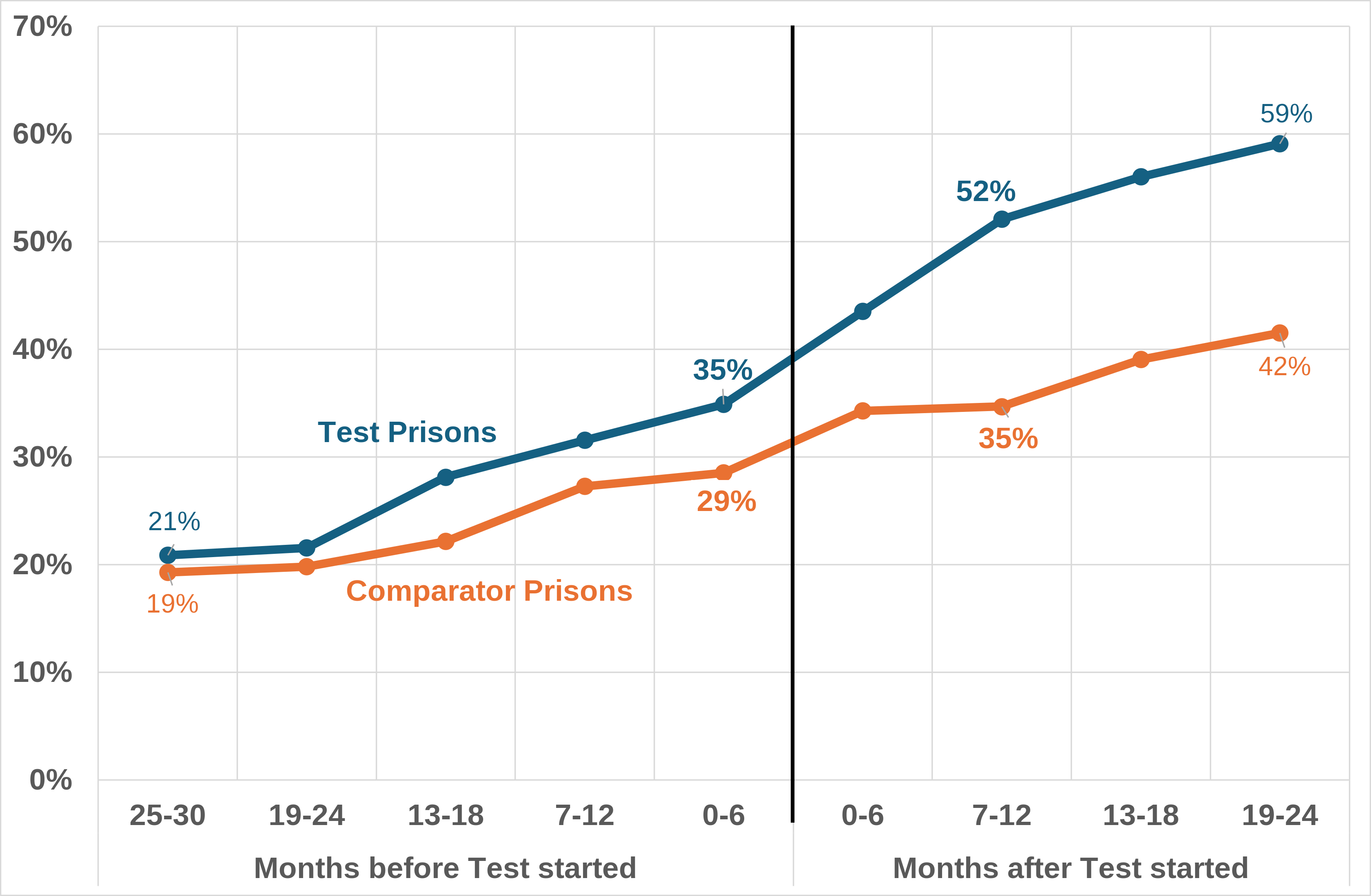
Prior to the test, the proportion of advances approved within 1 day were rising at a slightly faster rate in the test prisons.
During the test, the proportion of advances approved within 1 day increased by 17.2 ppts in the test prisons compared with 6.2 ppts across the comparator prisons (+11 ppts)
This difference has been maintained in the months following the test.
Measures aggregated across 14 Test prisons and their comparators
There was no evidence of a change in the proportion of prison leavers making a new claim for UC (~50%) but the average (mean) time taken to claim UC reduced by 0.8 days compared with a reduction of just 0.4 days across the comparator prisons.
| Measure | Test Prisons: Before | Test Prisons: After | Test Prisons: Change | Comparator Prisons: Change |
|---|---|---|---|---|
| Average (mean) time to claim UC | 4.0 days | 3.1 days | - 0.8 days | - 0.4 days |
| New claims for UC made within 3 days | 70% | 78% | + 7.6 | + 3.0 |
| New claims for UC made within 1 day | 55% | 66% | + 11.1 | + 4.7 |
| UC claimants receiving an advance | 93% | 95% | + 2.0 | + 1.4 |
| Mean time to approve advance | 6.4 days | 5.2 days | - 1.2 days | - 0.6 days |
| Advances approved within 3 days | 50% | 63% | + 13.3 | + 6.2 |
| Advances approved within 1 day | 35% | 52% | + 17.2 | + 6.2 |
Before = the 6 months prior to the start of the test period. After = the final 6 months of the test period.
Two prisons were excluded from this analysis: 1 had no comparable data prior to the test period, 1 had incomplete data for the final 6 months of the test.
Category B prisons recorded relatively low levels of participation but still achieved positive impacts on claim times
6 Category B prisons were included in the test. These prisons tend to house individuals entering and exiting custody from and to the local area.
The chart in the image below shows that there were positive impacts on claim times due to the test. On aggregate:
- Category B Test prisons achieved a 7 percentage point greater increase in claims made within 1 day compared with their Comparator prisons
The chart also shows that 5 out of the 6 prisons recorded relatively low levels of participation:
-
this is likely to be related to the high turnover in these prisons, limiting the amount of time prison work coaches had to engage with individuals prior to their release
-
analysis of the MoJ / DWP data showed that on average 77% of leavers from these prisons stayed in the release prison for less than 12 weeks. (Median across the 6 prisons; ranging from 65% to 87%)
-
the one site with high levels of participation has a dedicated departure lounge providing support to individuals on the day of their release. This contributed to high levels of prison leavers claiming UC within 1 day, even before the start of the test
Figure.3: Levels of participation in each of the Category B prisons and the proportion of new UC claims made within 1 day
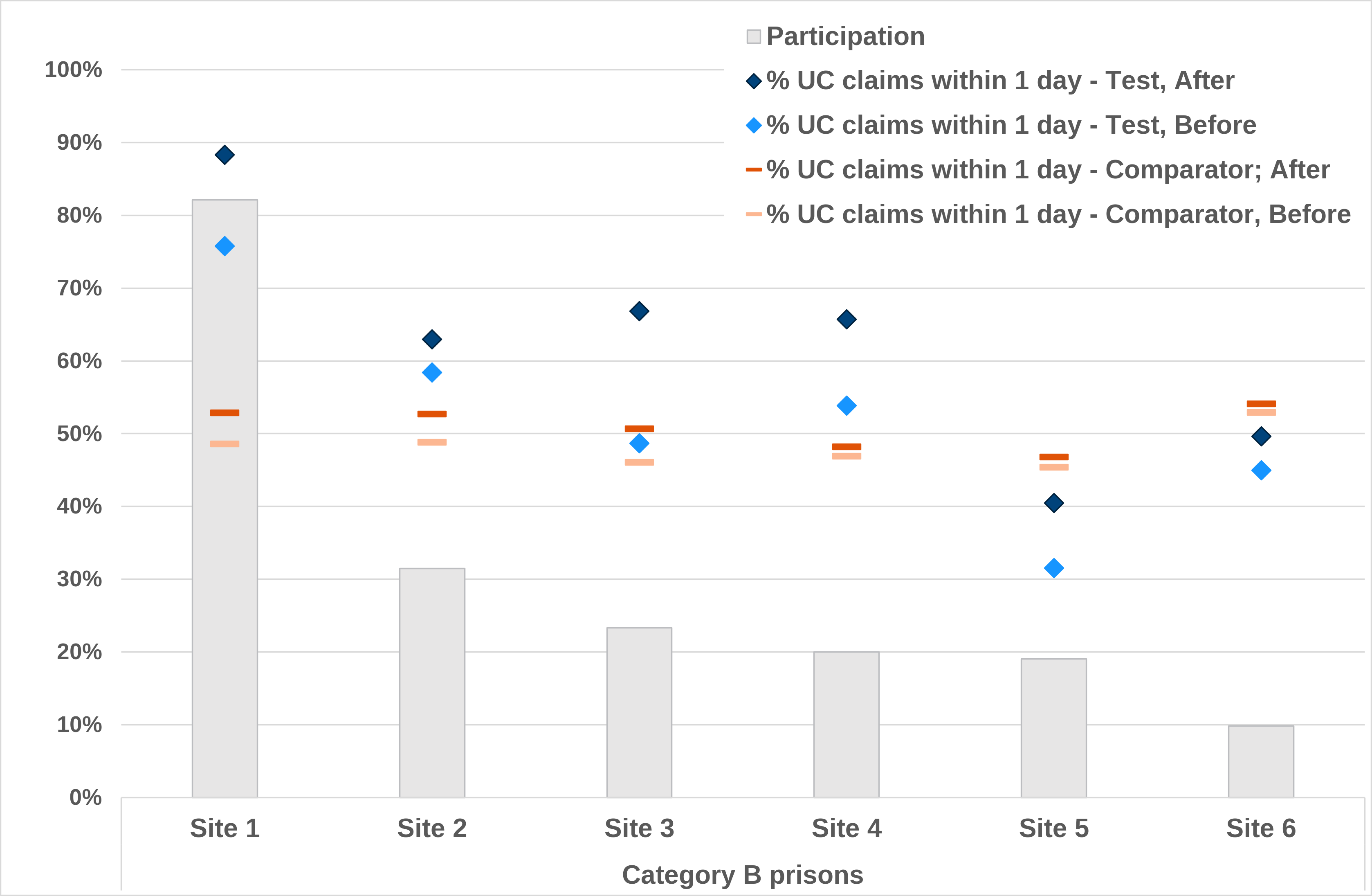
For each Category B prison, the chart shows:
participation rate (grey bars)
- median = 23%
Percentage of UC claims made within 1 day
-
site outcomes shown in chart
-
aggregate outcomes shown in table
| Before | After | |
|---|---|---|
| Test Prisons | 56% | 66% |
| Comparator Prisons | 48% | 51% |
Where the test was fully implemented, Category C prisons recorded high levels of participation and a positive impact on claim times
Five Category C prisons were included in the test. These prisons are training and resettlement prisons, providing prisoners opportunities to develop skills to find work and resettle into the community on release.
The chart in the image below shows that levels of participation varied but were typically higher than observed in Category B prisons, reflecting lower levels of turnover in these prisons:
-
sites 4 and 5 experienced more issues in establishing the test process and achieved lower levels of participation as a result
-
on average, 27% of leavers from these prisons were in the release prison for less than 12 weeks (Median across the 5 prisons; ranging from 5% to 29%)
The chart also shows that there were positive impacts on claim times due to the test:
-
Category C Test prisons achieved a 6 percentage point greater increase in claims made within 1 day compared with their Comparator prisons
-
this measure does not include Site 1, which achieved the highest levels of participation and proportion of new claims made within 1 day, but had no comparable data prior to the test
Figure.4: Levels of participation in each of the Category C prisons and the proportion of new UC claims made within 1 day
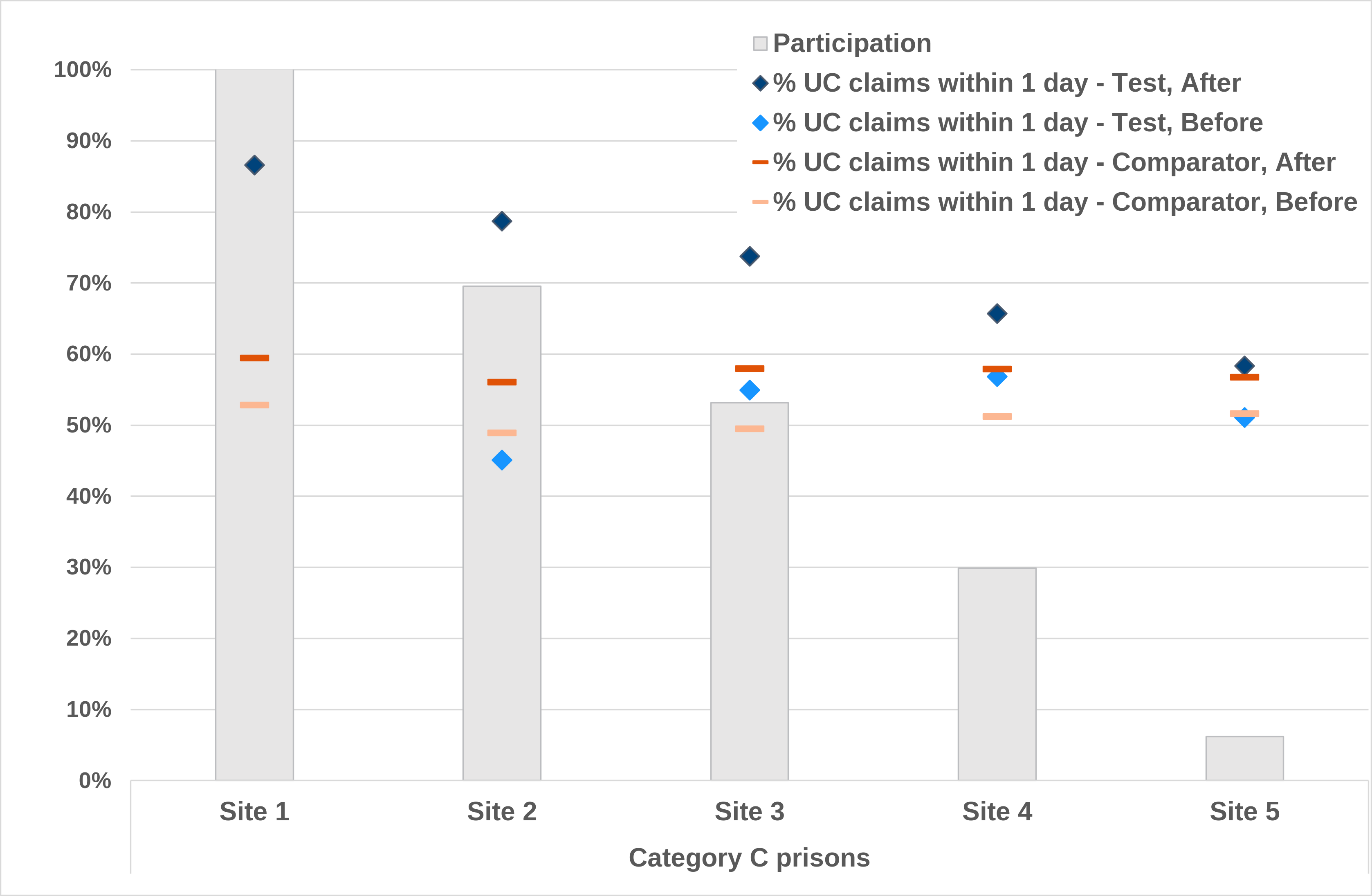
For each Category C prison, the chart shows:
Participation rate (grey bars)
- Median = 53%
Percentage of UC claims made within 1 day
-
site outcomes shown in chart
-
aggregate outcomes shown in table
| Before | After | |
|---|---|---|
| Test Prisons | 53% | 66% |
| Comparator Prisons | 51% | 57% |
Site 1 had no data on UC claims prior to the start of the test and has not been included in the aggregated results.
Category D prisons also tested the preparation of a digital claim, but experienced issues in establishing the process
Two Category D prisons participated in the test. These are designated as Open prisons, which means that eligible prisoners can spend some of the day away from the prison for work, education or resettlement purposes.
One encountered connectivity issues which, along with high volumes of prisoners transferring into the prison, prevented them from implementing the test process.
The second did implement the test but only 25% of prison leavers participated in the final 6 months:
-
the main reason for non-participation was reported to be a lack of confidence in digital skills
-
the open nature of the prison also means that many prisoners are entitled to Release on Temporary Licence (ROTL), giving them greater opportunities to find employment on release
-
the PWC’s role is focussed on supporting prisoners into employment and, even before the tests were introduced, they provided support for prison leavers to pre-populate and submit claims by phone
A relatively large increase in the proportion of UC claims made within 1 day from comparator prisons (from 55% to 66%), supports the impression that adoption of the test approach is not essential for improving UC access for leavers from Category D prisons.
Female prisons
Three Adult Female prisons participated in the test. These are all Closed prisons which house a mix of prisoners and combine the functions of local and resettlement prisons.
They achieved participation rates between 36 to 47% over the final 6 months of recorded activity.
This partly reflects the level of turnover within these prisons – on average, 70% of leavers from these prisons were in the release prison for less than 12 weeks (Median across the 3 prisons; ranging from 57% to 81%).
We have not formally measured the aggregated impact across these prisons:
-
one prison needed to make repairs to the departure lounge. The test started late and ran for less than 12 months, so this prison has been excluded from the overall results. Before the test, only 36% of claims were made within 1 day, but post-evaluation analysis shows that this had increased to 56% by the end of the test
-
the second already had a high proportion of claims made within 1 day before the test (70%). This increased by 6 ppts during the test – compared with a 2 ppt increase for comparator prisons
-
the third had a relatively low proportion of claims made within 1 day before the test (46%). This increased to 58% by the end of the test, bringing it into line with its comparator prisons
Engagement following release
There were some concerns raised about whether participants would continue to engage with JCP following release.
A few JCP staff noted that prison leavers involved in the tests had failed to attend their JCP appointments
I think the FTA rate will be huge as they’ve had an advance and discharge grant in their pocket.
We had three people who were booked in from England who were part of the test and they never turned up.
Staff also noted the potential barriers to attending the JCP for prisoners, including mental health issues.
I think there is probably quite a lot of them who are not going to their JCP appointment. I mean, we see a lot of mental and physical health issues among the men who leave here.
9 prisons tracked whether claimant commitment appointment meetings had been arranged and attended:
-
89% of those submitting a claim had a claimant commitment meeting arranged (1,723)
-
40% of these meetings were recorded as being attended
-
13% were rearranged
-
20% did not attend, with no evidence of the meeting being rescheduled
-
27% of outcomes were unknown
We have limited information from the MoJ / DWP data-share about claim journeys post-release:
- there was no evidence of any change in the time taken to accept the claimant commitment, or the time taken to receive the first full payment
There was no evidence of any reduction in the proportion of claims leading to a full payment.
6. Further considerations
Overview
The findings reported in the previous sections cover the main issues relating to the implementation of the test and the impact which it had. This section covers some additional factors to be considered when deciding if and how to extend the approach to more prisons.
We haven’t formally assessed the amount of resource required to carry out UC claim preparation, but PWCs have provided an indication of its impact on their wider work.
Our earlier analysis has focussed on individuals participating in the test, but we should also be conscious of those not participating and what support they require from PWCs.
A key factor affecting levels of participation in the test was the high levels of movement between prisons shortly before release, partly driven by the high level of the prisoner population at the time which meant:
-
an increase in transfers in / out for some prisons
-
End of Custody Supervised Licence (ECSL) was in operation in England and Wales between October 2023 and September 2024, which resulted in some release dates being changed at short notice
Both issues were reported by PWCs from some sites as having a direct impact on the test; either by limiting the number of prison leavers who could be supported, or in affecting the approach taken (for example, the suspension of the digital test in one prison).
Workloads
We haven’t formally assessed the amount of resource required to carry out UC claim preparation, but PWCs have provided an indication of its impact on their wider work.
Some of them have highlighted the length of time spent with prison leavers compared with ‘Business as Usual’. They have also raised concerns over the need to deprioritise other work and whether this affects the type of support they can provide.
We need to put 2 to 3 hours on hold to see one prisoner on DOR [Day of Release], could have seen 4 or 5 [if not in test].
There was not any guidance on how to deprioritise other work, [PWCs] had to decide to stop going to inductions and the employment hub – I think that decision should have been made for us.
If we’re bringing in 12-week group sessions and introductions as well, it’s going to be difficult. We’ve been so focused on the tests, that’s the only thing we’ve concentrated on.
Interaction with HMPPS staff
One issue raised at the start of the tests was uncertainty over the overlap between PWCs and the Prison Employment Leads (PELs) who work within HMPPS. While not completely resolved, it appears that in some prisons the tests have improved understanding of the PWC role and led to more effective working between PWCs and HMPPS staff.
The prison officers we work with understand the whole process, they understand the claim gather and ID.
[Prison Work Coach]
Prior to working with DWP, I didn’t have much knowledge of what they did which has been a learning curve, but I now have a good understanding of what the pilot is about.
[Prison Employment Lead]
Prison leavers ineligible for the test
A consequence of PWCs having to deprioritise other work in favour of UC claim preparation is that some other prison leavers may receive less support as a result. We cannot formally assess this but do have some information about the groups who are likely to be affected, including those ineligible for the test, non-participants, individuals flagged as having a record of unacceptable behaviour and vulnerable prisoners.
Individuals not eligible for the test
These are:
-
prison leavers on remand were not eligible for the test - this was estimated to be over 25% of releases from Category B and female prisons
-
prison leavers with an existing UC claim and did not require this type of support; 17% of males and 26% of females released from a custodial sentence. (There are also prison leavers who have a UC claim on admission to prison which is in the process of being close)
-
a small number of prison leavers over state pension age, those who require an appointee or are subject to immigration rules
Non-participants
4,627 individuals were recorded on the tracker as being eligible but unable or unwilling to participate in the test.
2,113 (52%) were deemed unsuitable by the PWC, of which:
-
36% of these had an Unacceptable Customer Behaviour (UCB) marker on their record
-
31% of these were lacking ID, banking details and / or an address, which prevented them from starting a claim
-
14% were not in the prison for long enough or were released early
1,602 non-participants declined help; whether because they did not intend to claim UC (28%), or because they did not want to follow the test process (43%).
We estimate that a further 6,000 prison leavers were not included on the tracker, of which around 5,000 may have been eligible for the test. Non-inclusion is likely to be for one of these reasons:
-
a pause in the delivery of the test
-
prison leaver was assessed as ineligible and not tracked
-
prison leaver was not in the release prison for long enough to be considered for the test
Unacceptable Customer Behaviour markers
762 prison leavers were deemed unsuitable for the test because they had a marker on their record for past unacceptable customer behaviour. While not a reason to exclude them from the tests, some PWCs reported that there was insufficient resources within the prison for them to safely engage with these prisoners.
This was a concern in some prisons more than others – within 3 Category B prisons, at least 40% of non-participants were reported to have a UCB marker.
In one prison, staff told us they were happy to see prisoners with a UCB marker “on the wings”, but not in the departure lounge, where there is no security presence.
Most PWCs, however, did include those with a UCB marker in the tests, often checking any relevant notes (for example, NOMIS) before deciding the most appropriate approach. Prisoner engagement was generally reported to be positive – with the voluntary nature of the support likely to be a factor. It was also pointed out that UCB markers can be out of date.
I think the whole UCB thing … people can sometimes get them for something they said which I wouldn’t be offended by. I’ll assess it from NOMIS, they might just have had a bad day.
Vulnerable prisoners
Prisoners within Vulnerable Prisoner Units
These are prisoners believed to be at risk from others, which may include sex offenders, LGBTQ+ prisoners, informants and collaborators.
PWCs in some sites did not include vulnerable prisoners in the tests. These PWCs also spoke about issues of under-resourcing, suggesting they were already offering support through the tests to as many individuals as possible.
In several sites, PWCs were offering the tests to vulnerable prisoners. PWCs typically had to visit vulnerable prisoners “on the wings” due to the restricted movement of these individuals.
If they are on the vulnerable prisoner wing, we don’t even put them on.
Normally we will go and see [vulnerable prisoners] on the wing. They are more likely to have an appointee, have a mental health condition or if they don’t need an appointee, then often we need to explain things in depth.
Prison leavers spending limited time in the release prison
The MoJ / DWP data-share has been analysed to look at the length of time spent in custody prior to release for prisoners in England and Wales.
This showed:
-
on average (median), 77% of prison leavers from Category B prisons spent less than 12 weeks in the test prison before release
-
PWCs did try and engage with these prisoners but the high level of churn experienced clearly affected their ability to support everyone
-
we estimate that around 33% of eligible releases from Category B prisons were not recorded on the tracker as a result
They come in from everywhere for a couple of weeks, they might even come just for a court appearance. We can’t do it at that pace.
[Prison Work Coach]
It’s challenging in a remand prison. I know that [PWC] does everything [they] can. [PWC] might have lined up prisoners who are eligible and then their circumstances change which rules them out.
[PWC Team Leader]
7. Conclusions
Summary of evidence
The approach was viewed positively by PWCs and prison staff, who perceived that prison leavers benefitted from being able to submit their UC claim on release and focus on other matters such as housing and probation. They felt that it helped to ensure a successful transition following release.
Over 4,000 prison leavers participated in the test, with 71% submitting their claim on release.
There was evidence of improvements in the speed at which prison leavers claimed UC, with pre-test and non-test prison comparisons suggesting the test contributed:
-
around a 6 ppt increase in the proportion of UC claims made within 1 day (66% of claims)
-
around a 10 ppt increase in the proportion of UC advances approved within 1 day (52% of claims)
Outcomes varied across the prisons involved in the test:
-
participation was relatively low in Category B prisons, reflecting a high turnover of prisoners
-
Category C prisons generally achieved higher levels of participation but a couple of these were unable to fully establish the test process
-
there was no evidence of an impact in the Category D prisons, who struggled to implement a digital element of process
Conclusions
Quantitative evidence indicates that the test has improved timeliness of access to UC, while staff involved in the test were supportive of extending the approach more widely.
To achieve successful adoption of the approach, the research has identified the following considerations:
-
it can take time for the approach to ‘bed in’. Factors affecting pre-release and day of release activity are likely to be unique to each prison and preparation was needed to ensure that there was appropriate space, security and IT access available to PWCs
-
there should be flexibility over the timing of pre-release support as PWCs reported that it wasn’t always possible or necessary to carry this out at a consistent time before release
-
some types of prison are likely to benefit more from the approach than others, with Category C (resettlement) prisons better suited to achieving the highest levels of participation
There was limited evidence of the benefits of a warm handover to JCP. Further work would be required to establish how and when PWCs should facilitate this.
There were significant issues in implementing a digital element of the test and where this was tested PWCs reported a lack of confidence in digital skills among prison leavers.