DCMS sectors soft power evidence review and theory of change
Updated 3 November 2026

© Crown copyright 2026
This publication is licensed under the terms of the Open Government Licence v3.0 except where otherwise stated. To view this licence, visit nationalarchives.gov.uk/doc/open-government-licence/version/3 or write to the Information Policy Team, The National Archives, Kew, London TW9 4DU, or email: psi@nationalarchives.gov.uk.
Where we have identified any third party copyright information you will need to obtain permission from the copyright holders concerned.
This publication is available at https://www.gov.uk/government/publications/dcms-sectors-soft-power-evidence-review-and-theory-of-change/dcms-sectors-soft-power-evidence-review-and-theory-of-change
1. Executive summary
1.1 The concept of soft power
Coined by Joseph Nye in 1990, soft power is broadly defined as the ability to secure preferred outcomes through attraction rather than coercion. Today, the UK’s cultural, sporting, and media footprint has a significant international reach. To understand this footprint, the Department for Culture, Media and Sport (DCMS) commissioned Ipsos to explore how its priority sectors contribute to the UK’s soft power, economic growth, and national security.
Soft power is an ambiguous concept, and it depends on audience responses - the same UK asset or message that attracts one audience may repel another. What generates admiration in Western democracies might be viewed with suspicion in other contexts, and cultural products filtered through different geopolitical lenses produce different meanings.
While soft power is frequently used in policy, it is very difficult to measure because it operates through subjective, intangible social and psychological processes, such as building trust, credibility, and affinity, rather than through direct, observable behaviours. Existing metrics often fall short by simply counting visible outputs (such as the number of museum visitors) rather than measuring actual influence or understanding how different audiences interpret and respond to UK sectors. Therefore, this work seeks to understand the causal, relational impact on the audience: the ability of an asset, sector, or state to elicit a response from an audience that leads to a beneficial outcome, specifically, advancing core national objectives such as economic growth and national security.
1.2 A framework to understand soft power
This research develops a framework that breaks soft power into a two-stage process. First, sector activities generate subjective psychological responses in international audiences. While the literature describes these in various ways - attraction, credibility, shared identity, trust - we have grouped these into three categories: Affinity (emotional connections), Legitimacy (recognition of competence and authority), and Moral Trust (belief in integrity and values).
These psychological shifts then lead to tangible behavioural choices. Based on the evidence, we identified four main behaviours: choosing to Consume (purchasing products or visiting), to Trade/Invest (committing capital), to Align/Partner (adopting frameworks or diplomatic cooperation), and to Study (pursuing UK education). This two-stage model helps explain how intangible influence might translate into measurable impacts.
1.3 Three pathways for influence
The research identifies three dominant pathways through which DCMS sectors generate soft power:
Pathway 1 - Cultural Reach: this works by projecting cultural narratives through mass-market visibility and interpersonal experiences. Global broadcasts of Premier League football or touring exhibitions from the Tate create familiarity, reducing psychological distance. This emotional connection primarily drives consumption choices - international audiences purchase broadcast rights, visit heritage sites, or engage with British cultural products. The evidence suggests this pathway generates significant economic value, with heritage tourism alone contributing £12.5 billion in 2023.
Pathway 2 - Utility: this operates through functional mechanisms. UK sectors are integrated into global value chains through technical competence: major studios book UK facilities for their infrastructure, foreign institutions adopt British regulatory frameworks such as the BFI Diversity Standards, and international students choose UK institutions for specialist training. This pathway drives choices to trade, invest, and form partnerships based on the UK’s operational capabilities rather than cultural appeal. The film and television sector’s £4.8 billion in inward investment are examples.
Pathway 3 - Values: this functions through the perceived independence and integrity of UK institutions. Audiences trust the BBC World Service or UK museums because they operate at arm’s length from the government, allowing them to engage credibly where state actors cannot. This pathway primarily drives alignment and partnership choices, with foreign actors adopting UK approaches or maintaining cooperation even during diplomatic strain. However, the evidence indicates this trust is fragile and easily undermined by attempts at state instrumentalisation.
1.4 Main insights from stakeholder engagement
Our research with forty sector stakeholders highlighted that soft power influence is predominantly built through long-term relationship-building and trust, rather than short-term state promotion. International audiences engage with UK sectors on an ‘institution-first’ basis - choosing specific world-leading entities like the BBC, Premier League, or major museums for their individual prestige rather than as representatives of a UK brand. This organic, relationship-driven approach generates authentic trust that facilitates subsequent diplomatic dialogue and economic choices.
1.5 Three major challenges for policymakers:
First, soft power depends on consistency between domestic reality and international projection. Restrictive visa policies, post-Brexit complexities, and political rhetoric about immigration directly contradicts narratives of openness. Multiple interviewees cited these contradictions as actively undermining their international work.
Second, the state’s role must be calibrated by pathway. For values-based influence, government attempts at direct messaging can destroy institutional credibility. The evidence suggests these sectors need funding and facilitation rather than strategic direction. For utility-based pathways, there appears to be more scope for active state involvement through major events and commercial platforms.
Third, the evidence base remains limited. Most available data captures outputs rather than behavioural change. Without longitudinal studies tracking how exposure translates into influence over time, or systematic comparison with international competitors, claims about impact remain largely theoretical.
To move beyond generic claims, DCMS assets should be evaluated through three lenses:
-
The experience and UK conduct: soft power emerges from actual conduct (the BBC’s impartiality, museums’ quiet diplomacy) rather than crafted messages, requiring assessment of genuine comparative strengths against international alternatives.
-
The audience and geopolitical lens: audiences filter experiences through their own contexts, requiring distinction between engaging mass consumers versus targeting foreign elites and decision-makers in a multipolar world.
-
Potential Scale of Impact: scale operates differently across pathways, with sport achieving volume through billions of viewers generating affinity, while heritage and media achieve deep structural impact when foreign governments adopt UK frameworks, creating legitimacy and alignment.
This research provides DCMS with initial frameworks for understanding potential soft power mechanisms while acknowledging substantial evidence gaps. The three pathways offer different routes to influence, but their effectiveness depends on sector strengths, audience receptivity, and policy coherence. Future research should focus on developing robust measurement systems that track actual behavioural change, understanding competitive positioning, and identifying where UK sectors hold a genuine advantage versus historical reputation.
2. Introduction
In January 2025, the UK government set up a Soft Power Council, an advisory board bringing together cultural and foreign policy experts to champion a new approach to soft power. The Council, co-chaired by the Foreign Secretary and DCMS Secretary of State, was the impetus for this work. A better understanding of how DCMS sectors to provide evidence to support the Council to set direction for their policies.
The Department for Culture, Media and Sport (DCMS) commissioned Ipsos to explore how its priority sectors contribute to the UK’s soft power, and how that contribution could lead to economic growth and national security. This research focuses on the following core objectives:
-
To develop a Theory of Change (ToC) demonstrating the pathways from DCMS sector assets and interventions to soft power, and subsequently to economic growth and national security.
-
To establish a detailed evidence base that informs and validates the Theory of Change.
-
To identify gaps within the existing evidence base related to the Theory of Change.
-
To identify specific levers and interventions that DCMS can employ to enhance soft power across its sectors, linked to the Theory of Change.
While frequently used in policy, soft power has always been a broad and ambiguous concept which is difficult to conceptualise and measure. This is because messages and experiences have ‘soft power’ only if they prompt a response from an audience. Therefore, we need to understand how a cultural asset creates a response. How an individual or group interprets and creates meaning is an intangible social and psychological process that involves, for example, building trust, credibility, or emotional connections. The effects are highly subjective, depend on the culture of the audience, and often unfold over long time horizons. Existing measurement approaches frequently fall short, relying on indices that count visible outputs (such as the number of diplomatic missions or museum visitors) rather than understanding international influence or behaviour.
This research, therefore, explores evidence on how activities generate intangible psychological responses (e.g. an emotional connection) in an audience and how those subjective shifts subsequently drive tangible behavioural choices. By linking these two stages - the psychological mechanism and the behavioural action - this work seeks to provide a starting point to conceptualise the mechanisms (how soft power works) that might lead to high-level policy outcomes , in this case, to impacts related to economic growth and national security.
Chapters 2 and 3 critically examine the evolving concept of soft power and set out the overarching Theory of Change framework, detailing three broad pathways for how we think soft power works. Chapters 4 to 10 apply this structured model to the seven DCMS priority sectors - Culture, Creative Industries, Heritage, Sport, Civil Society, Visitor Economy, and Media - mapping how their specific assets generate strategic outcomes. Finally, Chapter 11 sets out the policy implications and areas for future research.
3. Methodology
3.1 Scope
The review examined evidence across DCMS’s seven priority sectors:
-
Creative industries: advertising and marketing; architecture; crafts; design and fashion; film, TV, radio and photography; museums, galleries and libraries; music, performing and visual arts; publishing; IT, software, and computer services (including video games).[footnote 1]
-
Culture: industries with a cultural object at the centre of the industry, e.g. art galleries, educational institutions that offer courses focused on culture, and cultural showcases.[footnote 2]
-
Heritage: organisations/partnerships and assets focused on preserving, managing and interpreting historical, cultural, and natural resources, e.g. museums, archives, listed buildings, and landscapes.
-
Sport: organisations involved in sport activities, the operation of sports facilities and renting of sport goods.
-
Civil society: any individual or organisation that works to create social value, independent of government. This definition is intentionally broad and flexible, capturing traditional charities, social enterprises (the social sector), active individuals, community groups, social investors and private businesses.[footnote 3]
-
Visitor economy: organisations where the focus lies on the consumer (tourist, resident, student) rather than just the goods and services produced.
-
Media: organisations focused on broadcasting, publishing, film, and digital content.
3.2 Literature review
A literature review sought to identify how DCMS sector assets contribute to UK soft power, economic growth, and national security. Its three main aims were to:
-
Map the concepts: explore how soft power is currently understood and debated in international scholarship and commentary.
-
Identify sector mechanisms: find specific evidence showing how the assets in the seven sectors might create soft power.
-
Examine measurement limits: critique existing soft power indices and evaluations to understand why current measurement approaches often fail to capture true influence.
The material was sourced from academic databases such as Web of Science, JSTOR, and Scopus, as well as from grey literature, including UK government publications and think-tank reports. The search strategies combined core concepts, such as ‘soft power’ and ‘cultural diplomacy’, with specified terms to identify mechanisms (how influence is built) and outcomes (resulting impacts). For example, mechanism-focused searches included terms like ‘cultural affinity’ and ‘people-to-people connections’, which were paired with tangible sector-related outcome terms ranging from ‘foreign direct investment’ and ‘creative exports’ to ‘democratic resilience’ (see ANNEX A). Priority was given to empirical studies in English published from 2010 onwards, strictly excluding opinion pieces and studies that examine only outputs without measuring actual impact.
For context, and to help with the exploration of the model, the review included international case studies (see chapter 4). Each case study examines institutional arrangements, investment levels, measurement approaches, sectoral focus, and demonstrable outcomes.
This literature review was delivered by a team of academics:
-
Dr Melissa Nisbett – King’s College London (Academic Lead)
-
Dr J. Simon Rofe – University of Leeds
-
Helen Ramscar – Royal United Services Institute
3.3 Qualitative research
To ground the theoretical frameworks in real-world practice, Ipsos conducted interviews with forty senior stakeholders spanning the seven departmental sectors. The sample focused on individuals who directly manage global outreach, including Heads of International Strategy, Commercial Partnership Directors, and government officials from bodies such as the Foreign Commonwealth and Development Office (FCDO) and the Department for Business and Trade (DBT). These one-to-one, semi-structured conversations were designed to test understanding of the soft power concept and its potential applications, and to capture concrete examples.
3.4 Theory of Change
A Theory of Change is a logical, evidence-based model that explains how a policy or intervention leads to desired outcomes and contributes to social or economic change. It achieves this by identifying and defining the relationships between inputs, activities, outputs, outcomes, and impacts. By exploring the relationships between an organisations planned activities and its end goals, a Theory of Change explains how (often referred to as the mechanisms) a strategy, programme or policy leads to outcomes.
Theories of Change are most often used to underpin monitoring and evaluation frameworks that assess an intervention’s effectiveness but can also be very effective for developing and improving policies from the start. They can help policymakers define the policy problem, identify and explain their intervention logic, understand their assumptions, communicate the vision, and secure buy-in from principal stakeholders.
This review developed three overarching Theory of Change pathways that articulate how DCMS sectors support the UK’s soft power, each underpinned by a separate Theory of Change (see Chapter 4).
3.5 Workshops
A workshop was organised in December 2025, with Ipsos and academic experts presenting the findings of the literature review and providing an academic context. Following the qualitative research, three workshops were organised in March 2026 with the DCMS sector teams to present the emerging findings and test their implications. A workshop with senior leadership followed this to discuss the overarching model and next steps for this research.
4. The concept of soft power
4.1 The origin of the concept of soft power and its current salience
The concept of ‘soft power’ was developed by the political scientist and government advisor Joseph Nye in 1990 to describe ‘the ability to get what you want through attraction rather than coercion’. His central thesis was that culture played a crucial role in how countries were viewed in the world; culture could be used to influence and shape other countries’ perceptions and preferences in line with national interests. Culture should be viewed alongside ‘political values’ and ‘foreign policy’ as the ‘three pillars’ of soft power.[footnote 4] Nye considered that soft power works in relation to ‘hard power’ and not as a substitute to or alternative for it. The concept was originally conceived with liberal-democratic states in mind. However, the concept is now widely used, including by authoritarian states.
Soft power builds on historical relationships or helps develop new ones between elites (e.g. between governments) and the general population and enables states to shape rules (e.g. in multilateral fora) to advance their interests, generating trust and partnerships that can support wider economic or foreign policy aims. Therefore, soft power describes how a country’s assets can influence others.
Academics have criticised the concept for its lack of detail, criticality, rigour, and theorisation.[footnote 5] However, they acknowledge that part of the concept’s value lies in its flexibility. And, more importantly, it is now a concept used globally by politicians and policymakers. In response, the private sector has created international rankings to measure countries’ soft power. Examples include the Portland Soft Power 30, the Monocle Soft Power Rankings, Ernst and Young’s Rapid Growth Markets Soft Power Index, the IMF’s Global Soft Power Index, the Brand Finance Global Soft Power Index, as well as the ISSF World Soft Power Index and the HEPI/Kaplan Soft Power Index. These rankings both illustrate the concept and generate interest in it, and the term is now used more widely in the population.
4.2 How soft power works
Soft power is relational. The concept relies on attracting an audience. So, the extent to which any country, sector, or asset can be said to have soft power depends on how an audience perceives and responds to, for example, its cultural appeal and credibility.
Audiences filter information and cultural products to identify narratives that validate their own identities and values. Therefore, a positive response is often driven by shared identity - norms, heritage, or common challenges.[footnote 6] What is attractive to one audience may repel another. Soft power operates differently depending on the types of audience. For mass consumer audiences, influence is typically generated through broad visibility and cultural reach, such as the global broadcasting of major sporting spectacles. Engagement with elite audiences such as foreign diplomats, regulators, and business leaders is often based on institutional credibility and professional networks.
Soft power also functions by changing the context through the shaping of global rules and norms. A state can shape international rules through technical competence, by exporting indispensable professional expertise and regulatory frameworks that partners voluntarily adopt. Economic power also enables states to shape the rules by leveraging deep capital to become a crucial part of global supply chains (e.g. for AI).
The soft power impact of an asset is also long-term and diffuse. For example, educational exchanges, cultural relations, international broadcasting and people-to-people contact may exert influence decades later.[footnote 7]
4.3 The current geopolitical context and summary case studies
The geopolitical landscape has changed considerably since the concept was introduced. The world is now multipolar and highly competitive. Countries collaborate on an issue-by-issue basis. Democratic states, such as the UK, maintain strong relationships with countries with very different values, such as the Gulf States. The literature describes this as an ‘à la carte’ approach to international relations, in which states cooperate selectively across various domains without sharing a common ideological alignment.[footnote 8]
There are a number of economically successful autocracies. In 1990, it was assumed that growth was contingent, or at least likely to be linked to, countries becoming liberal democracies. China is the most obvious example of ‘decoupling’ democracy and growth. This means that many autocracies have significant cultural and economic channels to exert influence.
For this work, we developed case studies, summarised below:
France
France is a democratic power whose approach aligns closely with Nye’s original concept. Soft power is explicitly tied to normative leadership; France positions itself as a defender of multilateralism, climate governance, and cultural diversity.
France exerts influence through intellectual leadership, cultural pedigree, and institutions embedded worldwide. It relies on a heavily integrated and well-funded state infrastructure to project its language and culture globally. For example, the Institut Français acts as the operational arm of cultural diplomacy, while the Alliance Française operates over 800 centres globally to promote the French language.
These institutions aim to build educational dependency and professional bilingualism that sustain long-term structural influence in diplomacy and law. France leverages its own historic brands, such as the Louvre, the Cannes Film Festival, and Paris Fashion Week to project cultural authority. This authority is protected domestically by policies of ‘French exceptionalism’, a longstanding doctrine arguing that culture is a public good requiring state protection from market forces, such as heavy public subsidies for the arts and film quotas.
While this infrastructure provides stability, depth, and global reach, it is less agile than the rapid, capital-intensive models emerging elsewhere. This type of model is harder to scale quickly and struggles to adapt dynamically to a noisy, competitive, and increasingly digitised multipolar order.
China
China is an authoritarian state that embeds soft power within a long-term strategic vision to secure dominance in its immediate region and expand its strategic influence across the Global South. Soft power is not viewed as a standalone cultural tool, but as deeply integrated with economic development, regime stability, and global security objectives.
China’s model combines cultural promotion with structural economic power. A core pillar is its international media strategy, heavily funded by the state, which aims to secure ‘discourse power’ and offer an alternative to Western media hegemony.[footnote 9] State-controlled outlets like China Global Television Network and Xinhua have rapidly expanded their overseas bureaus, while Chinese firms invest heavily in telecommunications infrastructure in the Global South to get their message across.
Alongside this, the Belt and Road Initiative (BRI) generates goodwill and political alignment via infrastructure finance and development partnerships.
China’s model illustrates how audiences filter information to identify narratives that validate their own identities and values.[footnote 10] China faces credibility challenges in Western democracies, where concerns over human rights and state propaganda have led to, for example, the closure of Confucius Institutes. However, in the Global South, China’s scale of infrastructure delivery and its narratives of non-interference resonate powerfully with countries seeking rapid economic growth without Western political conditionality.
Russia
Russia is an authoritarian state that diverges from Nye’s original assumption that soft power relies on positive attraction. It pursues influence not by generating admiration, but through disruption, manipulation, and delegitimising opponents.
Russia operates a model of ‘dark power’.[footnote 11] It utilises typical soft-power channels, such as international media (Russia Today, Sputnik), digital platforms, and proxy institutions, to exploit domestic polarisation and weaken trust in liberal-democratic institutions.[footnote 12] State-funded media does not aim to persuade audiences that Russia is good, but rather to amplify hypocrisy and elite failure in the West, mixing facts with speculation to create plausible deniability.
Russia uses proxy institutions and the Russian Orthodox Church to mimic authentic civil society, projecting itself as a defender of traditional, conservative values. This identity-based alignment is a clear example of tailoring soft power to specific audiences; it resonates strongly with anti-establishment groups globally and post-colonial contexts resentful of Western intervention.
Russia aims to make the international environment less governable, rather than more cooperative. By actively degrading shared reality and exhausting democratic deliberation, Russia creates confusion and discord, acting as a highly effective mechanism for destabilising competing systems.
The United Arab Emirates (UAE)
The UAE is a non-democratic, wealthy Gulf state with a strategically sophisticated, state-managed approach to soft power to position the country as a neutral, competent, and indispensable node in global systems.
The UAE’s model reflects the contemporary ‘à la carte’ approach to international relations, where states selectively cooperate across domains without ideological alignment.
Through state sovereign wealth funds, the UAE embeds itself in critical global sectors: AI infrastructure, green energy, and logistics. It also aggressively purchases ‘imported prestige’ by hosting global mega-events (e.g. COP28) and establishing Partnerships with globally recognised, trusted Western brands (e.g. Louvre Abu Dhabi, NYU).
The UAE wields influence by providing unmatched utility, access, and reliability to international elites and multinational corporations, demonstrating that soft power can be engineered effectively without liberal-democratic foundations.[footnote 13] By controlling critical digital and financial infrastructure, the UAE wields ‘platform power’ that creates structural leverage and dependencies, making the state geopolitically influential.
Australia
Australia is a democratic middle power that explicitly integrates soft power into its statecraft, treating it as a tool to ensure stability and influence in its immediate Indo-Pacific region.
Its strategy relies on creating repeatable pipelines of people-to-people contact. Programmes like the Australia Awards provide scholarships for emerging global leaders in developing nations to undertake study and professional development in Australia, while the New Colombo Plan supports Australian undergraduates to study and intern across the Indo-Pacific to build regional familiarity.[footnote 14] The Pacific Australia Labour Mobility (PALM) scheme integrates temporary labour migration with economic interdependence, allowing workers from Pacific Island countries to fill workforce shortages in Australia while generating earnings and community linkages.[footnote 15] Its formalised Sports Diplomacy strategies use sporting links to deepen regional cooperation and project a modern Australian identity.[footnote 16]
These programmes are designed to build durable networks of alumni and professional connections that compound over decades. Because Australia’s influence depends heavily on being perceived as a respectful and reliable regional partner, its success relies on policy performance and institutional credibility. If lived experiences contradict the diplomatic narrative, such as instances of worker exploitation or visa friction, it could erode trust and undermine the geopolitical goodwill these relational pipelines were designed to build.
Australia demonstrates the core principle that soft power impacts are often long-term and diffuse. It focuses tightly on the audience, building soft power through relationships and experience rather than broad cultural projection.
South Korea
South Korea is a democratic state that explicitly recognises culture and the creative industries as strategic assets for national competitiveness, economic growth, and diplomatic visibility.
South Korea generates influence through the global spread of Hallyu (the Korean Wave), capitalising on the ways audiences worldwide filter and engage with compelling narratives and aesthetics.[footnote 17] This is driven by a highly integrated ecosystem connecting state policy, private entertainment conglomerates, digital platforms, and active fan networks.
Rather than producing content directly, the state creates the enabling conditions via financial incentives, IP protection, and export support.[footnote 18] Private conglomerates utilise vertically integrated ‘idol training systems’ to produce highly polished global entertainment (in K-pop, film, gaming, television).[footnote 19]
This cultural visibility serves as a gateway, driving direct economic benefits in tourism and consumer goods and elevating the state’s diplomatic profile among global youth audiences. However, this model also exposes significant structural vulnerabilities. The global reach of its cultural assets relies heavily on foreign-owned digital distribution platforms (such as YouTube and Netflix), thereby limiting the state’s ultimate control over its exports.[footnote 20] Additionally, the model is increasingly challenged by scrutiny of exploitative labour practices within the entertainment industry and by geopolitical tensions.
4.4 Our understanding of soft power in today’s world
The case studies illustrate that soft power is used to understand the strategic approaches of democratic and non-democratic states. As the case studies show, authoritarian and hybrid regimes successfully generate influence without relying on democratic norms. China achieves political alignment through infrastructure and development finance, the UAE engineers influence through capital and indispensability, and Russia actively uses information to disrupt and degrade competing systems. These examples prove that soft power does not require shared values; it can be built on utility, dependency, or even strategic disorientation.
The case studies also highlight varying models for managing soft power:
-
State-led models: France relies on a highly integrated, government-funded infrastructure (such as the Institut Français) to directly project its cultural and intellectual authority. The UAE’s strategy is tightly centrally managed, deploying sovereign wealth funds to purchase strategic cultural and technological assets. Similarly, soft power is integrated into China’s state-led geopolitical and economic strategy. And, in Russia, the state controls (e.g. media) or has significant influence over soft power assets.
-
Hybrid models: South Korea exemplifies a highly coordinated hybrid approach. The state does not produce content directly but rather creates the enabling policy conditions and financial incentives for private entertainment conglomerates to achieve global reach.
-
Networked models: Australia integrates soft power into its statecraft, such as being the first nation to formalise a Sports Diplomacy strategy however relies on a distributed network of non-state actors, such as universities and sports bodies. Because the actual delivery sits largely outside direct government control, the model benefits from greater authenticity and credibility while still advancing state strategic goals.
The case studies also highlight common challenges:
Regardless of the delivery model, audiences filter information through their own values and identities; what is attractive to one audience may repel another. For example, China’s model generates significant goodwill in the Global South through infrastructure and narratives of non-interference, but it faces severe credibility challenges with Western audiences who hold different values regarding human rights and state control.
When domestic behaviour or lived experience contradicts the values a state is trying to project, this creates a risk of perceived hypocrisy. For example, Australia’s networked model relies heavily on mobility programmes, like the Pacific Australia Labour Mobility (PALM) scheme, to build deep relational ties and position the country as a respectful development partner. However, when the lived experience of these international workers involves exploitation, visa rigidity, or administrative strain, it can fundamentally contradict this diplomatic narrative.
5. ‘Theory of change’ for soft power
5.1 The UK’s model
The UK is attractive because of its flourishing creative industries, world-class science and technology, global health expertise, and the highest quality education and research opportunities. The UK’s sectors are supported, but not controlled, by the UK government; and it is this independence and ‘arms-length’ principle that makes soft power assets like the BBC World Service, British Council and its National Museums so powerful and authentic.
All over the world, the UK also holds influence through global partnerships. These include formal alliances, such as NATO; membership of intergovernmental bodies including the G7, G20, and the Commonwealth; the UK playing an active role in major multilateral institutions including the United Nations and the World Trade Organisation; and its strong ties worldwide, including the Commonwealth and recent reset partnership with the EU. The four nations of the UK – England, Scotland, Wales, and Northern Ireland – also promote their own identities internationally, their diversity an asset to the Union as a whole.
5.2 Alternative
The UK’s model is largely based on supporting sectors to generate influence independently. Many of the sectors discussed in this report - such as the media, creative industries, and sport - operate independently of government. Others, particularly within culture and heritage, are linked to the state, such as the Natural History Museum (an arms-length body) and the British Council (a UK charity with a Royal Charter), or the BBC World Service (within the BBC under their Royal Charter), but they operate at arm’s length.
Regardless of their governance structures, our interviews indicate that while these institutions guard their independence, they project a set of values common to the UK. Independent media outlets, for instance, emphasised that while they are not mouthpieces for the government, they do not start from a completely different set of values; their journalism naturally reflects a shared foundation, such as an outward-looking democratic tradition and the rule of law. Similarly, the civil society sector functions as a proxy for democratic values. By operating independently to hold power to account, defend human rights, and convene open policy dialogues, UK think tanks and advocacy groups project a structural commitment to democratic integrity and political pluralism.
Beyond shared values, the UK model relies on the commercial freedom and technical capability of its private sector to build global credibility. In elite sport (such as the Premier League) and the creative industries (such as the UK’s globally integrated film and television studio infrastructure), international influence and legitimacy are generated by market competitiveness, transparent corporate governance, and technical excellence, rather than state sponsorship.
Alongside values and commercial capability, the UK model is characterised by its organic cultural reach. Independent music, film, and television sectors play a major role in generating international visibility, supported by historical advantages such as the English language and globally recognised intellectual property. This approach contrasts, for example, with South Korea, which explicitly coordinates state policy, financial incentives, and private entertainment conglomerates into an integrated ecosystem designed to boost national competitiveness. The UK state does not orchestrate this cultural visibility; instead, the scale of these independent creative sectors generates global familiarity with the UK.
Ultimately, the relational networks built by these independent sectors dock into the UK’s broader macro-level global partnerships. The UK maintains structural influence through formal alliances (such as NATO), membership of intergovernmental bodies (including the G7, G20, and the Commonwealth), and an active role in major multilateral institutions (such as the UN and the WTO). Within this framework, the distinct international identities of the four nations – England, Scotland, Wales, and Northern Ireland - function as additional, diverse assets that support broader UK diplomatic engagement.
5.3 Overview of the evidence
The literature review found a substantial body of scholarship and policy papers on soft power, yet the concept remains broad, ambiguous, and conceptually fluid. The term is often used as a catch-all for any international activity, and a lot of the existing research is designed to demonstrate the value of a specific organisation or institution rather than to objectively measure influence. This was reflected in our interviews, where most interviewees did not cite measuring audience responses to gauge influence; instead, they relied on output metrics such as visitor numbers, ticket sales, or media reach. Currently, major international rankings (such as the Portland Soft Power 30 or the Brand Finance Global Soft Power Index) provide insights into a country’s resources by measuring inputs and outputs, but they do not capture the causal mechanisms that translate these assets into actual influence.[footnote 21] Therefore, there is very little causal evidence demonstrating how soft power interventions actually change foreign policy behaviour or security outcomes.
5.4 Constructing the Theory of Change
Despite a general lack of causal evidence, the literature cites concepts such as attraction, credibility, identity alignment, trust, and legitimacy that describe how audiences respond.[footnote 22] We have used these audience responses to develop our framework, which breaks influence down into a two-stage mechanism: a subjective psychological response in the audience (in the ToC, these are interim outcomes), which then leads to a tangible choice or action (behavioural choices). By linking these two stages, we sought to develop a framework that illustrates how a subjective change in audience perception could lead to a desired outcome.
The following figure depicts the different elements of the Theory of Change:
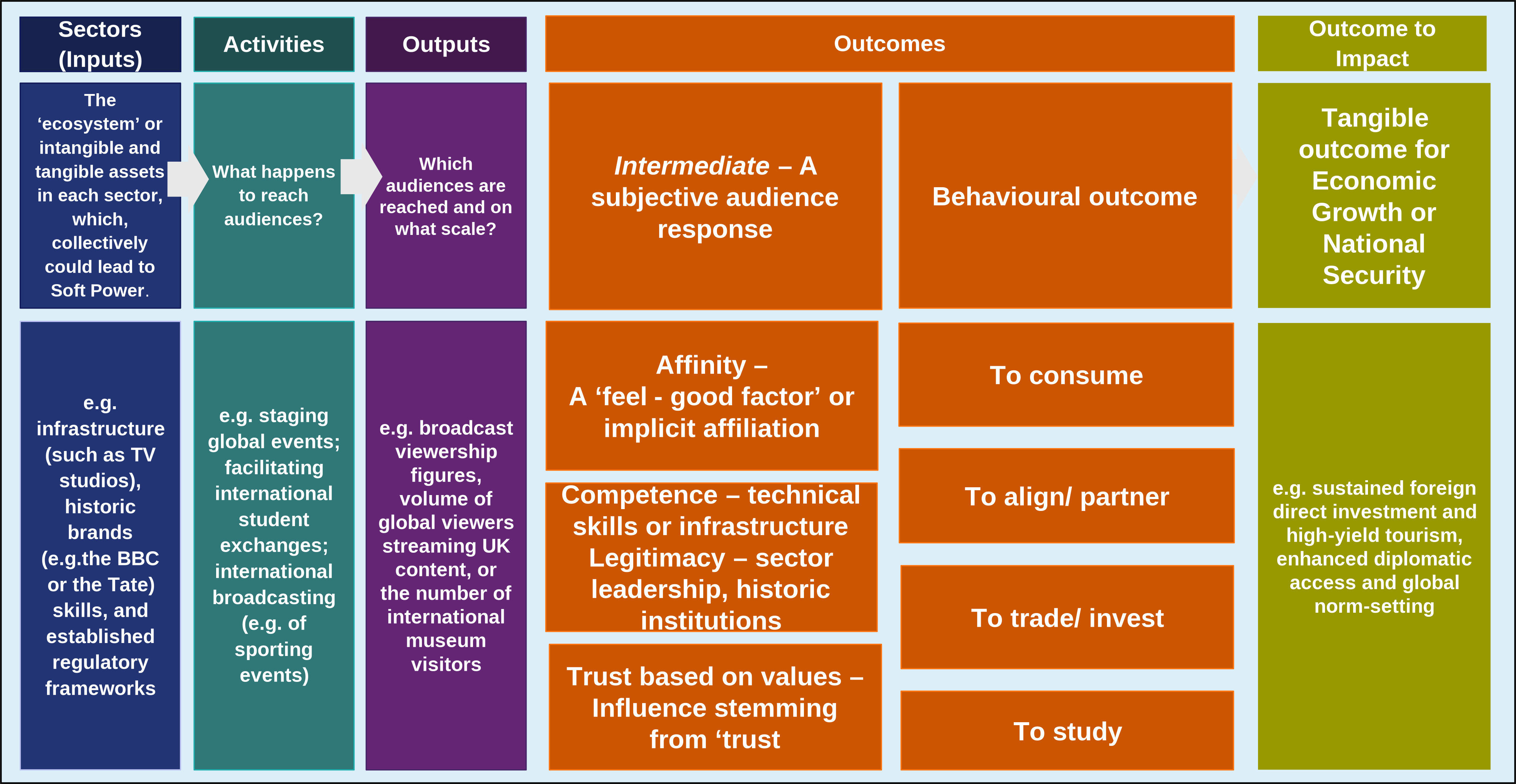
Figure 1: Core framework for the Theory of Change
5.5 Inputs, Activities and Outputs
The Theory of Change for each sector begins with inputs, which represent the sector’s ecosystem of tangible and intangible assets, such as physical infrastructure, historic brands, elite talent, and regulatory frameworks. Activities such as staging global cultural showcases, facilitating international exchanges, or exporting creative intellectual property lead to concrete outputs such as visitors to an exhibition, or an audience for a film. These outputs capture both the broad scale of mass-market visibility, such as the volume of global viewers streaming UK content, and interpersonal engagement, such as international partners participating in collaborative volunteering or professional capacity-building.
The outcome section of the Theory of Change is split up in two parts: the intermediate outcomes and the behavioural outcomes. The intermediate outcomes are a subjective audience response to the outcomes. The behavioural outcomes are actions the foreign audiences take in reaction to the intermediate outcomes.
5.6 Interim Outcomes
These subjective psychological responses fall into three distinct categories:
Affinity: In the literature, examples of influence often centre on creating emotional familiarity, usually through a shared passion or cultural experience. For instance, exposure to cultural products such as international sporting events or films is frequently cited as creating or deepening connections that overcome geographical distance. These examples all relate to the creation of Affinity - a ‘feel-good factor’ or implicit affiliation. While the concept is widely referenced, empirical evidence isolating this exact emotional mechanism is rare; however, one empirical study on music demonstrates that listening to international music communicates ‘social emotional signals’ that listeners decode, implicitly improving their social attitudes toward other cultures.[footnote 23] Affinity, therefore, describes a personal emotional connection that can make an audience more receptive to a nation’s culture and values.
Competence and Legitimacy: Examples of influence are based on the strength of a sector in global value chains or the historical brand of a cultural institution that enables the sector, or state, to play an important role in shaping global rules and norms. This influence operates through two distinct, though sometimes connected, responses.
Eliciting a feeling of Competence relies on technical skills and infrastructure. For instance, the UK has very strong technical skills and infrastructure in film and TV production, which means that multinationals invest in the UK to make films and television. International partners feel that the UK sector is highly competent and, in some cases, indispensable.
Eliciting a feeling of Legitimacy relies on sector leadership, historic institutions, and brands. For example, when international partners look to the UK arts sector and institutions such as the Tate for guidance, this is driven by the organisation’s history and global recognition, which elicits a sense that they have the credibility to lead, or play a leading role, in global discussions on, for example, standards. We term this as Legitimacy. Similarly, when a sector has established itself as an authority, it can export regulatory models; for example, the British Film Institute’s (BFI) Diversity and Inclusion standards served as a template for the Academy Awards.
Often, the two go together. A strong sector with well-regarded technical skills and infrastructure often has legitimacy when engaging in discussions on, for example, shares, rules and norms.
Trust based on values: Examples of influence that stem from the audience trusting a nation or sector of that nation, linked, but not always explicitly, to its values. For the UK, this might include perceived independence, integrity, and political neutrality. For instance, the trust audiences put in impartial public service broadcasting or the sensitive stewardship of contested heritage. In these examples, the audience chooses to read the BBC or The Guardian because they trust its output, or to entrust highly sensitive cultural projects to UK institutions. Soft power, based on trust and values, is often more long-term and durable, as it is often grounded in shared histories or experiences (e.g. higher education), where relationships have been built over time. This outcome provides the closest link to the UK’s core democratic values, such as freedom of expression, inclusion, and the rule of law.
The term ‘trust’ is used frequently across the soft power literature with many different meanings. While functional competence could be described as generating an ‘instrumental trust’ (it’s trusted because it works), we are primarily referring to moral trust and the recognition of shared values (it’s trusted because the audience shares similar values or believes those values to be important).
As with other soft power concepts, empirical proof directly linking this trust to specific foreign policy outcomes is scarce, as trust is earned over long-term, non-linear interactions. However, the evidence demonstrates that moral trust is unlikely to be created by the state; it is earned when institutions validate the audience’s values or prove their credibility through independent action, such as the BBC World Service’s impartial reporting free from state interference.
5.7 Behavioural Choices
For soft power to affect economic growth or national security goals, the subjective psychological response (Affinity, Legitimacy, or Trust) must influence tangible choices that drive those impacts. Based on what we found in relation to the end impacts, these actions fall into four distinct categories:
To consume: The physical or economic act of buying products, paying for broadcast rights, or travelling to the UK. For example, the global emotional connection to UK sporting spectacles directly drives international consumption, with the English Premier League securing international media rights deals worth approximately £6.5 billion.[footnote 24] Similarly, the UK’s advertising and marketing sector exports over £10 billion in services annually by shaping global branding and storytelling.[footnote 25]
To trade/invest: The choice by international actors or multinational corporations to commit Foreign Direct Investment (FDI), integrate with supply chains, or purchase services. This is driven by competence and legitimacy. For example, the UK’s film and high-end television sector generated £4.8 billion in inward Investment in 2024, largely because major US studios actively choose to base productions at UK facilities.[footnote 26] This choice is driven by the competence of UK crews, predictable tax incentives, and world-class infrastructure.
To align/partner: Formal government-to-government cooperation, structural alignment, and institutional networking. This involves foreign entities voluntarily adopting regulatory frameworks, participating in shared research, offering diplomatic support, or acting as informal ambassadors. It can be driven by trust (e.g. heritage institutions sharing knowledge on the sensitive restitution of historical artefacts to build diplomatic goodwill), or by legitimacy (e.g. the Academy Awards adopting the British Film Institute’s Diversity Standards).
To study: The choice to engage with elite higher education or professional mobility pathways over international competitors. This choice is driven by prior exposure to the UK’s culture and creative industries or by the globally recognised prestige of UK institutions. The resulting outcome of choosing to study or train abroad is the creation of long-term relational capital, intercultural understanding, and an alumni network; these support future business and diplomatic relationships.[footnote 27]
5.8 Outcomes to Impacts
This final part of the Theory of Change captures how individual choices to consume, trade, partner, or study ultimately deliver against two core national objectives: Economic Growth and National Security. Economic growth impacts materialise through sustained foreign direct investment, high-yield tourism, and increased gross value added, while national security impacts are realised through enhanced diplomatic access, global norm-setting, and geopolitical resilience.
5.9 The Three Pathways to Influence
Outcomes represent the specific psychological shifts and tangible choices made by an audience. By tracking how ecosystem activities produce outputs that, in turn, generate interim outcomes and behavioural choices, we identified three dominant cross-sector pathways of influence. These pathways are the overarching “logics” for how soft power works. They demonstrate that DCMS sectors do not operate in silos; they share similar mechanisms of influence, which are explored in detail throughout the sector chapters.
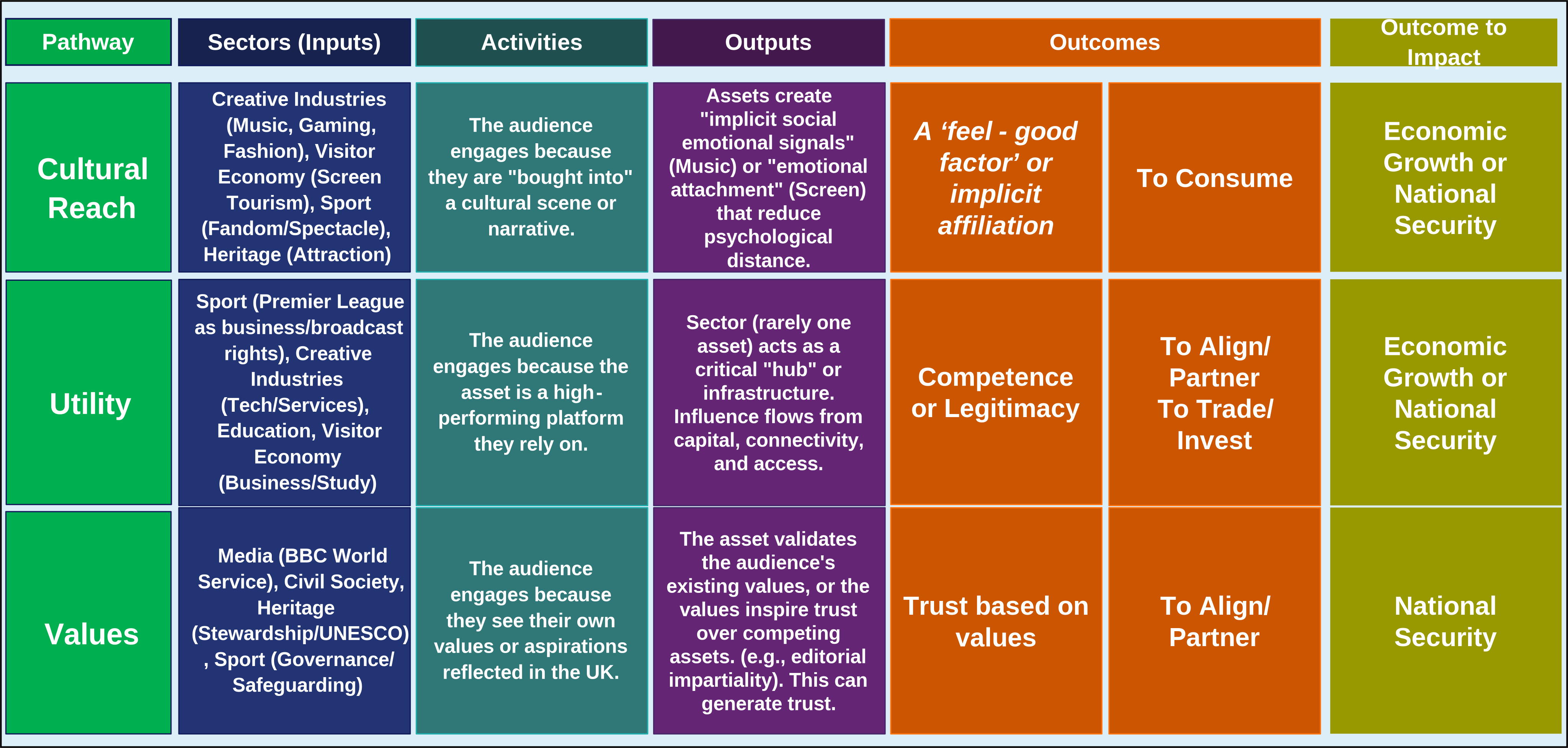
Figure 2: The three pathways to influence
5.10 Pathway 1: Cultural Reach
Mechanism: Influence is generated by projecting compelling cultural narratives and through lived experiences. This occurs through two distinct routes: mass-market visibility (such as the mass consumption of culture, sport, and media) and interpersonal or lived experience (such as collaborative volunteering, travel, and youth exchanges). Both routes reduce psychological distance, potentially turning attention or a one-to-one connection into a deeper emotional connection (affinity). This pathway relies heavily on the underlying strength of the UK’s sectors and brands, including the historical intangibles (such as heritage, tradition, and institutional prestige) that contribute to their global appeal. Our interviewees said that across all these areas - whether consuming sport, volunteering, or engaging with the arts - audiences and international partners often engage with specific, historic, world-leading institutions (such as Wimbledon, the Premier League, the Tate, or specific NGOs and artists) in their own right, rather than explicitly seeking out a UK brand. However, when looking at the sectors, their scale, reach and quality create significant soft power for the UK.
Impact: This emotional pull predominantly drives the primary economic choice to consume. An emotional connection creates demand and means that international commercial entities cannot ignore these assets, effectively compelling them to purchase broadcast rights or sponsorships (as seen in the global demand for Wimbledon or Premier League media rights). Lived experiences, such as the 17.6 million heritage-related international trips, or the 3.6 million people[footnote 28] reached through volunteering and education programmes, create emotional familiarity that sustains high-yield cultural tourism.[footnote 29]
5.11 Pathway 2: Utility
Mechanism: This pathway operates through two distinct functional routes. First, where sectors have strong or even indispensable infrastructure, they are integrated into global value chains (such as in elite engineering or the film and TV industry). Second, where there are strong sectors and representative bodies or regulators, other countries often base their standards or regulations on UK sectors. Legitimacy and structural authority are therefore created through the export of professional frameworks, regulatory standard-setting (like the BFI Diversity Standards) and the prestige of elite institutions.
Impact: Competence primarily drives the choice to trade/invest. For example, the UK’s ‘Motorsport Valley’ includes 10 of the 11 Formula 1 teams because of UK engineering skills, and major studios like Disney and Netflix book UK sound stages to gain a competitive advantage in infrastructure. Commercially successful sectors and the historical prestige of elite institutions confer the Legitimacy that drives choices to align/partner and to study. Global talent chooses elite UK institutions (such as the Royal College of Art or the Courtauld), which can act as a multiplier, building the relational capital required for future diplomatic alignment.
5.12 Pathway 3: Values
Mechanism: Influence is generated through the perceived integrity, independence, and political neutrality of UK institutions. The audience trusts the sector, asset, or output, and sometimes, but not always, the UK, as a result, thereby validating the audience’s own identity or establishing itself as a credible, independent standard-setter, distinctly separate from state promotion.
Impact: This trust drives the choice to align/partner, which the evidence shows occurs through three distinct sector routes: elites formally adopting UK regulatory frameworks, maintaining deep people-to-people alumni networks (like Chevening scholars) who act as informal ambassadors, or using major events and iconic sites (like embassies hosting business elites at Wimbledon or Silverstone) as convening platforms for diplomatic access. Audiences also actively choose to consume, for example, UK-based media brands and independent journalism (like the BBC World Service or the FT) specifically because they trust its accuracy and integrity.
5.13 Main findings from qualitative interviews
Across the forty interviews with stakeholders, a consensus emerged on how DCMS’s sectors can generate soft power. Influence is predominantly built through long-term relationship-building and trust, rather than through overt, short-term state promotion. International audiences and partners are drawn to the UK by the high quality, technical expertise, and rich heritage of its sectors. However, this engagement is largely “institution-first”; global partners choose to work with specific, world-leading entities, such as iconic museums, elite universities, the BBC, or major sporting events like Wimbledon and the Premier League, for their individual prestige, rather than explicitly seeking out a generic UK national brand. Furthermore, the UK’s sectors project democratic values, such as freedom of expression, editorial independence, and inclusivity, which earns them international credibility. Ultimately, this trust and cultural appeal open doors for the UK globally, creating a welcoming environment that makes subsequent diplomatic dialogue easier, secures high-level access to foreign leaders, and drives tangible economic choices like inward investment, international student enrolment, and tourism.
While interviewees broadly agree on the UK’s cultural appeal, they disagree on how soft power should be projected and managed. A point of friction is the use of overt national branding, like the government’s “GREAT” campaign. While diplomatic and some sporting bodies embrace this, many cultural and media institutions feel uncomfortable with it, deliberately downplaying their “Britishness” to avoid coming across as boastful or arrogant. There is also debate over the concept of soft power itself, with heritage professionals often preferring the term “cultural diplomacy” because they warn that actively trying to wield influence as a strategic lever strips away trust and turns it into “hard power”. Finally, the sectors face differing international tensions, ranging from peer nations pushing back against the UK’s tendency to mix sport with politics, to the ongoing complexities and “double-edged sword” of navigating the UK’s colonial history and contested museum collections.
5.14 Limitations and how to read the Theories of Change
Limitations
The evidence reveals several methodological and practical constraints in understanding soft power:
Soft power effects are difficult to isolate from economic or political factors. When international partners choose UK institutions, they may be responding to market dynamics, historical ties, or cultural appeal - often all three simultaneously. The mechanisms through which audiences create meaning from cultural experiences remain poorly understood, with little causal evidence linking specific interventions to diplomatic or economic outcomes.
Time presents a particular challenge. Soft power impacts can take years or decades to emerge, by which point multiple actors may claim credit for the same outcome. The lack of agreed measurement frameworks means the sector relies on output metrics (visitor numbers, export values) rather than evidence of actual influence or behaviour change.
The evidence also points to practical tensions. Different sectors may work at cross-purposes; commercial imperatives in creative industries can conflict with diplomatic messaging, while visa restrictions imposed for security reasons directly contradict cultural exchange objectives. Reputational damage in one area can rapidly spread across sectors, undermining trust built over decades.
Lastly, in a multipolar world with many alternatives, historical connections alone no longer guarantee influence. UK sectors must compete on current merit while managing the complex legacy of empire and ongoing geopolitical realignments. The evidence suggests that soft power works best when acknowledging these limitations rather than overstating potential impact.
How to read and use the Theories of Change
This work is a broad survey of seven DCMS priority sectors, supported by 40 primary interviews. While we have sought to be critical in our understanding of the soft power concept and its evidence base, this work does not seek to critically evaluate the specific claims made about individual sectors. Much of the available evidence comes from sources that inherently seek to explain the positive impact of their respective fields. The organisations that design, fund, and evaluate these programmes often depend on demonstrating positive results to secure future funding, political backing, and institutional survival, creating a structural pressure to frame findings positively.
Also, this research has not explored the current comparative strength of the UK sectors. Therefore, while we have been careful not to overstate the claims, the Theories of Change in the following chapters operate on the assumption of strong sectors, modelling how soft power could and should work, rather than definitively stating how it currently does work across every asset. Given the contested world of soft power, the actual strength of these assets will always need to be measured comparatively against international peers.
Theories of Change in the subsequent chapters (Chapters 5–11) apply the model set out in this chapter to show how soft power could operate through these three pathways in each sector. The primary purpose is to provide DCMS with an applied, evidence-based model. In this way, the Department can clearly explain how its sectors generally contribute to national influence. Sector teams can then use these frameworks to further explore and explain how specific programmes or multilateral fora function as potential routes for influence.
These models provide DCMS with a framework for understanding where state intervention may be effective and where stepping back to protect institutional independence better serves soft power objectives. However, without comparative data, longitudinal tracking, and clearer metrics for success, significant gaps remain in the evidence base for policy decisions.
6. Cultural sector
6.1 Ecosystem
The Cultural Sector includes ‘industries with a cultural object at the centre of the industry’, such as art galleries, educational institutions that offer courses focused on culture, and cultural showcases.
Educational institutions are important anchors for this ecosystem. Specialised universities, like the Royal College of Art and the Courtauld Institute, attract students and creative talent from all over the world.
The ecosystem also has world-class galleries, such as Tate, which attracts over a million overseas visitors to its touring shows every year, and has set historic attendance records in cities like Shanghai. Cultural showcases and venues are another crucial element of the cultural sector, presenting large-scale work and tours via co-commissioning to platform the arts and reach large audiences.
Beyond public-facing exhibitions, the sector exports technical expertise. UK cultural institutions provide consultancy services and capacity-building training for international peers. Through this peer-to-peer knowledge exchange, the sector helps shape global professional standards and regulatory frameworks, in curation, conservation, and cultural governance that foreign institutions actively adopt.
Important to the international credibility of the sector is that the major bodies, such as major national galleries and the Arts Council, operate with arm’s-length independence from the government. It ensures that foreign partners engage with authentic, independent cultural entities rather than state-directed messaging.
6.2 Pathway 1: Cultural Reach
Core logic: Culture – Cultural Reach
The cultural sector create emotional connections with international audiences through shared cultural experiences. By producing and distributing cultural content and staging international exhibitions, the sector builds a familiarity that reduces psychological distance, encouraging audiences to consume UK products and visit the UK.
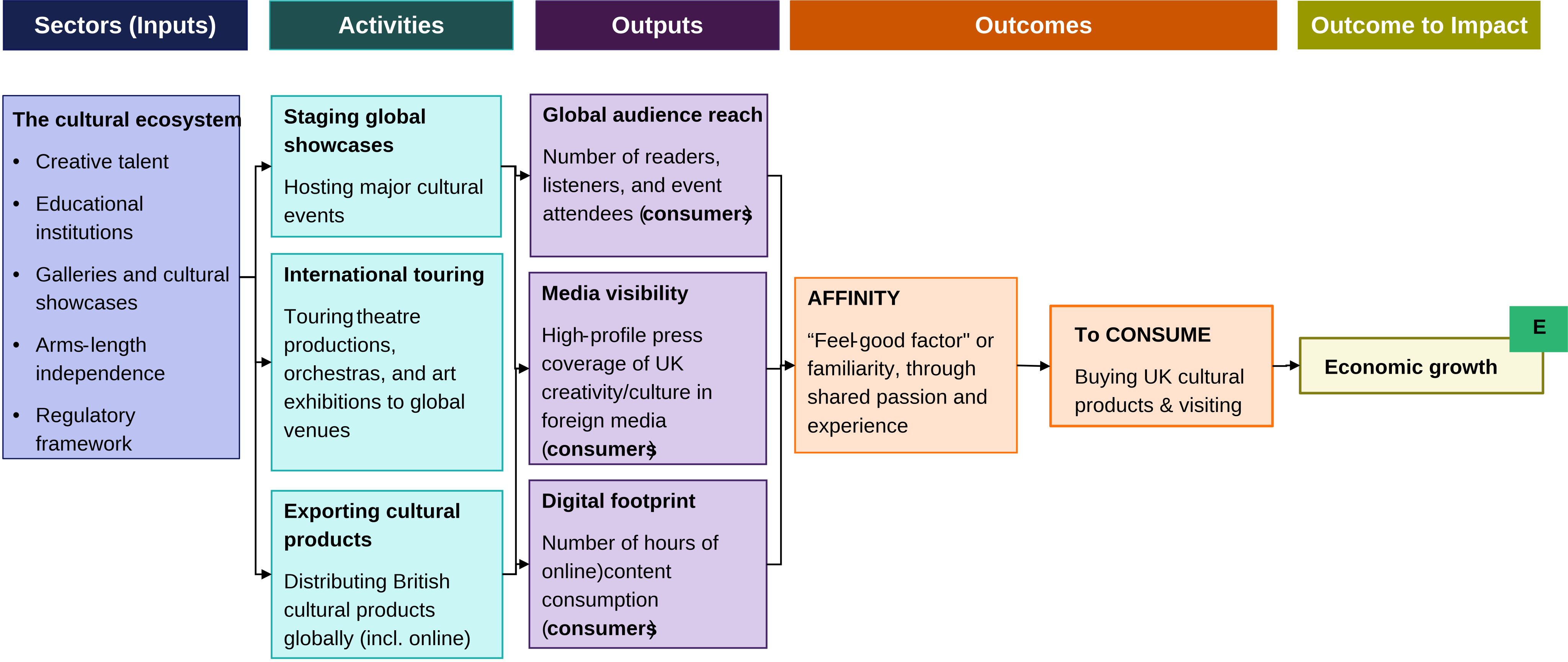
Figure 3: Cultural reach pathway for Culture
The UK’s cultural sector encompasses a range of activities, including staging global showcases and major cultural events (e.g. London Fashion Week), touring productions and exhibitions (e.g. theatre productions) to venues worldwide, and distributing British cultural products globally. The extensive reach of these activities allows the UK to build affinity with global audiences, translating cultural visibility into economic growth.
“The approach is understated. There is no deliberate, overt use of ‘Britishness’ as a marketing device. Instead, the organisation relies on the recognised quality of UK museums, collections and professional standards as the primary signal of trust and value.” Cultural organisation
The literature highlights that the UK possesses a large global presence in the cultural sector. For example, the work of Factory International in Manchester has reached more than 1.85 million people in over 30 countries, generating over £10 million of international investment since the festival began.[footnote 30] The work of the cultural sector also leads to high-profile press coverage of UK creativity/culture in foreign media, and a ‘digital footprint’ of our exported cultural products.
“I would say [the] UK is more trusted than other places and ultimately its cultural offer is second to none.” Cultural organisation
Continuous engagement with UK cultural products, showcases and institutions can make foreign audiences feel more familiar with the UK (sometimes referred to as reducing psychological distance), turn foreign audiences into active participants who feel potentially creating affinity towards the UK. Through this, audiences may feel more predisposed and open to future engagement with the UK, for example, through tourism.
“I think the leverage is really in the conversations we create between countries. So, we bring industry people together at our festivals to have conversations they wouldn’t have in a more formal setting.” Cultural organisation
Our research suggests that this cultural affinity boosts the visitor economy by stimulating inbound tourism. Through familiarity, audiences may choose to buy British cultural exports or travel to the UK to experience its culture, such as theatre productions or major galleries. By immersing international visitors in world-class cultural experiences, the sector generates direct revenue; the literature shows that cultural organisations contributed £32.97 billion to the economy overall in 2024.[footnote 31]
6.3 Pathway 2: Utility
Core logic: Culture – Utility
The cultural sector exports technical expertise and professional capabilities that global networks rely upon. By exporting services, and providing specialist education and professional standards, the sector establishes structural authority, making it more attractive for international partners to invest in UK creative services and align with UK frameworks.
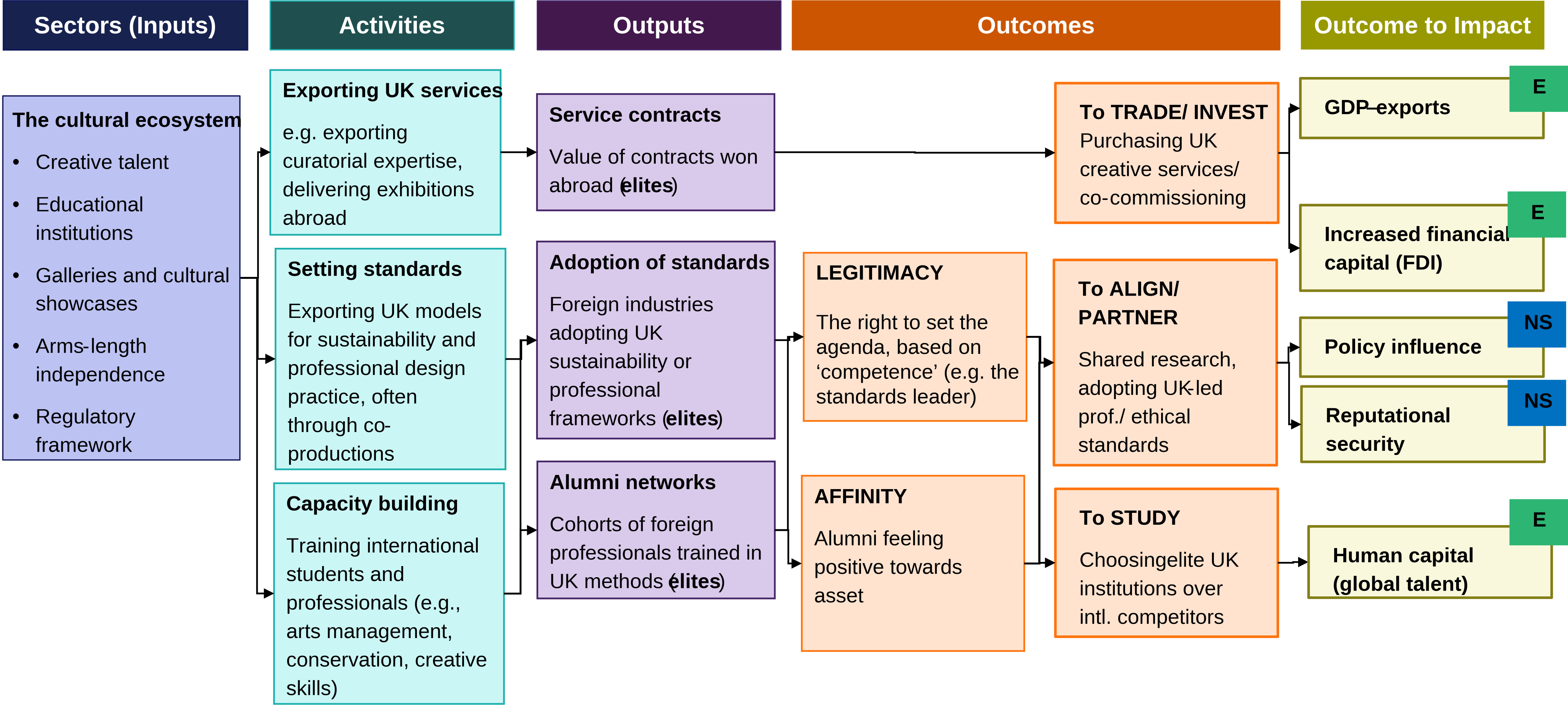
Figure 4: Utility pathway for Culture
The UK’s cultural reputation is also, in large part, defined by its creative talent, educational institutions and regulatory frameworks. International partners often rely on UK expertise and commission UK cultural services, such as curatorial services or the delivery of exhibitions abroad. UK institutions also train international students and arts professionals (e.g. in arts management, conservation, and creative skills) on the UK’s ability to set standards.
The UK also exports high-value cultural services through service/design contracts won abroad. For example, in 2018, London’s Serpentine Galleries and Beijing’s WF CENTRAL announced a co-commission for the first Serpentine Pavilion outside of London. The Pavilion served as a public space for cultural activities, events and social encounters, and housed a programme of cultural activities.[footnote 32]
“We’ve had really good feedback from our training courses, and the best thing is that it’s part of a pipeline of connection and of collaboration […] in one case we started with training, made connections, made friends. The next thing they did, is they invited one of our touring projects to come to their venue and [then] they co-commissioned something.” Cultural organisation
The cultural sector’s models for good practice, relating to sustainability and professional design practice, are highly regarded by international partners who adopt them themselves, or work through them via co-productions. For example, the Society of London Art Dealers’ trading standards are a large draw in the global art market. These activities allow the UK to build institutional credibility on the global stage.
Similarly, by educating international students and foreign professionals through our educational institutions or professional capacity building initiatives, the UK cultural sector benefits from an alumni network. Institutions and organisations can identify cohorts of foreign professionals trained in UK methods. Interviewees noted examples of training provision or standard-setting that led to further collaboration and relationship-building with organisations abroad.
“We also demonstrate what excellence looks like in our industry, and we advise other countries on how to set up similar organisations. We run courses, for example, for events industry, and we are often asked to speak at high level events about our work and the impact our work has.” Cultural organisation
Additionally, foreign audiences who have studied in the UK or been trained in UK methods can form emotional bonds with the country. This reinforces others’ choices to study in the UK. Its recognised authority may also drive foreign institutions to formally cooperate with the UK by adopting its professional frameworks and standards. The UK also secures future partnerships through academic institutions, which are chosen for their prestige and career prospects. As previous students move through the world, some may carry UK standards into other countries, and some may go on to seek work within the UK, creating strong global alumni networks. Separately, as an outcome from global partners functionally rely on the UK’s proven technical excellence and infrastructure, they may choose to trade and invest in the UK. This drives export revenues and overseas commercial work for the UK economy.
“We have an incredible alumni network. There’s not a country that you can point to where we can’t point to three or four of the leading artists, two of the kind of top industrial designers and kind of say, oh yeah, they were ours.” Cultural organisation
The literature suggests these behavioural choices may contribute to broader economic and security objectives, though isolating direct causal links remains challenging.
International partnerships and education exchanges can generate export revenues and attract investment in cultural services. As the UK cultural sector wins contracts, co-commissions or co-produces abroad, international partners are actively investing in UK cultural services.
The reputation of specialist institutions like the Royal College of Art may influence international students’ decisions to study in the UK, though multiple factors shape these choices, including visa policies, costs, and alternative options.
When foreign institutions adopt UK professional frameworks or seek British expertise, this can create channels for ongoing dialogue and cooperation. However, the evidence indicates that sustained influence depends on continued technical excellence and the perceived independence of cultural institutions from state direction. The literature notes that these relationships require long-term investment and can be undermined by shifts in domestic policy or international competition.
6.4 Pathway 3: Values
Core logic: Culture – Values
The cultural sector generates influence through its institutional independence and values, such as freedom of expression and inclusive practices. Operating at arm’s length from state control, cultural institutions earn trust and credibility, enabling them to maintain diplomatic channels and collaborative partnerships even when relations between states are strained.
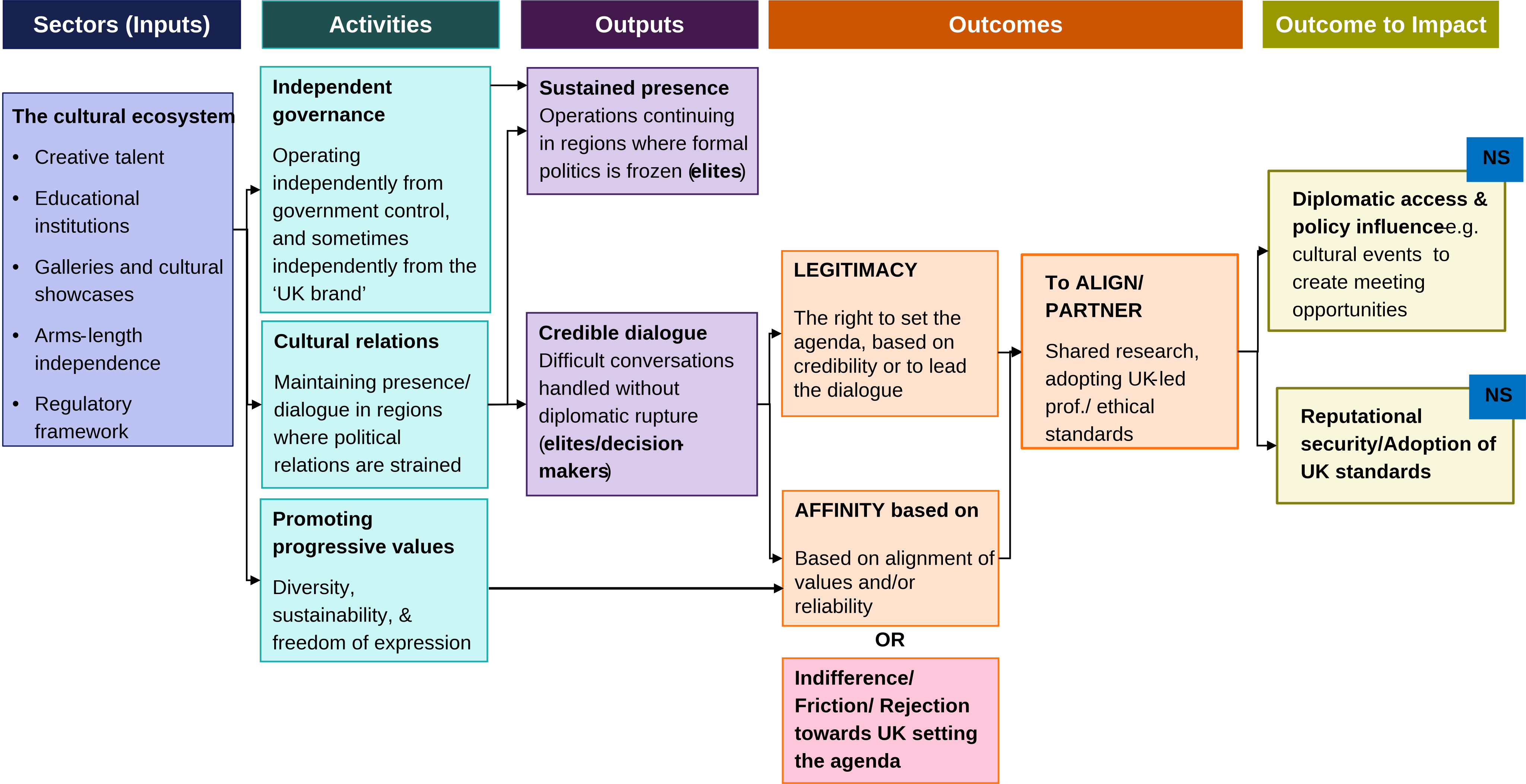
Figure 5: Values pathway for Culture
The independence of the UK’s cultural institutions, its international presence and its values leads are the building blocks of the sectors ability to influence.
“They enjoy the freedom of expression that is held within our environment in the UK, and there are subject matters that some artists can’t talk about in their country, including America, for example, at the moment. […] We are seen as an organisation that can open conversations that couldn’t necessarily be opened in the same way.” Cultural organisation
UK cultural institutions have been able to navigate sensitive issues, such as decolonisation, through ‘quiet diplomacy’ which maintains the cultural sector’s ability to handle difficult conversations. Additionally, by downplaying or selectively using overt national branding, UK cultural organisations establish themselves as trusted brands in their own right, which may help minimise political friction. Interviewees spoke of the value of distancing themselves from the UK brand to maintain international partnerships amid political instability (e.g. in Europe post-Brexit). The literature also notes that visible independence from government (e.g. the British Council) helps us distinguish ourselves from authoritarian countries, which may use culture to disseminate government propaganda. This allows the UK cultural sector to maintain a sustained presence, even when formal political ties are frozen.
“I think, again, the UK is being looked to very specifically for how we are approaching those sensitive issues […]. I do think, you know, that kind of quiet diplomacy, a more sensitive approach, is something that is being recognised.” Cultural organisation
One outcome of this pathway is that the UK cultural sector’s ability to uphold dialogue through politically challenging times may increase its credibility, or ‘right’ to lead the dialogue, thereby fostering alignment and partnerships. This may result in collaborations on shared research or the voluntary adoption of UK ethical frameworks (e.g. those championing diversity and sustainability). Another outcome is that it may, alongside the promotion of values, build affinity with audiences who share those values, positioning the UK as a moral leader. However, it is important to note that in where the audience does not share those values, this can also lead to indifference, friction or rejection of the UK setting the agenda.
This values-led engagement can theoretically support national security; by sustaining cultural relations and being independent from government, the sector retains an open channel for dialogue. This diplomatic access remains, even when political relations are strained. This makes culture a neutral entry point for bridging divides.
6.5 Specific limitations
The limits of national branding: International trust in the UK’s cultural sector stems from its independence and focus on two-way collaboration. Therefore, attempts to instrumentalise culture for state messaging (e.g. national branding campaigns like the GREAT campaign) may backfire. Interviewees note that this can fall flat with international partners, who may view it as arrogant or self-promotional, stripping the relationship of its authenticity and damaging the UK’s credibility.
Underinvestment in the cultural ecosystem: Long-term constraints on public funding, alongside a decline in domestic arts education and increased visa and financial barriers for touring artists and international students, have left the sector increasingly fragile. Failure to support the cultural infrastructure and the human talent that produce the UK’s cultural outputs may weaken the UK’s international influence over time.
7. Creative industries
7.1 Ecosystem
The creative industries are seen as a crucial part of the UK’s global influence and economic growth. The DCMS Sector Vision marks them as one of eight priority areas, tying ‘Global Britain’ directly to successes in screen, games, design, and beyond.[footnote 33] The Creative Industries Policy and Evidence Centre told Parliament this exact combination of economic and symbolic weight makes the UK a ‘soft power superpower’.[footnote 34] The British Council takes a similar view, placing the creative sectors right alongside the BBC in the UK’s international portfolio.[footnote 35]
The UK creative industries are a multi-sector ecosystem spanning advertising and marketing, architecture, crafts, fashion, film and television, music and performing arts, publishing, and IT/computer services/gaming. This interconnected landscape generates substantial export revenues, attracts significant inward investment, and showcases UK ideas, talent, aesthetics and values to global audiences.
Within this ecosystem, specific sub-sectors function as the UK’s primary global cultural flagships. The collaboration between creative industries and tourism bodies exemplifies strategic soft power. For example, music has been explicitly recognised at the highest levels of government, with Foreign Secretary Yvette Cooper praising the sector as ‘one of the most powerful expressions of our soft power in action’.[footnote 36] The UK’s music exports benefit from global reach through artists including Charli XCX, Coldplay, Dua Lipa and Oasis, whose international tours and streaming presence cement the UK’s contribution to the global music landscape.[footnote 37]
7.2 Pathway 1: Cultural Reach
Core logic: Creative Industries – Cultural Reach
The creative industries can generate influence by capturing global attention through world-renowned content and building emotional connections with international audiences. Audiences can feel an emotional connection with, for example, music, television and film. Linked to this, the history and overall quality of the output lead audiences to believe it is from the UK. This leads to economic benefits from the sale of media rights and tourism, supporting the sector and the jobs it creates.
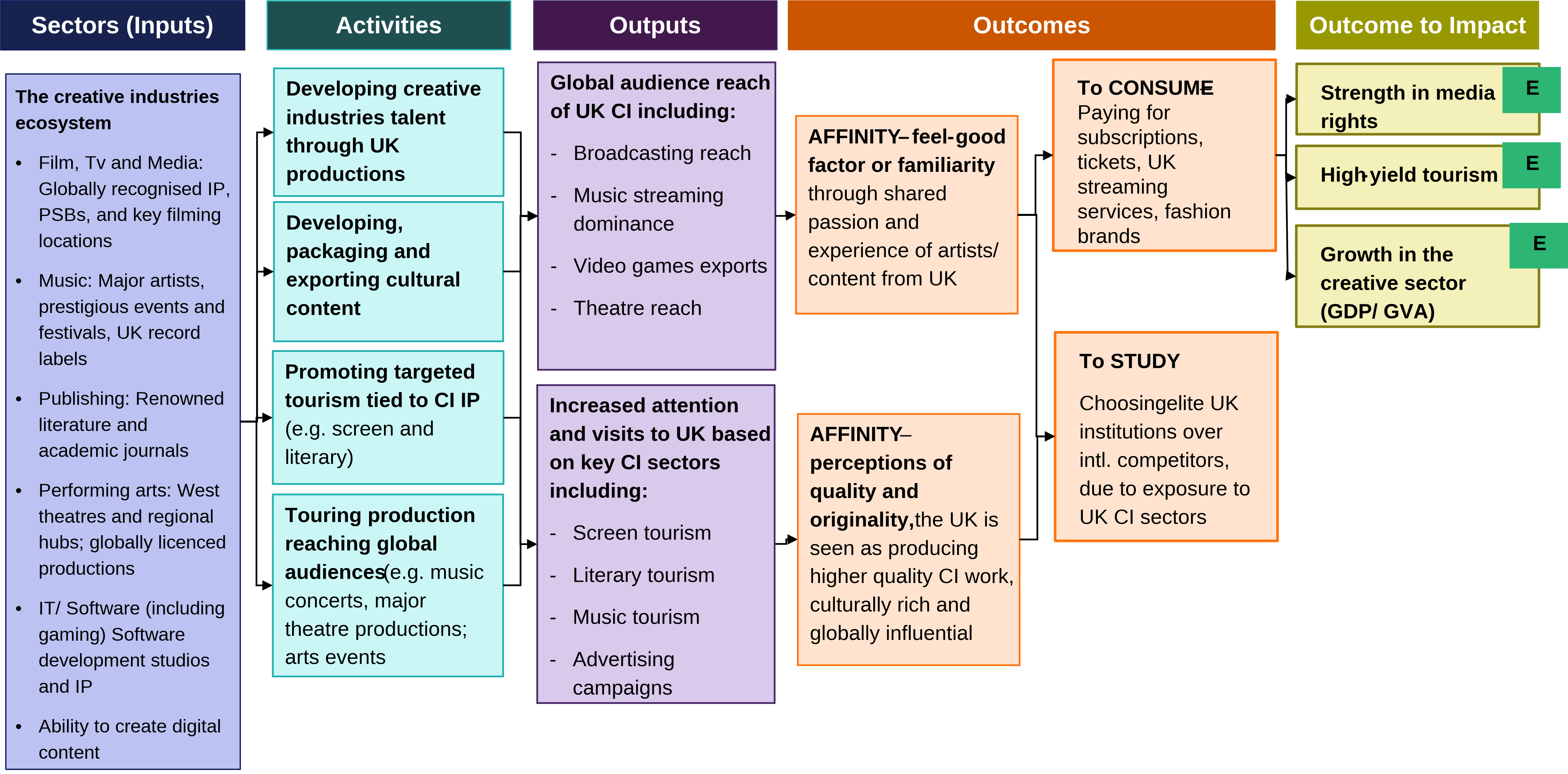
Figure 6: Cultural Reach pathway for Creative Industries
The UK creative industries maintain a significant international presence, supported by established talent networks, recognised institutions, and content with demonstrated export value. Drawing on historical strengths in literature, theatre, and music, the sector currently encompasses film and television, music, publishing, gaming, and the performing arts, which contribute to the UK’s international cultural engagement through a variety of channels. Evidence from the literature review and stakeholder interviews suggests that the UK’s creative output is disproportionate to its size, though this claim requires comparative analysis to be fully substantiated.
“For a relatively small physical place, we really punch above our weight globally in terms of the exports, the impact, the legacy of our work globally.” Creative industries sector stakeholder
The literature highlights that in an era of fragmented media consumption, British creative content maintains high levels of global influence. Industry evidence shows that one in ten songs streamed globally is by a British artist,[footnote 38] positioning the UK as the world’s second-largest music exporter with exports reaching £4.8 billion in 2024.[footnote 39] The BBC’s weekly global audience of 453 million across 40 languages provides consistent exposure to British programming, while UK television content ranks third globally for “travelability”.[footnote 40] Travelability refers to the ratio of a title’s international demand against its home market demand; a show with higher travelability is more highly demanded by international audiences. In gaming, over 90% of UK games companies actively export their products, including Grand Theft Auto and FIFA, commanding huge global attention.[footnote 41] The West End and UK theatre productions serve as a globally licensed production hub, with shows such as The Phantom of the Opera, Six the Musical, and The Play That Goes Wrong performed worldwide.[footnote 42] The cast album for Six The Musical has surpassed 1 billion streams globally.[footnote 43] Interviews and evidence from the literature highlighted that being exposed to different parts of the UK through film and TV draws international audiences to travel to the UK to visit these filming locations.
This broadcast, streaming, and digital exposure may contribute to emotional engagement with British cultural content among certain international audience segments. The literature review identified studies indicating that British productions and narratives contribute to cultural familiarity with the UK, though the extent and depth of this familiarity vary significantly across different markets and demographics. Additionally, industry survey data suggest that approximately 70% of sampled international audiences associate British film and television with high production values, though this figure requires contextualisation given the survey methodology and geographic scope.[footnote 44] Similarly, the “Made in the UK” designation appears to carry positive associations in some markets, though evidence for this claim is primarily anecdotal and would benefit from systematic evaluation.[footnote 45] This was supported by interviews, in which stakeholders said the UK’s creative industries are seen as best in class. This builds affinity among international audiences because they want to continually re-engage with British creative industries content.
The affinity developed through perceived quality and engagement with UK creative content may influence consumption choices for some international audiences. This can include purchasing tickets, fashion, or attending performances, though the evidence linking cultural exposure to specific consumer behaviour remains limited. The interview data suggest that positive associations with UK creative industries may be one factor among many that influences international students’ choice of study destination. Several interviewees noted that exposure to British content through film, publishing, and music may contribute to the UK’s appeal as an educational destination for certain demographics, though they acknowledged that this cultural familiarity operates alongside more determinative factors such as institutional reputation, visa accessibility, and cost considerations.
“British content is very well regarded globally as being high quality. I think that’s the number one thing – the quality of our output and then also the quality of our craftsmanship and the rigor and the way that things are produced.” Creative industries sector
The affinity that drives audiences to consume UK creative industries products and opt to study in the UK leads to several longer-term impacts. This includes a growth in the creative industries and the export revenues – in 2023 creative industries exports totalled £59.4 billion,[footnote 46] and contributed £124 billion in GVA to the UK economy.[footnote 47] The affinity also drives inbound tourism as fans travel to experience British culture firsthand.[footnote 48] The literature shows that 66% of international visitors report UK film and television influenced their travel decision, while VisitBritain’s “Starring GREAT Britain” campaign generated an estimated £217 million in additional visitor spend in the first half of 2025, a return of £20 for every £1 invested.[footnote 49] Literary tourism contributes an estimated £1.7 billion annually to the UK economy,[footnote 50] and music tourism generated 12.6 million visits in 2019.[footnote 51] In addition, the demand for British-produced creative industries products drives growth in the sector, supporting over 2.4 million jobs across the UK.
“Two thirds of people who visit the UK have first experienced it on screen, big or small. So there’s clearly quite a strong correlation with our creative outputs to the world and our perception.” Creative industries sector
7.3 Pathway 2: Utility
Core logic: Creative Industries – Legitimacy
The UK has specialist technical infrastructure, high-end production capabilities and talent. Due to these assets, sectors in the creative industries are embedded in global supply chains and export their services. Exporting professional expertise and shaping global production standards based on institutional prestige influences international perceptions of the UK as a place to invest and do business.
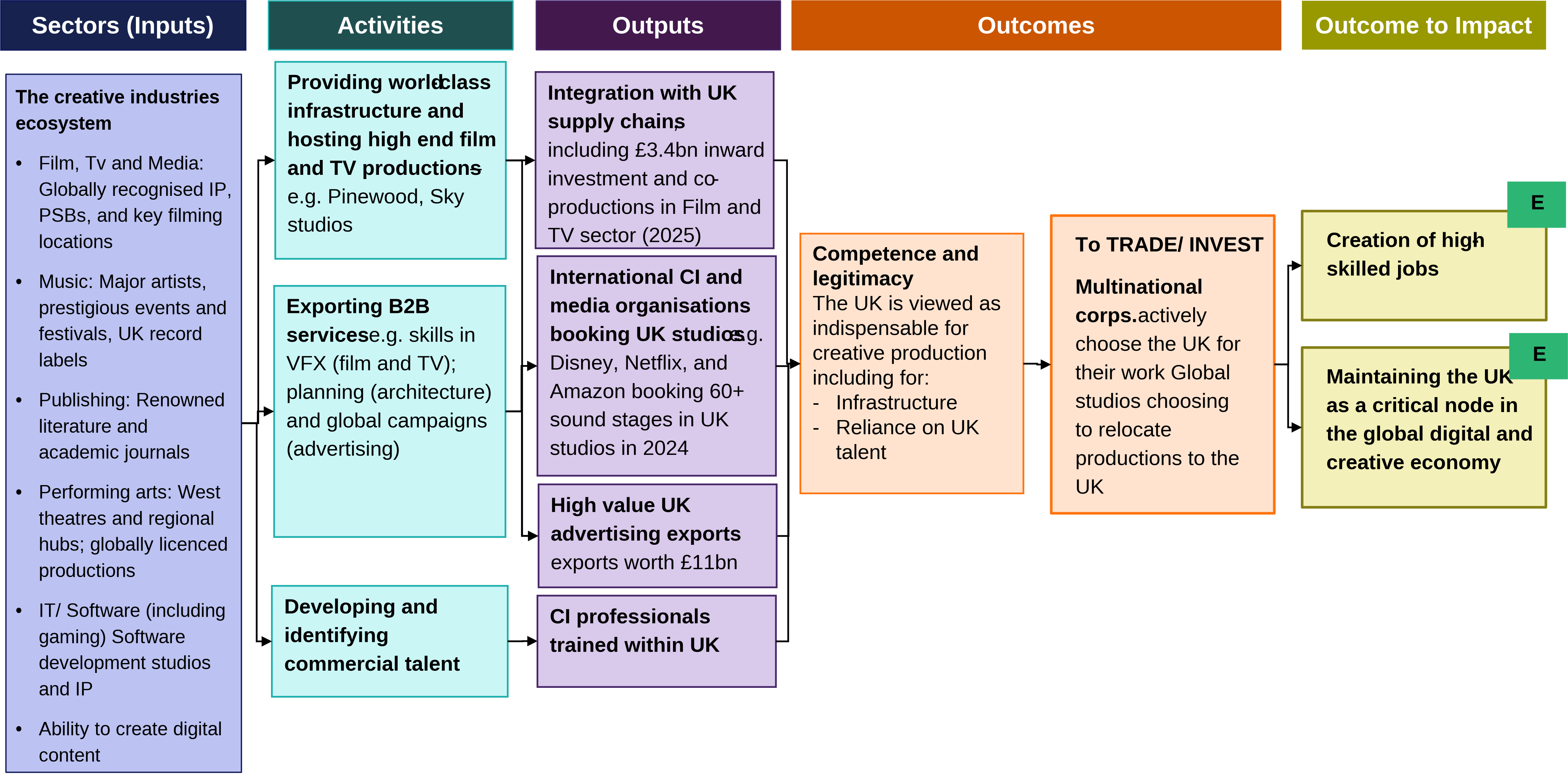
Figure 7: Utility pathway for Creative Industries
The sector maintains studio facilities, technical expertise, and specialised supply chains, including in Pinewood and Shepperton, providing technical capacity and scale suitable for international productions, supported by experienced workforces in visual effects, set construction, and post-production.
“The Americans want to make their films here. We are hosting films such as Star Wars, the new Marvel films, Rings of Power for Amazon, Bridgerton, and so on.” Creative industries sector
Interviews and the literature document how major streaming platforms and studios have embedded their operations within the British technical and creative industries’ supply chains, with Disney, Netflix, and Amazon collectively booking over 60 soundstages across UK facilities.[footnote 52] In 2024, total UK film and high-end television production reached approximately £5.6 billion, with around 85% (£4.8 billion) coming from inward investment and international co-productions financed by US studios and global streaming platforms.[footnote 53] The sector also leverages its expertise to provide high-value business-to-business services globally. The UK maintains one of the world’s largest trade surpluses in advertising services, exporting £10-15 billion annually, with campaigns devised in London shaping global branding for major multinational corporations.[footnote 54] UK games studios provide development services for major international publishers, with the sector contributing approximately £6 billion in GVA annually.[footnote 55]
“Disney, Netflix and Amazon have booked out 60 plus stages. They want to be in the UK, they want to be at Pinewood, and they want to be at Shepperton.” Creative industries sector
Influence through this pathway stems from international partners recognising the value of the UK’s creative infrastructure, though these capabilities are also found in other competitive markets. This positioning may contribute to partnership opportunities with foreign organisations, facilities, and talent, though the extent varies by subsector and project type. The perceived legitimacy and technical competency of the UK creative infrastructure appear to be a factor influencing production location decisions by some international studios, operating alongside skilled labour availability, infrastructure, and fiscal incentives. Similarly, evidence indicates that certain multinational corporations engage UK advertising agencies for international campaigns. The video games sector shows patterns of international publishers working with British development studios. Partnerships are likely to be based on multiple factors, including historical relationships, time zone advantages, and language considerations, rather than solely on the UK’s capabilities, but technical competence is crucial.
“The crews and the facilities are as good as anything you get in Hollywood… With the tax credit, it’s also cheaper to make your film here in the UK, but it is internationally competitive.” Creative industries sector
Decisions to trade and invest in the UK, based on this legitimacy, support foreign investment and international demand for British technical expertise in the creative industries, resulting in economic growth. The sustained investment and integration of the UK’s creative industries into global supply chains position the UK as a vital part of the international creative economy, ensuring the country remains central to global content production and distribution.
“Organisations around the world have looked very closely at our model and they’ve certainly looked at how they could make that work for their territories.” Creative industries sector
This influx of foreign direct investment and international demand for British technical expertise leads to two impacts: substantial economic growth and high-skilled employment. The film and high-end television sector sustains thousands of specialist roles in production, post-production, VFX, and technical services. The video games sector supports over 73,000 jobs,[footnote 56] while the UK advertising and marketing industry contributes £21.5 billion to the UK economy.[footnote 57] The sustained inward investment and structural integration of the UK’s creative industries into global supply chains position the UK as a vital part of the international creative economy, ensuring the country remains central to global content production and distribution.
7.4 Pathway 3: Values
Core logic: Creative Industries – Legitimacy
The creative industries can generate influence by functioning as an independent, values-led ecosystem that builds trust through the projection of quality, free expression, diversity, and sustainability. Operating with institutional independence from direct state control, UK creative institutions transform this authenticity into relational influence, enabling them to export professional standards and maintain diplomatic channels even during geopolitical strain.
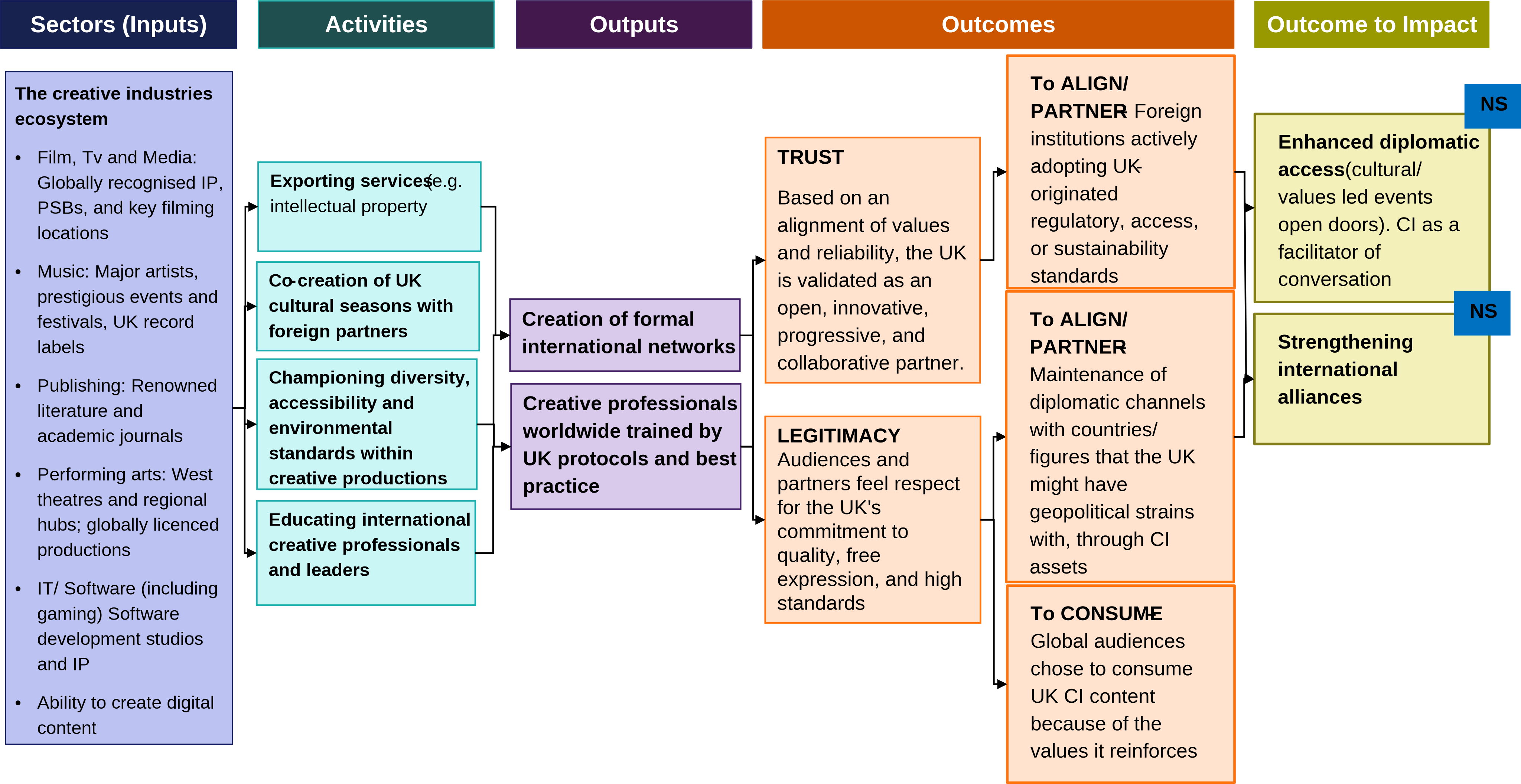
Figure 8: Values pathway for Creative Industries
The UK creative industries could generate influence through value projection and institutional credibility. The literature highlights that because creative industries organisations operate with perceived independence from the state, they function as channels for progressive narratives around editorial freedom, accessibility, environmental responsibility, and inclusion around the world. This includes championing diversity, accessibility and environmental standards within the creative industries. Alongside this, the literature documents how UK creative education institutions shape global creative leadership. The Royal College of Art, Central Saint Martins, and the National Film and Television School are among those who train professionals who subsequently occupy leadership positions across the global creative economy.
This ecosystem and set of actions leads to the creation of international networks of creative industries professionals who look to the UK for guidance. For example, the BBC World Service provides editorially independent international news that projects journalistic integrity and counters disinformation, and independent scholarly publishers advance open-access science. Those trained in the UK can take approaches, standards, and networks into international roles, extending structural influence beyond direct commercial relationships. These initiatives create extensive institutional footprints and people-to-people connections that embed British approaches within international creative practice.
“We are perceived as being at the forefront of work around equity, diversity and inclusion in the sector… making the sector as inclusive as possible.” Creative industries sector
The literature notes that depending on the audience and geopolitical context, these activities generate trust and legitimacy. International partners trust UK institutions because they demonstrate sustained commitment to quality, free expression, and professional standards rather than political messaging. The institutional independence of UK creative industries bodies operating at arm’s length from the government builds credibility that state-controlled rivals cannot replicate. However, values-led projection can generate indifference or friction where values don’t align. The UK is perceived as an open and progressive partner due to some of the values that it promotes within its creative industries content.
Where trust and legitimacy are built, this may lead to international audiences opting to align and partner with the UK. The first way that this is done is through foreign institutions adopting the UK’s best practice on regulation, values, and sustainability. Other countries want to follow the UK’s lead because it is seen as being the standard for effective creative industries. Alongside this, where relevant the creative industries function as a tool for diplomacy and partnership, providing a softer forum for discussion and channels of communications, where they might otherwise be strained. The literature references examples of this, including how the Cosmonauts exhibition enabled UK-Russia communication during political tension,[footnote 58] while cultural seasons, like the use of the Bayeux tapestry showcasing, have historically smoothed political agreements.[footnote 59] In addition, because the UK’s creative industries content is seen as being progressive and open, this leads international audiences to consume more. For example, with film and TV, the UK is seen as a place where stories are developed featuring people from all backgrounds. This resonates with people from similar backgrounds around the world who want to engage further with other British produced content.
“International partners trust us because of the sheer professionalism. Our reputation is for a system that works really well and rather transparently to high professional standards.” Creative industries sector
Where countries and organisations opt to align and partner with the UK, this leads to enhanced diplomatic relations. Interviewees noted that creative industries and cultural events like film festivals, art showcases, and fashion events can serve as forums for international dignitaries to meet, with the creative industries acting as a softer space to facilitate conversations, including those related to national security.
“Soft power will be of most value in navigating challenging contexts… through culture and soft power rather than hard politics, we can get closer.” Creative industries sector
7.5 Specific limitations
Context dependency. The influence of creative industries is contingent, context-specific, and mediated by broader political narratives and media environments. Values-led projection can generate affinity among audiences who share those values but may produce indifference or friction where values are not shared.
8. Heritage sector
8.1 Ecosystem
The heritage sector focuses on preserving, managing, and interpreting historical, cultural, and natural resources, such as museums, archives, listed buildings, and landscapes. Economically, heritage activities directly contributed £15.3 billion to the English economy in 2022, rising to nearly £45 billion when supply chain effects are included, and supported approximately 523,000 jobs. Additionally, inbound heritage tourism generated £12.5 billion in 2023.[footnote 60]
UK frameworks include ‘gold standards’ such as the Government Indemnity Scheme and the Museum Accreditation Scheme. Alongside these, international collaborations, such as the Tate’s co-produced exhibitions with The Museum of Modern Art (MoMA) or the reciprocal lending of the Bayeux Tapestry and the Lewis Chessmen, act as high-profile cultural exchanges.[footnote 61]
Internationally, the ecosystem extends to safeguarding initiatives, notably through the Cultural Protection Fund, which has awarded over £50 million across 19 countries to protect cultural assets at risk from war and climate change.[footnote 62]
8.2 Pathway 1: Cultural Reach
Core logic: Heritage – Cultural Reach
Heritage creates influence using emotional affinity by turning cultural visibility into direct, personal experiences. Iconic landscapes and world-class museum collections first capture global attention on screen and through major international touring exhibitions, closing the gap between foreign audiences and the UK. This exposure drives tourism, which is usually drawn to the prestige of specific institutions like the Tate or the National Trust.
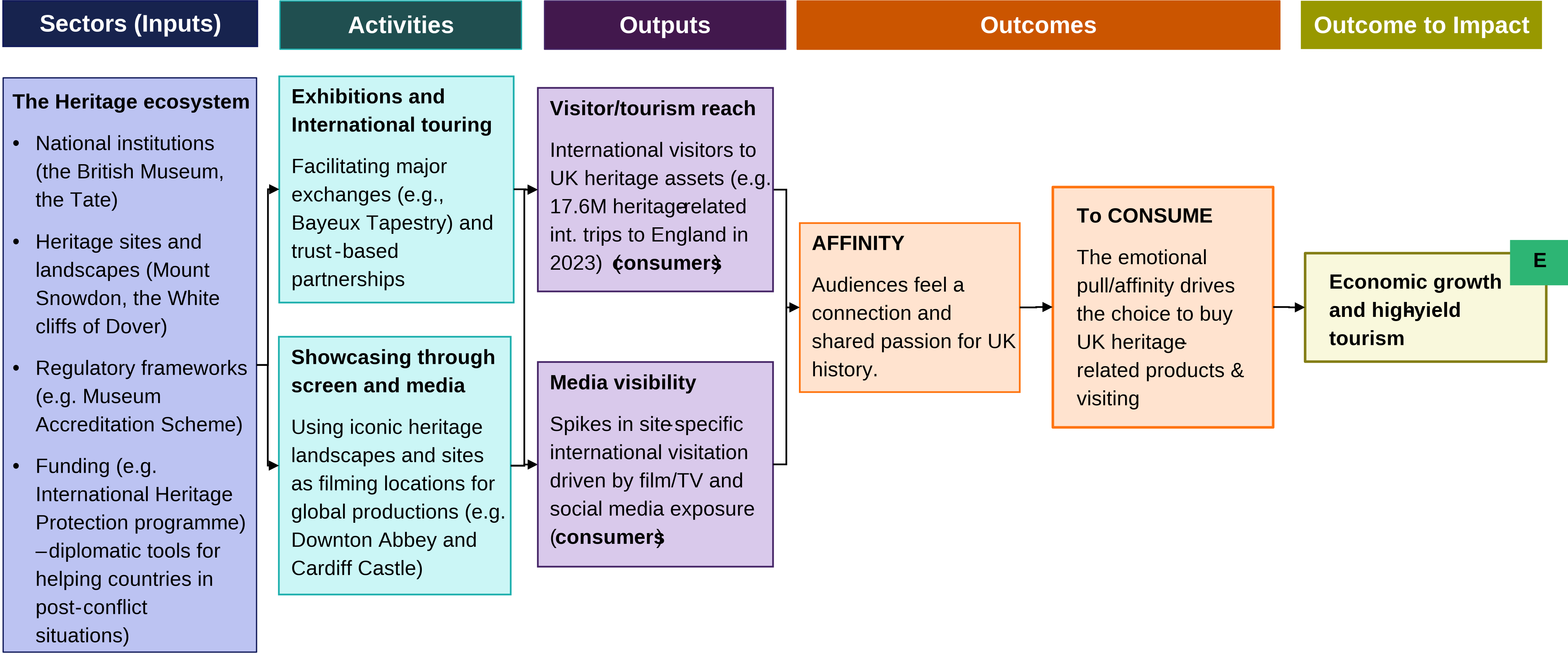
Figure 9: Cultural Reach pathway for Heritage
The UK’s heritage sector retains its cultural reach through assets including national institutions such as the British Museum and the Tate, and heritage sites/landscapes such as Mount Snowdon and the White Cliffs of Dover. Through these assets, the UK facilitates activities such as international touring and major exchanges with foreign institutions, such as the loaning of the Bayeux Tapestry in exchange for the Lewis Chessmen and showcases iconic heritage landscapes like Alnwick Castle (used to film Harry Potter) through screen and media.
“The obvious one perhaps is tourism in terms of museums, specifically museums, but heritage and culture in general being consistently the highest or very high on the list of reasons why people come to the UK, reasons why people think positive things about the UK.” Heritage organisation
Through exhibitions and international touring, the UK physically presents major cultural archives and heritage collections to overseas audiences. This leads to tourism reach; in 2023, there were 17.6 million international trips to heritage-related assets in England.
The historic built environment is often showcased through screen and media. By featuring the UK’s iconic landscapes and historic properties (e.g. National Trust locations) in global film and television products, these sites gain media visibility, driving spikes in site-specific international visitation. For example, anecdotal accounts suggest visits to the Yorkshire Dales increased following the release of the 2026 adaptation of Wuthering Heights. Social media exposure may further increase this visibility.
“When there is filming that happens at one of our places, there’s always a spike in visits, often for years afterwards. Not just a short term one, but at least a medium term one […] we have millions of international visits and, but, but certainly there is a pattern that if something appears in, on TV or in a film, it attracts international visits sometimes specifically to come and see that thing.” Heritage organisation
Continuous exposure to the UK’s heritage creates a baseline of familiarity and warmth towards its history and landscapes. This outcome is built through repeated exposure and international showcasing, which reduce psychological distance, encouraging a feeling of connection and shared passion, leaving foreign audiences more predisposed to, or open to, future engagement with the UK. VisitBritain research demonstrates the centrality of heritage to tourists’ perceptions of the UK. When asked about their perceptions of Britain, ‘a place where I can explore history and heritage’ was the statement most frequently selected by international tourists.[footnote 63]
“Visitor numbers are over 72 million and a year and 25 million of that is international visitors, which is just a really huge amount.” Heritage organisation
As a result, international audiences make a tangible choice to consume UK heritage by travelling to experience these landscapes/collections firsthand. This emotional pull to purchase UK-heritage-related products and to visit translates into economic impact. Research shows that the 17.6 million heritage-related international trips to England generated £12.5 billion in inbound visitor spend.[footnote 64] This supports hundreds of thousands of domestic jobs and provides foundational infrastructure that sustains the UK’s broader cultural and diplomatic influence on the world stage.[footnote 65]
8.3 Pathway 2: Utility
Core logic: Heritage – Utility
Heritage can generate influence by establishing professional standards and providing indispensable technical expertise to international partners. By safeguarding global collections and delivering capacity-building in fragile regions, the sector transforms technical credibility into structural legitimacy, driving foreign governments to seek UK heritage expertise, adopt UK frameworks and align with the UK diplomatically.
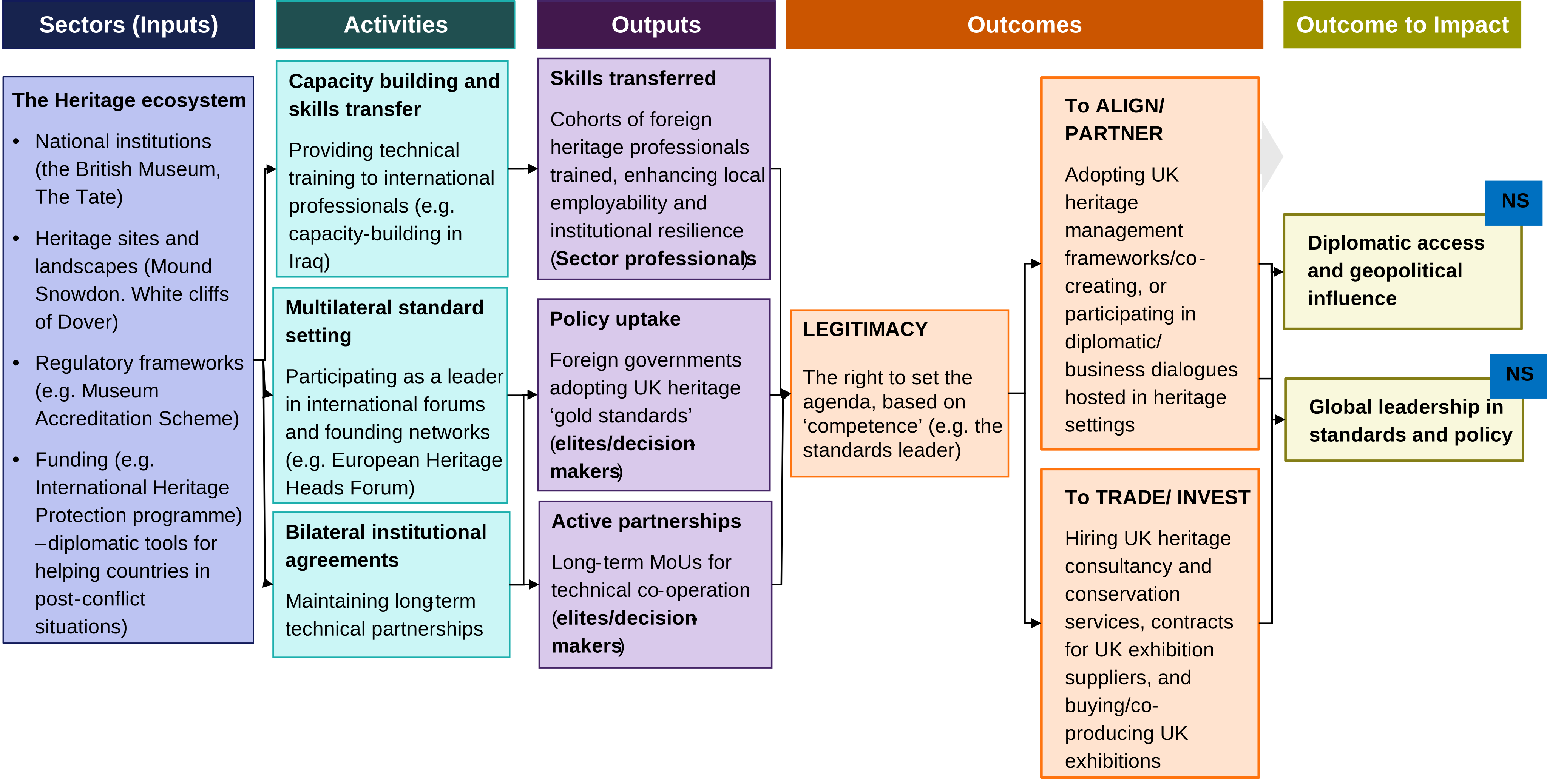
Figure 10: Utility pathway for Heritage
The UK demonstrates its technical expertise in heritage primarily through regulatory frameworks, national institutions and funding. By undertaking activities like capacity building and skills transfer programmes, the UK provides technical training to international professionals. The heritage sector also focuses on maintaining long-term technical partnerships through bilateral institutional agreements, as well as participating as a leader in international forums and networks.
“It’s very much about partnerships, about knowledge-sharing.” Heritage organisation
The literature highlights that the UK actively exports its heritage expertise and sets global standards through capacity building. Examples were noted both in our qualitative interviews and in the literature, such as the UK-backed UNESCO-ICCROM recovery programme in Mosul, which tracks the thousands of local craftspeople and graduates trained in historic reconstruction. UNESCO reports 2,800 trainees completing competency-based vocational training in construction, with 80% moving into on-site rehabilitation work on historic buildings. In parallel, 50 local professionals (architects, engineers, archaeologists) and 70 craftspeople were directly involved in restoration activities, while ICCROM delivered a two-year programme training 49 local graduates in heritage recovery (UNESCO, 2024; ICCROM, 2024).[footnote 66][footnote 67] By transferring these skills, the UK enhances local employability and institutional resilience in countries around the world.
The heritage sector also leads in multilateral standard-setting activities by advising UNESCO working groups and founding networks like the European Heritage Heads Forum (EHHF) which shapes and exchanges knowledge and regional practices. Working multilaterally in this way provides an opportunity for knowledge-sharing, increasing the visibility of UK heritage practices and improving the likelihood of other countries adopting UK heritage ‘gold standards’ such as the Museum Accreditation Scheme and the Government Indemnity Scheme.
Furthermore, heritage institutions work to establish bilateral partnerships to transfer skills and maintain long-term technical relationships abroad. For example, Historic England’s 2017 ‘Wall to Wall’ collaboration with the Chinese Academy of Cultural Heritage (CACH), which have remained in place even whilst diplomatic relationships have been unstable.
“We get a lot of requests for training, capacity building and technical advice. We’re invited to join research policy roundtables […] and a lot these days around climate adaptation.” Heritage organisation
Evidence suggests that the heritage sector builds legitimacy through its technical excellence. By improving the heritage capabilities of other states, maintaining active partnerships for technical co-operation, and sharing UK heritage frameworks, UK heritage institutions establish themselves as highly credible consultants and partners. This outcome drives the choice to align with the UK, either through adopting or co-creating management frameworks, or through officials and elites participating in diplomatic/business dialogues, hosted in UK heritage settings. Separately, global partners may choose to trade and invest with the UK, simply because they rely on the UK’s heritage consultancy and conservation services.
“It really is that sort of people to people contact is the fact that we’re a trusted institution.” Heritage organisation
These behaviours translate into national security impacts, including diplomatic access and geopolitical influence. High-profile exhibitions and reciprocal loans frequently serve as politically neutral venues for diplomatic visits, keeping political channels open during periods of strained relations.[footnote 68] Simultaneously, delivering capacity-building in fragile areas builds relational capital, establishing the UK as a credible partner on sensitive issues. In addition, when other countries adopt UK heritage frameworks and treat them as international benchmarks, this gives British professionals technical authority, ensuring they maintain a trusted advisory role in multilateral forums such as UNESCO on topics such as digitisation, climate adaptation, and emergency preparedness.[footnote 69]
8.4 Pathway 3: Values
Core logic: Heritage – Values
Heritage can generate influence by earning moral trust through institutional independence, perceived integrity, and political neutrality. By engaging in ‘quiet diplomacy’ to sensitively contested topics and acting as a responsible steward for heritage at risk in fragile zones, the sector transforms its ethical credibility into relational capital, driving international peers to have reciprocal collaboration and sustain diplomatic cooperation even when formal political relations are strained.
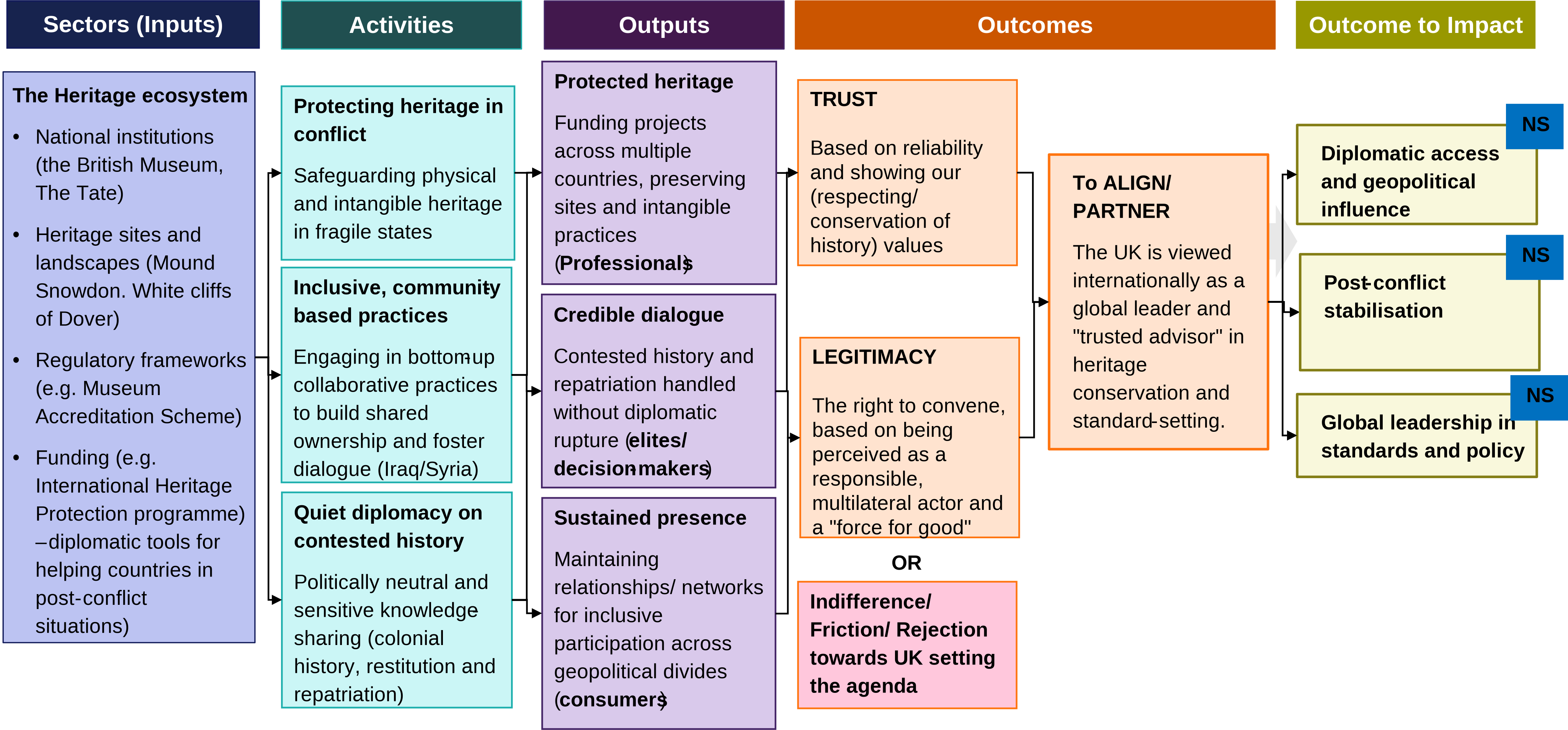
Figure 11: Values pathway for Heritage
“Feeling that it’s about intention. As soon as you try to WIELD soft power, it becomes hard power. Soft power should be happening organically through relationship- and trust-building/partnerships.” Heritage organisation
The literature highlights that the UK heritage sector actively protects physical and intangible heritage in fragile states. Through initiatives like the Cultural Protection Fund, which has awarded over £50 million to 159 projects across 19 countries, and community-based archaeological practices in places like Mozan, Syria, the UK empowers local populations to safeguard and manage their own heritage.[footnote 70] UK professionals employ a strategy of ‘quiet diplomacy’ rather than top-down legislative mandates to facilitate sensitive, peer-to-peer knowledge sharing on contested colonial legacies, restitution, and repatriation. However, sustaining institutional credibility requires balancing this openness to dialogue with structural reality. Despite the UK’s rhetoric towards decolonisation, strict legal barriers, such as the 1963 British Museum Act which prevents national trustees from permanently disposing of items, remain in place. As the UK lacks the legal mechanisms to facilitate structural restitution, this ‘quiet’ approach risks being perceived internationally as a stalling tactic, creating a tension between dialogue and action. These activities nonetheless result in a sustained operational presence in fragile environments (e.g. Ukraine, Yemen and Lebanon) and foster positive dialogues.
“UK institutions are really well respected internationally and trusted internationally. So, I would say that there’s probably quite a lot of evidence that that’s definitely the case for museums.” Heritage organisation
These interventions create two outcomes: trust and legitimacy. UK heritage institutions can signal ethical stewardship without displaying any political ambitions, thereby validating partners’ cultural identities and securing long-term relational capital. Due to UK standards, evidence and a balanced approach, foreign audiences view the UK heritage sector as a reliable and trusted advisor. This drives international audiences to align with or partner with the UK, seeking British cooperation and guidance on global challenges such as climate adaptation.
This pathway has national security implications. High-profile exhibitions and quiet diplomacy facilitate diplomatic access, providing spaces to keep dialogue running across geopolitical divides. Additionally, initiatives like the Cultural Protection Fund deliver direct post-conflict stabilisation. By transferring skills and rebuilding institutions in fragile states, the UK fosters local social cohesion and long-term economic resilience. Finally, this professional standing ensures global leadership in standards and policy, allowing British experts to steer multilateral responses to issues such as conservation and climate adaptation in forums like UNESCO.
8.5 Specific limitations
Contested history: Heritage operates as a relational process tied to identity and power. It frequently acts as a double-edged sword for international perceptions. Disputes over colonial legacies and the repatriation of collections such as the Parthenon sculptures and the Benin bronzes reveal deep geopolitical sensitivities. A cultural intervention that draws praise in one setting can easily provoke resentment in another.
Institutional prestige vs. the national brand: Foreign partners engage with bodies like the Tate or the British Museum as independent entities rather than state representatives; trust attaches directly to the institution.
The risk of instrumentalisation: Heritage does not operate as a simple input-output mechanism for state influence. The government cannot engineer the moral trust underpinning the sector’s international credibility. Attempting to instrumentalise this trust as a diplomatic lever strips it of authenticity, turning organic relationships into hard power. Soft power emerges from how institutions behave within shared moral spaces, rather than from loud marketing.
Funding and resource fragility: Soft power is not self-sustaining; it is fragile without adequate resources and investment. Constraints on funding threaten the underlying ecosystem that sustains the UK’s heritage.
9. Sports sector
9.1 Ecosystem
As a mass mainstream cultural activity, sport plays a significant role in the UK’s global influence and soft power.[footnote 71] Official statistics estimate sport’s Gross Value Added (GVA) at £20 billion,[footnote 72] but the Sport Satellite Account (SSA) (which uses a broader definition of sport-related activity to capture the sector’s full economic footprint across wider supply chains, including tourism, retail, and professional services) captures £53.6 billion in direct GVA alongside £29.5 billion in indirect supply chain effects (such as construction and media), totalling approximately £83 billion.[footnote 73]
Recent government strategies explicitly position sport alongside other cultural sectors in national planning.[footnote 74] For example, the DCMS’s Gold Framework (2023)[footnote 75] ties hosting major events to national goals in trade, investment, and global convening, while leading sporting figures sit on the UK’s recently launched Soft Power Council.[footnote 76]
Elite sporting leagues, with their historical brands and world-class talent and skills, are the highest-profile part of the sector. The Premier League generated £9.8 billion in Gross Value Added (GVA) for the UK economy during the 2023/24 season,[footnote 77] while sustaining a widespread broadcasting network across 189 countries.[footnote 78] Furthermore, the UK’s broader football ecosystem is expanding its commercial footprint, with the Women’s Super League reporting a £65 million five-year domestic broadcast deal starting in 2025/26, which rises to over £100 million when including additional production investment.[footnote 79] Alongside men’s football, other competitions such as English cricket, Wimbledon, Rugby Union and Formula One also maintain a major global profile.
The UK sport sector is also known for its international impact such as, International Inspiration, the legacy initiative of the London 2012 Games, engaged over 25 million children across 20 countries and directly influenced 55 national policies and The Premier League’s Premier Skills programme has trained over 41,000 coaches and reached 2.2 million young people globally.[footnote 80]
9.2 Pathway 1: Cultural Reach
Core logic: Sport – Cultural Reach
Global sporting spectacles capture attention and create emotional connections with international audiences. Sporting cultures and narratives that fans globally identify with create an engaged global fanbase. This generates Affinity, which drives the choice to consume, translating emotional attachment directly into the purchase of lucrative media broadcast rights, merchandise, and inbound tourism. Ultimately, this global consumption delivers significant economic growth, export revenue, and sustained national brand appeal.
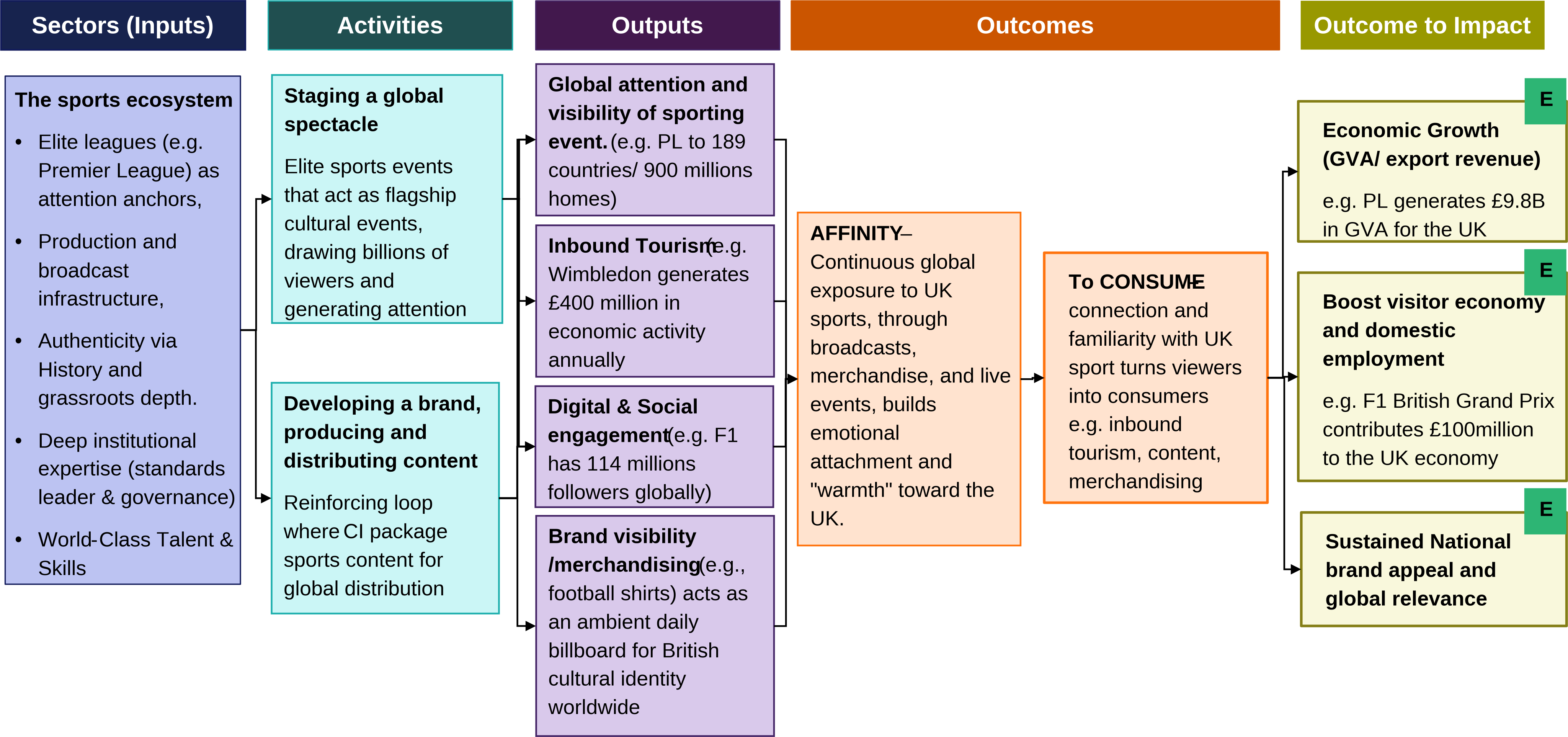
Figure 12: Cultural Reach pathway for Sport
Sport possesses a universal appeal that provides significant potential for soft power projection. The UK sports ecosystem holds an advantage in this sector due to its historical ties to major global sports, including its international recognition as the ‘home of football’ and its status as the birthplace of the Paralympic movement at Stoke Mandeville. Built on this legacy, the strength of the UK sporting ecosystem allows the country to build emotional connections with audiences worldwide and convert cultural visibility into tangible economic value.
“The UK is viewed as a world leader in live sporting events, with Wimbledon being a principal example” Sport stakeholder
Our research found that sport generates an emotional response towards the UK. In a saturated media environment with highly fragmented audiences, elite sporting events function as rare anchors of live global attention. Examples of the scale of this visibility were noted in our qualitative interviews with the Premier League broadcasting to 189 countries and reaching 900 million homes,[footnote 81] and Formula 1 drawing a cumulative global television audience of 1.6 billion across its race calendar. The sports sector works closely with the UK’s creative industries, which capture this cultural appeal and expertly package and distribute these live events globally.
“The Premier League does not explicitly reference the UK in branding - but there are obviously ties.” Sport stakeholder
By continuously broadcasting sports events globally, the sector uses this digital exposure to transform passive viewers into a global fan base with an emotional connection to British culture.[footnote 82] This leads to multiple outputs such as increased digital engagement, brand visibility and more inbound tourism.
The evidence shows that this affinity, or emotional connection, creates connections across the globe. For instance, UK officials use the country’s status as the home of football to generate a targeted sense of warmth toward the UK, using the sport as a primary entry point to bridge cultural distances and create a receptive environment for broader diplomatic discussions on issues such as climate and trade. This affinity for British sports translates directly into a single outcome: global consumption, for example, through broadcast rights, merchandise, and inbound tourism.
“The diplomatic network deploys these assets as entry points, leaning on football (the UK as ‘home of football’) to initiate engagement.” Government stakeholder
Our research estimates that this pathway leads to three long-term impacts. The first one is that this emotionally driven demand drives export revenues. This can be exemplified by the Premier League generating £9.8 billion in Gross Value Added for the UK economy during the 2023/24 season.[footnote 83] Secondly, by stimulating inbound tourism as fans travel to experience the heritage firsthand, through events like Wimbledon or the Silverstone GP, and by supporting domestic employment. The literature shows that the sport ecosystem supports approximately 1.25 million jobs across the UK[footnote 84] and a portfolio of 16 major events supported by UK Sport generated £373 million in direct economic impact and supported over 4,200 full-time jobs.[footnote 85]
9.3 Pathway 2: Utility
Core logic: Sport – Utility
Specialised technical infrastructure and elite event delivery embeds the sector into global markets. The reputation and utility of the sporting brands provide the UK with platforms for diplomatic leverage and convening power. Exporting professional frameworks and shaping international regulatory standards based on institutional prestige builds trust in the sector’s specific expertise, shaping broader international perceptions of the UK as a reliable partner.
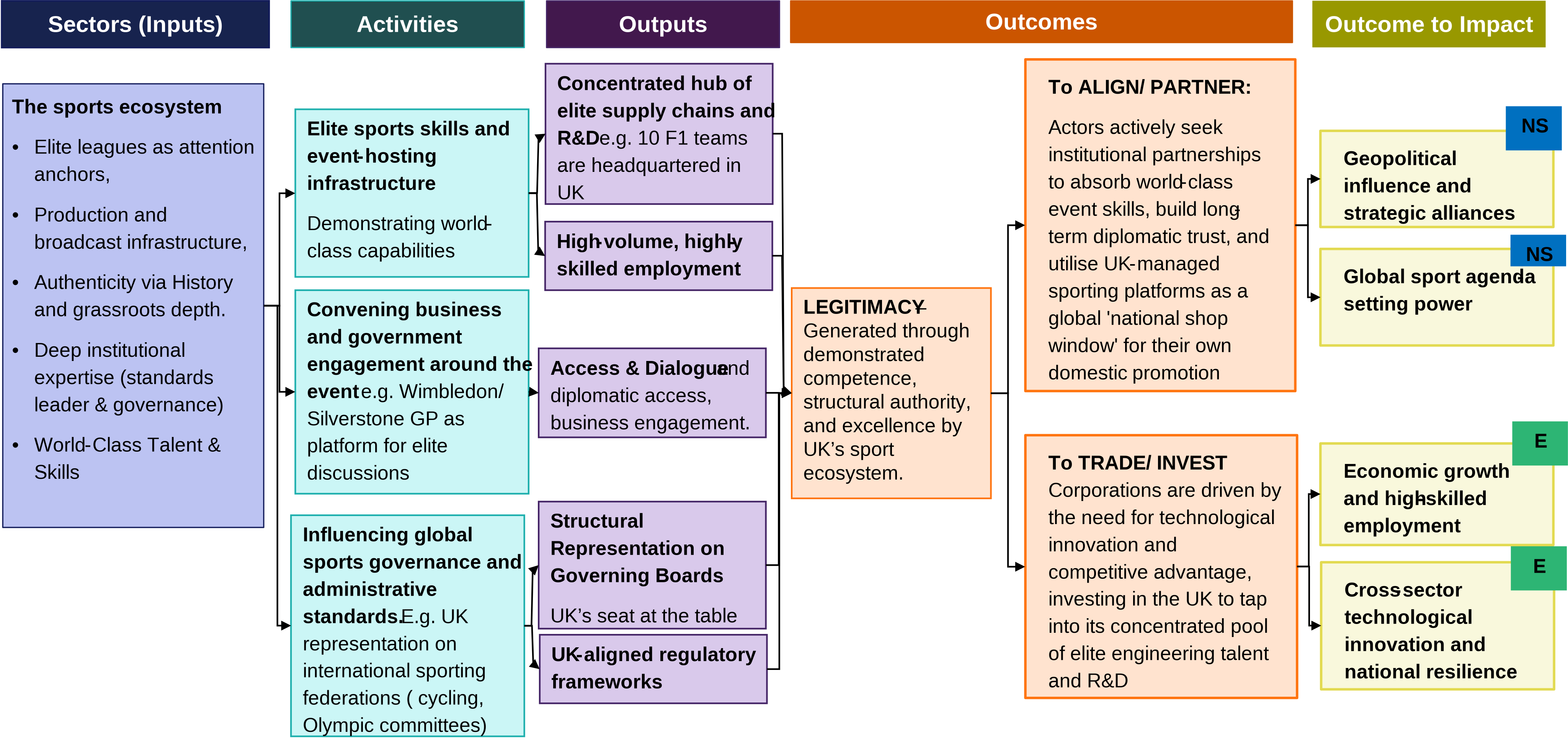
Figure 13: Utility pathway for Sport
The UK sport ecosystem generates international influence through its functional competence and structural authority. Activities like developing elite sports skills and maintaining world-class event hosting infrastructure help the UK to demonstrate technical capabilities that international peers can rely upon. This technical infrastructure sustains high-volume, highly skilled employment, with the broader sport ecosystem supporting approximately 1.25 million jobs across the UK.[footnote 86] The sector also leverages this infrastructure to convene business and government engagement. Major sporting properties like the Wimbledon Championships and the Silverstone Grand Prix function as platforms for elite discussions and open direct channels for diplomatic and business engagement.
“Grand Prix regularly attract presidents, prime ministers, royalty, and senior business and media figures. The interviewee sees this as a major, repeatable opportunity for the UK government to engage principal stakeholders around the world.” Sport stakeholder
The activity the sport sector does to prove its functionality is to influence global sports governance and administrative standards. Qualitative interviews note that UK sporting bodies actively seek structural representation on international federations, such as the UCI for cycling, helping to establish UK-aligned regulatory frameworks. UK’s targeted programmatic expertise also shapes domestic legislation within partner nations. For example, the International Inspiration legacy initiative drove 55 national policy and legislative changes abroad, embedding new frameworks for education systems, safeguarding norms, and overarching civic governance capacity.[footnote 87] The results of these activities demonstrate the UK’s competence in the sport ecosystem, structural authority, and excellence.
“Our main work internationally includes trying to increase British influence in UK sporting boards - e.g. try to get officials on board of UCI so that Britain is not at a disadvantage.” Sport stakeholder
As a result of this legitimacy, foreign actors may seek institutional partnerships to leverage the UK’s world-class event skills. An example of this is the delegations from the LA 2028 organising committee and Commonwealth African nations explicitly partnering with the UK to learn from its approach to hosting major events. Successfully delivering mega-events and exporting institutional expertise establishes the ecosystem as a “safe pair of hands” and a trusted authority in the global sports arena,[footnote 88] which in turn can translate into geopolitical influence, strategic alliances, and global sport agenda-setting power. The ability to align with or partner with foreign states due to its legitimacy may lead to benefits for the UK’s national security.
“There is a certain level of respect that other nations have for the UK, for our, our success in sport in the, in the past and for the kind of broader relationship.” Sport stakeholder
This pathway has economic growth implications. Interviewees highlighted that corporations, driven by the need for technological innovation and competitive advantage, may decide to invest in the UK to tap into its elite engineering talent and R&D. Industry evidence highlights that 10 of the 11 Formula 1 teams are based in the UK’s “Motorsport Valley”, a pull that has led major overseas manufacturers like Cadillac, Audi, and Honda to base or expand their operations in Britain. The influx of foreign direct investment and international demand for British technical expertise drives substantial economic growth and high-skilled employment. The sport sector generates an estimated £53.6 billion in direct Gross Value Added (GVA) and sustains a workforce of approximately 1.25 million people.[footnote 89]
9.4 Pathway 3: Values
Core logic: Sport – Utility
Because sport can generate global visibility, it is a vehicle for projecting values-based messages. For receptive international audiences, encountering these narratives can generate an affinity that drives the choice to consume, while also reflecting the broader values of the state to build the trust necessary to encourage foreign actors to align/partner. These values are reflected in training, policies, and administrative frameworks.
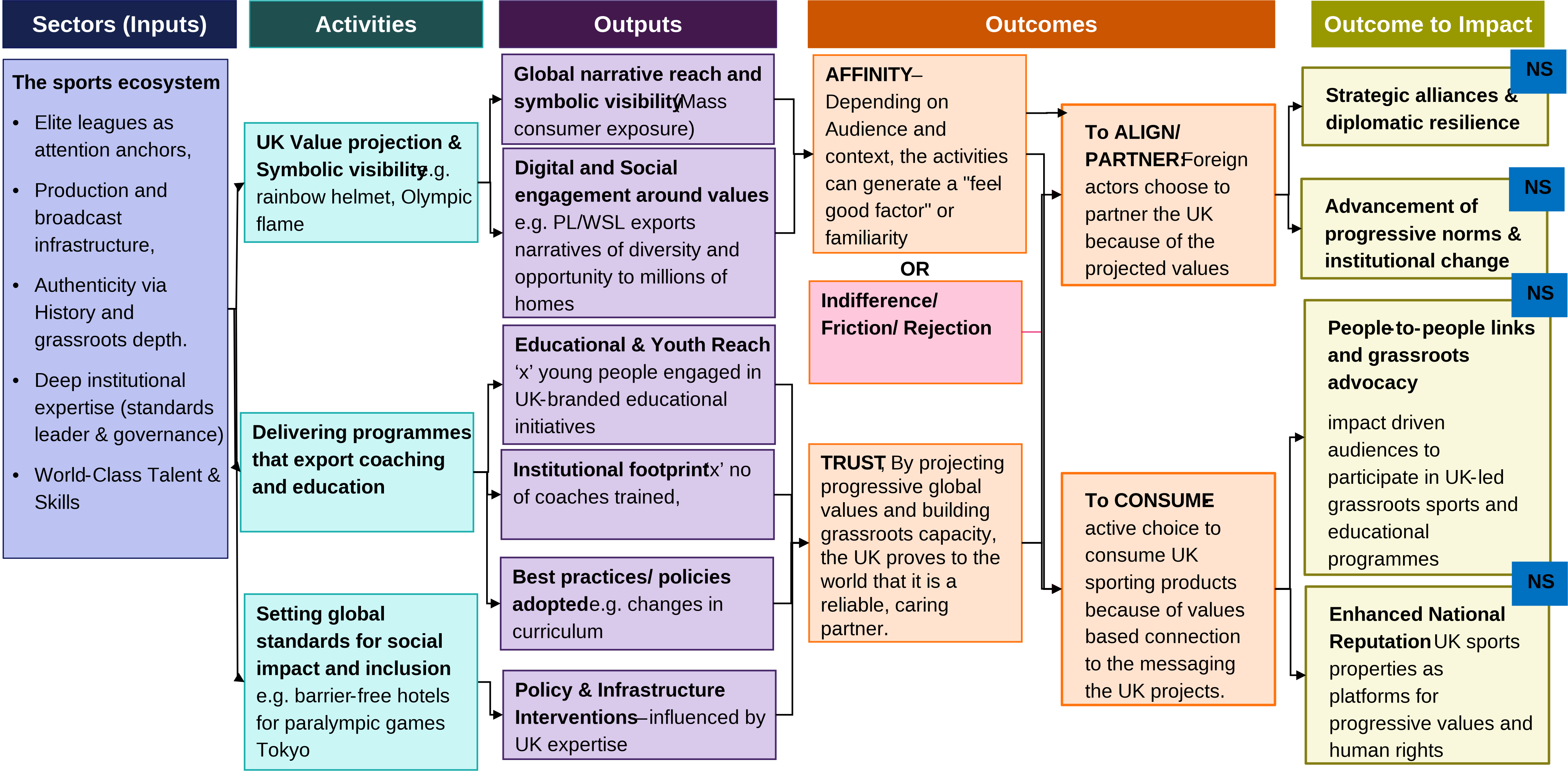
Figure 14: Values pathway for Sport
The UK sport sector generates influence through activities like value projection and symbolic visibility, exporting knowledge and setting global standards. Qualitative interviews reveal how elite sports use their platforms to project contemporary values internationally, with examples such as Paralympics GB maintaining the tradition of lighting the Paralympic flame at Stoke Mandeville to signal its heritage of inclusion, and Formula 1 drivers championing human rights by wearing rainbow helmets in restrictive contexts. The literature highlights that institutions like the Premier League and the Women’s Super League export narratives of diversity and opportunity.[footnote 90] This activity leads to outputs as: securing mass consumer exposure, symbolic visibility and digital and social engagement around progressive values in millions of homes worldwide.
“The Premier League embodies cultural and value synergy through consistent alignment with wider UK soft power strategies, reinforcing values of diversity, openness, and cultural sharing.” Sport stakeholder
“…it also perpetuates a reputation of the UK as somewhere that’s progressive, you know, that’s promoting equality, promoting those kinds of values…“ Sport stakeholder
The literature also documents how the sector delivers programmes that export British coaching and education, with initiatives such as Premier Skills, which achieved massive educational reach by engaging over 25 million and 2.2 million young people, respectively.[footnote 91] According to the literature, this activity creates a large institutional footprint, training hundreds of thousands of coaches globally and leading directly to foreign nations adopting UK best practices. This is best evidenced by the International Inspiration programme, a partnership between UK Sport, UNICEF and the British Council, which led to 55 national policy and curriculum changes.[footnote 92] Qualitative interviews further demonstrate how the ecosystem sets global standards for social impact. Evidence shows UK expertise directly influencing policy and infrastructure interventions, such as advising local authorities to convert barrier-free hotels in Tokyo and Yokohama for independent wheelchair users.
“We’ve worked with Japanese hotels to convert ‘barrier-free’ rooms and bathrooms for independent wheelchair users; engaged ministers, mayors and the organising committee.” Sport stakeholder
The literature notes that, depending on the audience and geopolitical context, these activities generate affinity, creating a ‘feel-good factor’ and familiarity. Academic reviews and qualitative interviews both caution that because values are culturally contested, this approach could lead to indifference, friction, or rejection if UK norms clash with local expectations.[footnote 93]
“The emphasis is on relationship capital: we aim to be a ‘very positive, trusted partner,’ prioritising strong relationships with other nations and international bodies, and open sharing of best practice and skills.” – Sport stakeholder
“For example, in Tanzania with Skateboarding GB, where we tried to encourage them to take part in sport. This was alongside wider diplomatic work that British ambassadors were conducting.” Sport stakeholder
These outcomes may have an impact on the national security of the UK. Interviews indicate that this messaging of values may secure strategic alliances and diplomatic resilience while driving the advancement of progressive norms and institutional change internationally. Additionally, the decision to actively consume UK products can builds people-to-people links and grassroots advocacy as international audiences actively participate in UK-led grassroots sports and educational programmes. By using UK sports properties as platforms for progressive values and human rights, the sector enhances the national reputation on the world stage.
9.5 Specific limitations
The risk to the host: While states use sport mega-events to project prestige, this global spotlight automatically invites intense international scrutiny of domestic flaws, such as corporate lobbying, cronyism and erosion of civil liberties. Without credible messaging, the attempt to buy visibility actively backfires on the host nation.[footnote 94]
The audience perception: State-backed narratives, including “sportswashing,” are not passively absorbed by global viewers. Their effectiveness is highly context-dependent, meaning a sporting event that successfully generates goodwill with one regional audience may fail entirely with another due to differing local politics and media environments.[footnote 95]
10. Civil society
10.1 Ecosystem
Civil society occupies a distinctive and contested position within the UK’s soft power landscape. Comprising a collection of non-governmental organisations, charities, voluntary associations, and community groups, the sector focuses on social justice, civic engagement, community resilience, and service delivery. Unlike other DCMS sectors, where the government actively positions assets within a strategic soft-power toolkit, civil society’s relationship to soft power is more complex.
The sector operates through diverse mechanisms, including campaigning, policy engagement, network creation, and cross-border partnerships, and advocacy. Major UK-based organisations maintain significant international footprints: Oxfam GB and its 426 Partner organisations supported 9.21 million people in 2024/25, including 8.05 million through humanitarian work, 51% of whom were women and girls.[footnote 96] Voluntary Service Overseas (VSO) reached nearly 3.6 million people through education programmes, 200,000 through health initiatives, and over 400,000 through resilient livelihoods programmes, deploying a distinctive volunteer empowerment model designed to build local capacity and sustainability rather than deliver one-off aid.[footnote 97]
From a soft power perspective, civil society functions as a proxy for democratic values and is frequently measured internationally through metrics such as the number of NGOs, participation in activism, and civic freedoms. Sources, including Freedom House’s annual ‘Freedom in the World’ research and V-Dem’s Democracy Report, measure liberal democratic indicators (free elections, political pluralism, rule of law, and freedom of expression).[footnote 98] However, these measurements assess whether civil society exists and is healthy, rather than capturing soft power effects such as whether UK organisations are trusted internationally, generate attraction, or lead to policy shifts abroad.
The sector’s soft power potential is currently constrained by both domestic and international factors. Domestically, recent government actions have drawn external condemnation from bodies including the United Nations.[footnote 99] These developments place civil society freedoms in tension with the state, undermining the autonomy and credibility which is necessary for the sector to function as authentic soft power.
Internationally, restrictions on Civil Society could impact the UK sector’s potential soft power. The CIVICUS Monitor (2024) reports that 118 countries have serious civic space restrictions, with only 2.1% of people living in countries with open civic space.[footnote 100] V-Dem Institute data (2025) reveals that for the first time in over 20 years, autocratic countries (91) outnumber democratic ones (88), with liberal democracies now the least common regime type. Less than 12% of the global population lives under democracy, the lowest figure in 50 years, while 72% live in autocracies, the highest since 1978.[footnote 101] This global “closing space” trend, documented by the Charities Aid Foundation, sees governments worldwide introducing policies that inhibit civil society organisations and activists.[footnote 102]
This contested landscape complicates civil society’s soft power utility. Historical case studies, such as Su Lin Lewis’s research on Myanmar, demonstrate that Britain has had a fundamental role in shaping civil society through education, language, and parliamentary democracy, but has also competed with the United States, Soviet Union, and China for influence among politicians, activists, and intellectuals.[footnote 103]
10.2 Pathway 1: Cultural Reach
Core logic: Civil Society – Cultural Reach
Civil society generates influence by embedding volunteers and educators within local communities to build long-term relationships. By working collaboratively with local populations and host governments civil society can creates a sense of shared endeavour that leads audiences to study in the UK and trust the UK.
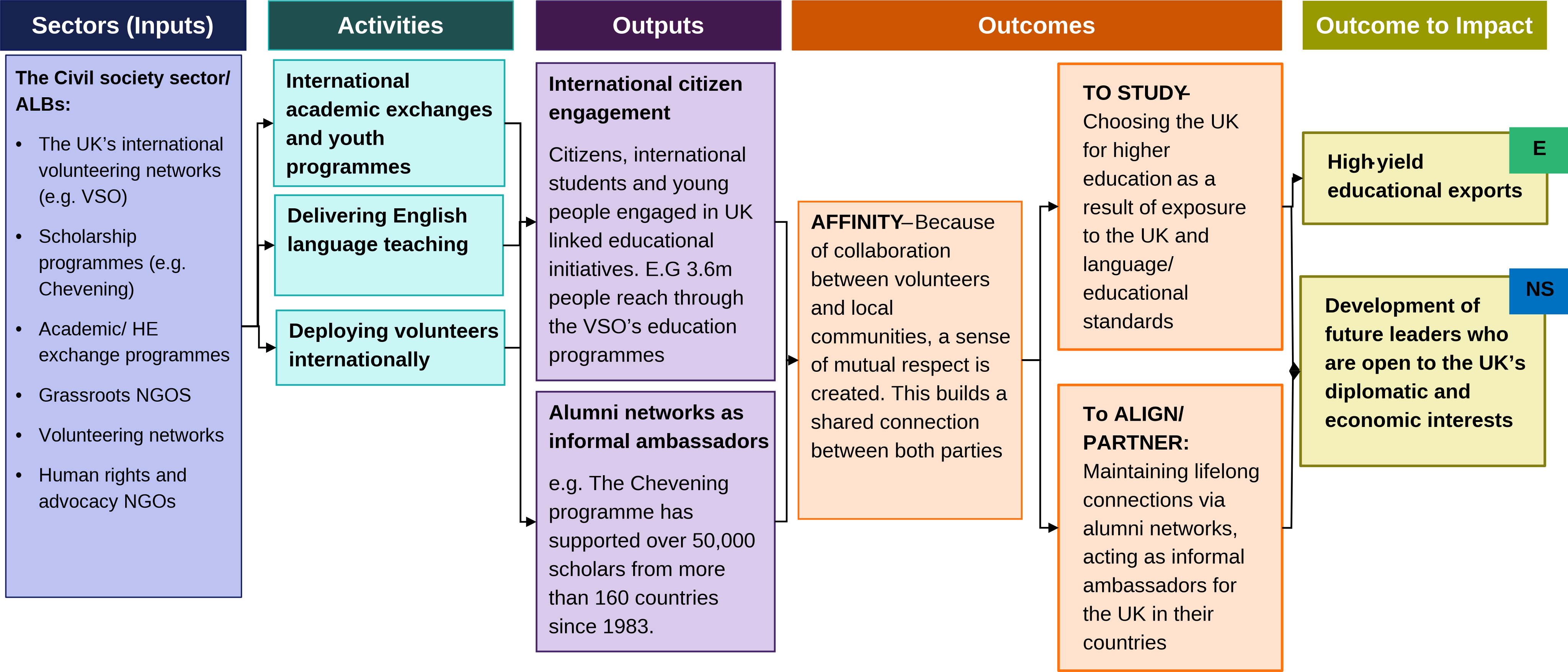
Figure 15: Cultural Reach pathway for Civil Society
The UK civil society sector has international influence through actions like people-to-people engagement, educational exchanges, and volunteer deployment. Unlike sectors where influence flows primarily through mass exposure or commercial relationships, civil society builds connections through direct collaboration with communities abroad.
“One of the strengths we have is our network of 100 countries that’s been in place for 90 years. The network as a platform and the knowledge and insights and connections that that platform has for 90 years. It’s been there for that long-term relationship, that slow burn type thing which not many other organisations have.” Civil society sector
The literature documents how UK fellowship and education programmes create lasting networks of international influence and citizen engagement. The Chevening programme has supported over 50,000 scholars from more than 160 countries since 1983, while the John Smith Trust provides fellowships to emerging leaders from transitional democracies.[footnote 104] These alumni form global networks across government, business, academia, and civil society, creating familiarity with the UK. Likewise, organisations like the VSO have a wide reach and evidence shows that volunteer deployment represents a distinctive mechanism for building international affinity. Voluntary Service Overseas (VSO) reached nearly 3.6 million people through education programmes in 2023/24, with 94% aged 15-24.[footnote 105]
“We attempt to select the leaders of the future and send them all fees paid to the UK… we try to create these touch points where people feel a connection to the UK, whether that is through events that we host or through scholarships that we support. When these people get to positions of power, they’re interested in the UK.” Government stakeholder
Where people internationally are exposed to UK linked educational and cultural programmes, this builds affinity to the UK. This collaborative approach, working alongside rather than for local communities, generates mutual respect and breaks down psychological distance between UK actors and international populations. One outcome of this pathway is that this affinity towards the UK, encourages people that have engaged in UK educational programmes to study in the UK. The literature suggests this exposure prompts decisions to pursue higher education in the UK. In addition, the affinity leads aligning and partnership with the UK through alumni networks and other equivalent channels. Because people have engaged with and enjoyed the UK educational programmes when they were younger, it leads them to act as informal ambassadors for the UK encouraging others to take part in similar programmes in the future.
In the long term, affinity built with the UK through educational programmes leads to the economic impact of high-yield educational exports. There is a direct economic returns through tuition fees and living expenditure, because people want to study in the UK. Alongside this long-term national security and diplomacy are bolstered where fellowship alumni progress into positions of authority abroad. Their familiarity and affinity with the UK creates networks of influential individuals receptive to British diplomatic and economic engagement.
10.3 Pathway 2: Utility
Core logic: Civil Society - Utility
Civil society can generate soft power by delivering humanitarian and development assistance that meets urgent human needs independently of state direction.
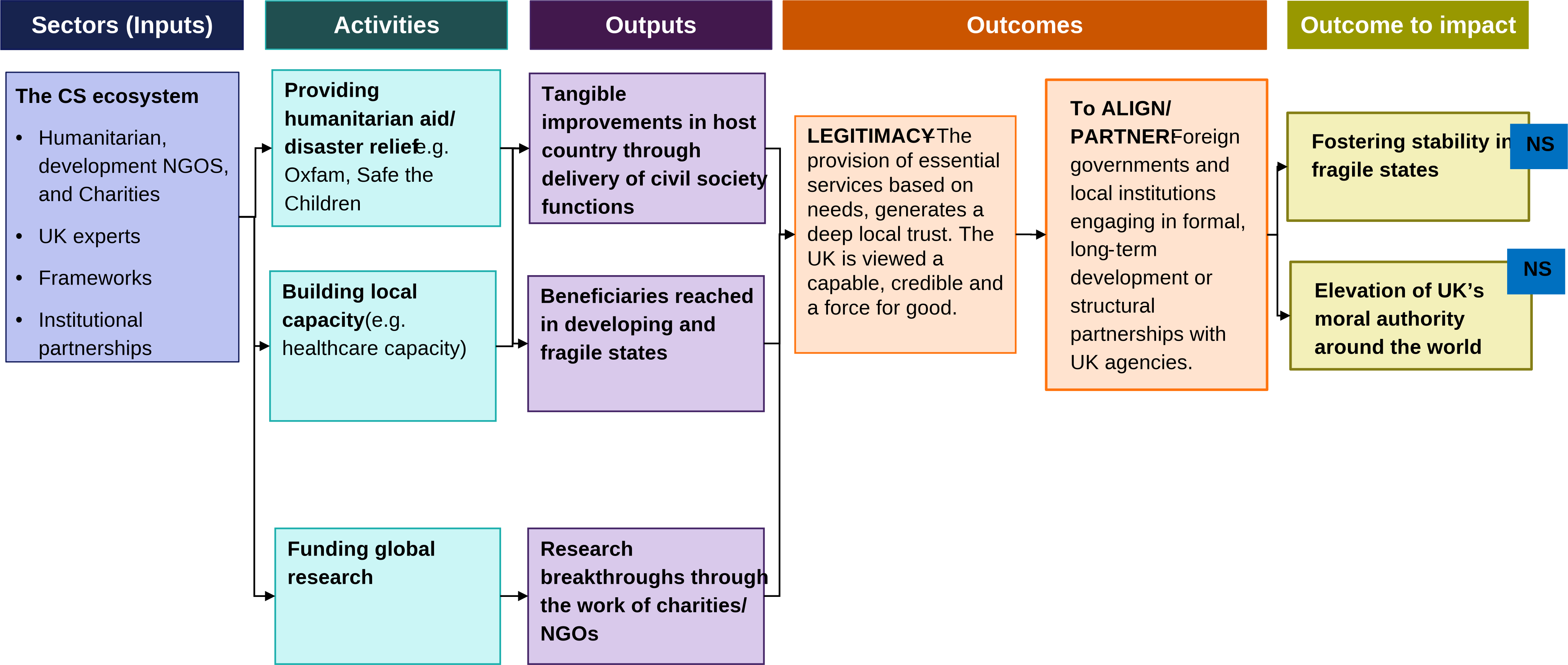
Figure 16: Utility pathway for Civil Society
The UK civil society sector has influence through the delivery of humanitarian assistance, capacity-building, and research that addresses global challenges. Major UK-based organisations maintain significant international footprints, demonstrating technical competence and operational capability in complex environments. This includes providing humanitarian aid and disaster relief, through organisations like Oxfam and Save the Children.
“It starts with the reputation. The UK has a good reputation here in Mexico. So, most of the time when we speak to stakeholders for the first time, they will be open to start the conversation.” Government stakeholder
Through the actions of an ecosystem of NGOs, charities and humanitarian aid, tangible improvements are delivered in countries around the world. Industry evidence documents the scale of this delivery. Organisations including Save the Children and The HALO Trust deliver frontline assistance and emergency relief in crisis zones,[footnote 106] Oxfam GB and its 426 partner organisations supported 9.21 million people globally in 2024/25, including 8.05 million through humanitarian work, 51% of whom were women and girls.[footnote 107] UK organisations deliver crucial functions of civil society that would otherwise be lacking in countries around the world. Notably, this includes work like the VSO’s integrated programmes, which reach millions across the world, providing support for education, health, and livelihoods in fragile and developing contexts.
Working in conjunction with this, charitable foundations like the Wellcome Trust aim to fund research breakthroughs to address global health challenges.
The wider UK civil society ecosystem is viewed as a legitimate partner for providing support around the world, that is independent from the state. The literature review shows that influence is earned because these organisations deliver essential services based on need rather than political calculation. The literature highlights that because UK civil society actors operate independently of the state, they position the UK as a credible, capable, and reliable partner in contexts where direct government intervention might be viewed with suspicion. This independence generates legitimacy that state-backed initiatives cannot easily replicate. In the longer term, foreign governments and local institutions choose to engage in formal, long-term development partnerships with UK agencies.
Where countries have chosen to partner with the UK, this supports national security impacts. The long-term impact of delivering humanitarian assistance and post-conflict recovery contributes to stability in fragile states, reducing the conditions that generate displacement and extremism and addressing security challenges at their source. In addition, by being seen as a reliable partner who delivers vital support on the ground in countries that need it, it further elevates the UK’s moral authority, where the UK is seen as a force for good.
10.4 Pathway 3: Values
Core logic: Civil Society Core logic: Civil Society - Values
Civil society can generate soft power by convening policy dialogue and holding power to account with arm’s-length independence from government. By championing democratic values and the rule of law, civil society can earn trust and legitimacy, this can lead to the adoption of UK-aligned norms and standards.
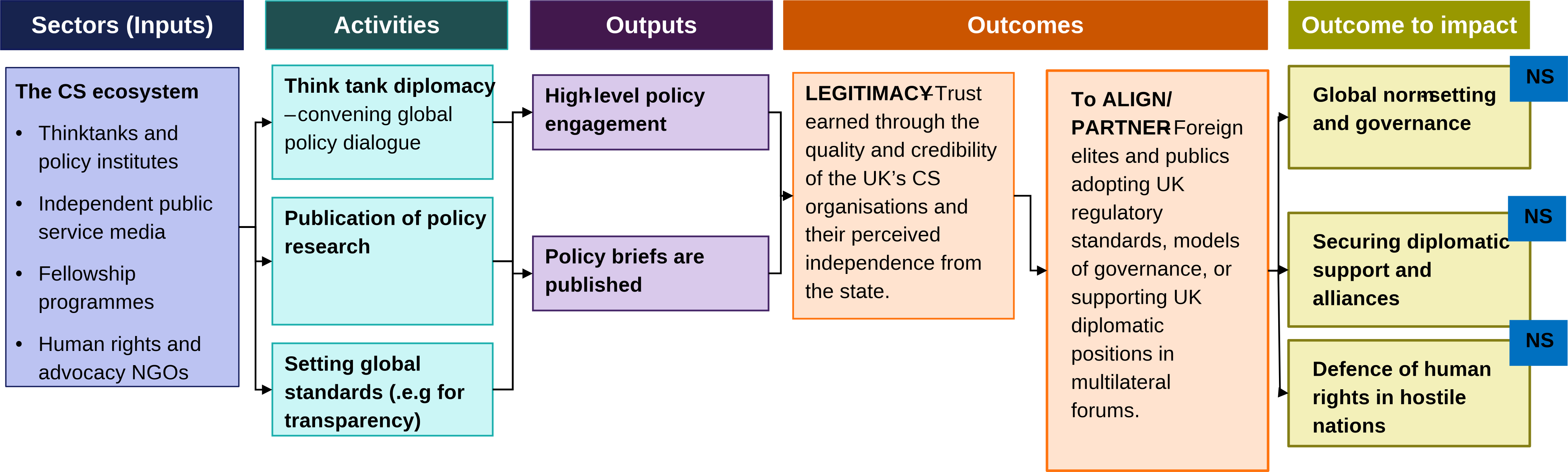
Figure 17: Value pathway for Civil Society
The UK civil society sector has influence through actions like think tank diplomacy, policy research, and contributions to global standard-setting. Operating at arm’s length from government, these organisations engage credibly in contexts where direct state intervention would be viewed with suspicion.
“We take this cultural relations approach to our work where it’s not top down, it’s not that the UK knows best – we co-create and we develop together with partners in country projects and programmes.” Civil society sector
The literature documents how UK think tanks and policy institutes function as convening platforms for international dialogue and high-level policy engagement. Organisations such as Chatham House and RUSI bring together international leaders, policymakers, civil society representatives, and journalists for policy discussion outside traditional state diplomacy. These institutions produce authoritative research and analysis on global challenges that informs international debate and decision-making. Our research shows that UK civil society organisations also contribute to developing international standards in areas including transparency, anti-corruption, safeguarding, and institutional governance. This standard-setting work extends British approaches and norms into international frameworks, shaping how global challenges are understood and addressed.
“What we are trying to do is say we can achieve more together, we have some experience that might be helpful… you might also give us your feedback and your own experience. Some other embassies will try to say, ‘we already know how to do it and we’re going to show you’ – we do the other way around.” Government stakeholder
“Countries are wanting to learn from the UK sector to develop their creative industries and creative economies. There’s a partnership between the UK and the ASEAN countries to share UK expertise, UK knowledge, UK experience… which they want to learn from and develop their own.” Civil society sector
The literature highlights that this arm’s-length independence from the UK government creates legitimacy for the UK’s standing internationally. Namely essential moral authority and respect from foreign audiences is generated because audiences can see that organisations within the broader ecosystem are independent from the state. Organisations are perceived as acting on principle rather than state interest, meaning they can engage credibly in contexts where official diplomatic channels are constrained or compromised. Grounded in this legitimacy, foreign elites and publics adopt UK regulatory standards and models of governance, or support UK diplomatic positions in multilateral forums. Organisations in other countries adopt the UK’s standards and positions internationally and within their own country.
“The British Council here has done a deal with Tokyo government to run their English language testing for Japanese high schools. Now all those kids are learning a British curriculum, and they know it’s delivered by British Council. It does mean we’re increasing the level of English speaking, which then makes people more likely to live in the UK, study in the UK, trade with the UK.” Government stakeholder
The trust built through independent civil society engagement translates into diplomatic capital, supporting long-term impact on national security. Partner countries who have engaged with credible UK institutions are more predisposed to support UK positions and enter into strategic alliances to support national security. UK advocacy organisations and human rights defenders also maintain pressure on authoritarian regimes and document abuses in contexts where official diplomatic engagement is constrained, sustaining attention to human rights concerns and providing support to local activists.
10.5 Specific limitations
Competing narratives and contested influence: Historical case studies, such as research on Myanmar, demonstrate that UK influence through civil society has always been contested,[footnote 108] competing with other powers including the United States, Soviet Union, and China. Furthermore, evidence suggests that a free and healthy civil society is no longer a pre-condition for soft power success, authoritarian states achieve significant soft power outcomes through alternative means, while some actively weaponise civil society structures for destabilisation.
The perceptions and health of the UK’s own civil society: The reputation and health of the UK’s civil society, namely it being in a positive state, is a pre-requisite for being perceived to have legitimacy and credibility overseas. Changes in government agendas, restrictions to civil liberties (e.g. attitudes towards non-violent civil disobedience), can undermine soft power in this sector, as international audience may question why the UK has the right tell others how to act.
11. Visitor economy
11.1 Ecosystem
Rather than a single discrete industry, the visitor economy covers a range of activity: leisure and business tourism, international study, short-term mobility (such as conferences, festivals, and sporting events), and longer-term stays linked to work, research, and educational exchanges.[footnote 109]
The visitor economy relies on physical infrastructure, such as museums, historic heritage sites, and major film studios, and intangible cultural draws, including the English language, reputation and historical traditions. These core assets span various other DCMS sectors, but the visitor economy provides the mechanism for audiences to engage with them.
Domestic tourism is a crucial part of the visitor economy. With Britain recording 105.6 million domestic overnight trips and £32.9 billion in spend in 2024, this domestic activity sustains the hospitality, transport, and cultural venue infrastructure that ultimately supports the international visitor experience.[footnote 110] This is an example of how the visitor economic links to other sectors, with the creative industries through ‘screen tourism,’ where international visitors are motivated to travel after seeing UK locations in film and television.[footnote 111]
The global appeal of these combined assets draws millions of international tourists, students, and working professionals, whose mobility is often driven by practical motivations, such as career advancement, educational prestige, or leisure. Inbound tourism serves as a major export earner, with the UK recording 42.6 million international visits in 2024, generating £32.5 billion in spending.[footnote 112] Overall, the visitor economy contributed an estimated £58.2 billion in direct Gross Value Added (GVA) in 2023.[footnote 113]
11.2 Pathway 1: Cultural Reach
Core logic: Visitor Economy – Cultural Reach
Projecting compelling cultural narratives and facilitating lived experiences through travel reduces psychological distance and builds emotional affinity with international audiences. The historical prestige, scale, and quality of specific, world-leading institutions attract visitors. This direct, people-to-people engagement sustains high-yield cultural tourism and can create trust in the UK.
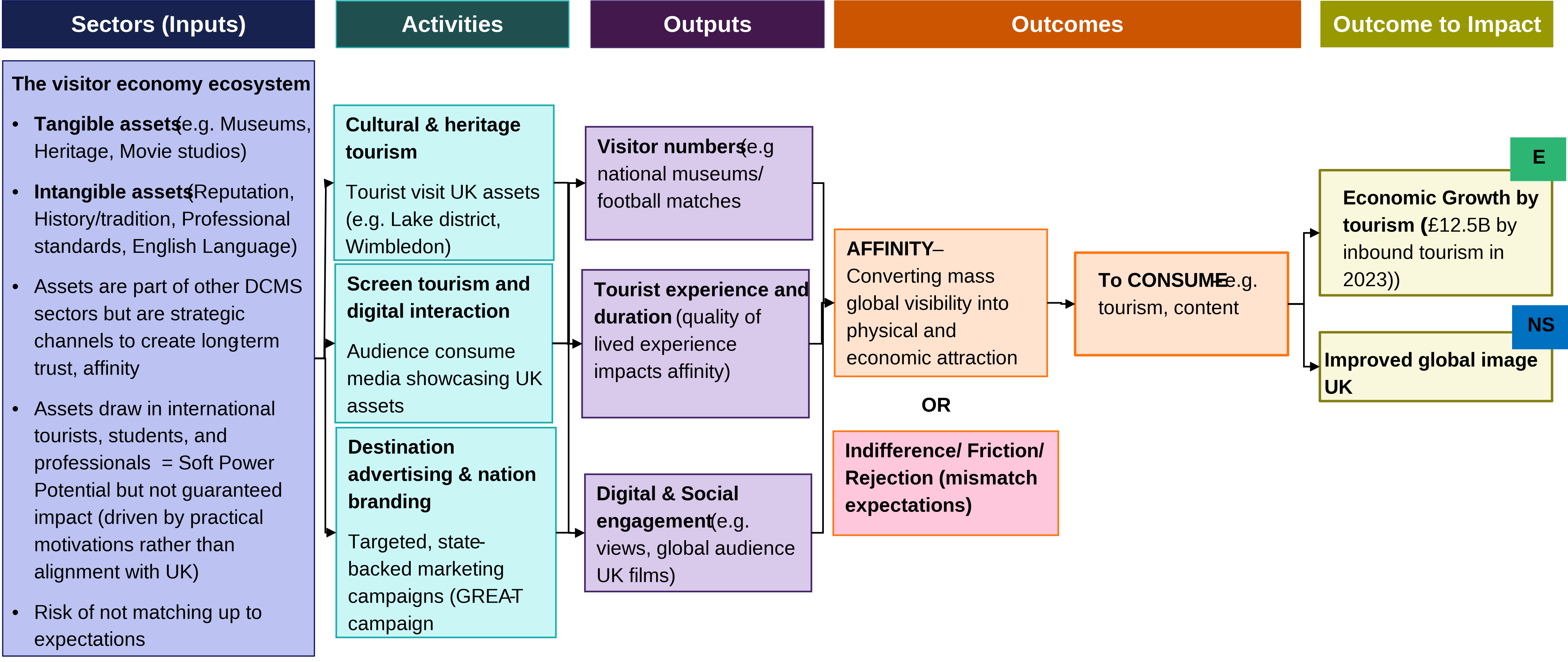
Figure 18: Cultural Reach pathway for Visitor Economy
The visitor economy generates influence through a combination of cultural and heritage tourism, screen tourism, and destination advertising. This sectors influence is closely linked to other DCMS sectors, and its assets serve as strategic channels for building long-term affinity and trust with audiences abroad. The main activity in this pathway is focused on tourism. Interviewees emphasised a range of UK attractions such as the White Cliffs of Dover, the Stonehenge landscape, and the Lake District, alongside major events like the Wimbledon Championships. The Tate network alone sees between 6 and 8.4 million annual visits, with international tourists making up half the audience at Tate Modern. Audiences consume media showcasing UK assets, with research showing that film and TV location tourism, ranging from James Bond franchises to Harry Potter, acts as a material driver for travel.[footnote 114] The UK government funds destination advertising and nation branding such as the GREAT campaign and VisitBritain’s Starring GREAT Britain, package and market the country to global audiences.[footnote 115]
“Filming at Trust places reliably drives spikes in visitation, including internationally, often lasting years, and social media can forge powerful international links to specific sites.” National Trust
These activities secure global visibility that translates into measurable visitor numbers and digital engagement. Industry data shows this creates millions of direct interactions, with 42.6 million international visits overall in 2024[footnote 116] and significant footfall across national museums, heritage sites, and football matches. The literature emphasises that the tourist experience and duration are critical metrics. Heritage-motivated visitors tend to stay longer and spend more, with the national average sitting at 6.9 nights per visit.[footnote 117]
“While the UK’s heritage appeal is strong, the perceived “welcome” is not always as strong as it could be, which can temper visitor sentiment.” Government Stakeholder
Depending on the quality of this exposure, these engagements can generate affinity, converting global visibility into physical and economic attraction. The British Council’s empirical research demonstrates that direct people-to-people contact through travel builds emotional familiarity, warmth, and trust.[footnote 118] However, the literature warns that this affinity is highly conditional; a mismatch between branded expectations and lived reality can lead to indifference, friction, or rejection, such as the ‘Paris Syndrome’ (tourists experiencing a culture shock, disappointment, and psychological distress due to the stark contrast between their idealised image and the urban reality of the city),[footnote 119] which is a negative outcome in this pathway. However, when the experience successfully meets expectations, it drives the active behavioural choice to consume. This outcome, which is driven by emotional connection and brand visibility, entices international audiences to make the economic choice to purchase UK cultural products, travel to the UK, and spend money within the domestic hospitality and visitor sectors.
“They cultivate trust through first-hand experiences of studying and collaborating in the UK…“ Arts Stakeholder
The active choice to consume impacts the economic growth by tourism. Sector data confirms that inbound heritage tourism alone generated £12.5 billion in spending in 2023,[footnote 120] while the broader visitor economy brought in £32.5 billion in 2024.[footnote 121] Beyond immediate financial returns, another impact is the sustained people-to-people contact and strategic nation branding which cultivate an improved global image for the UK. By transforming passive viewers into active visitors and informal advocates, the sector could help establish the relational capital required to enhance the UK’s reputation.
“…Students and partners become ambassadors for the college, the UK study system, the UK creative industries, and London, leading to long-term links and openness to partnerships.” Arts Stakeholder
11.3 Pathway 2: Utility
Core logic: Visitor Economy – Utility
Specialist higher education generates structural authority through elite training and the cultivation of global alumni networks. World-leading institutions like the Royal College of Art and the Courtauld Institute of Art equip international students to export UK-trained protocols and approaches directly back to their home institutions. This integration of UK expertise into overseas knowledge systems and home economies prompts future global leaders to maintain institutional loyalty, align their professional standards with British practices, and sustain long-term international partnerships.
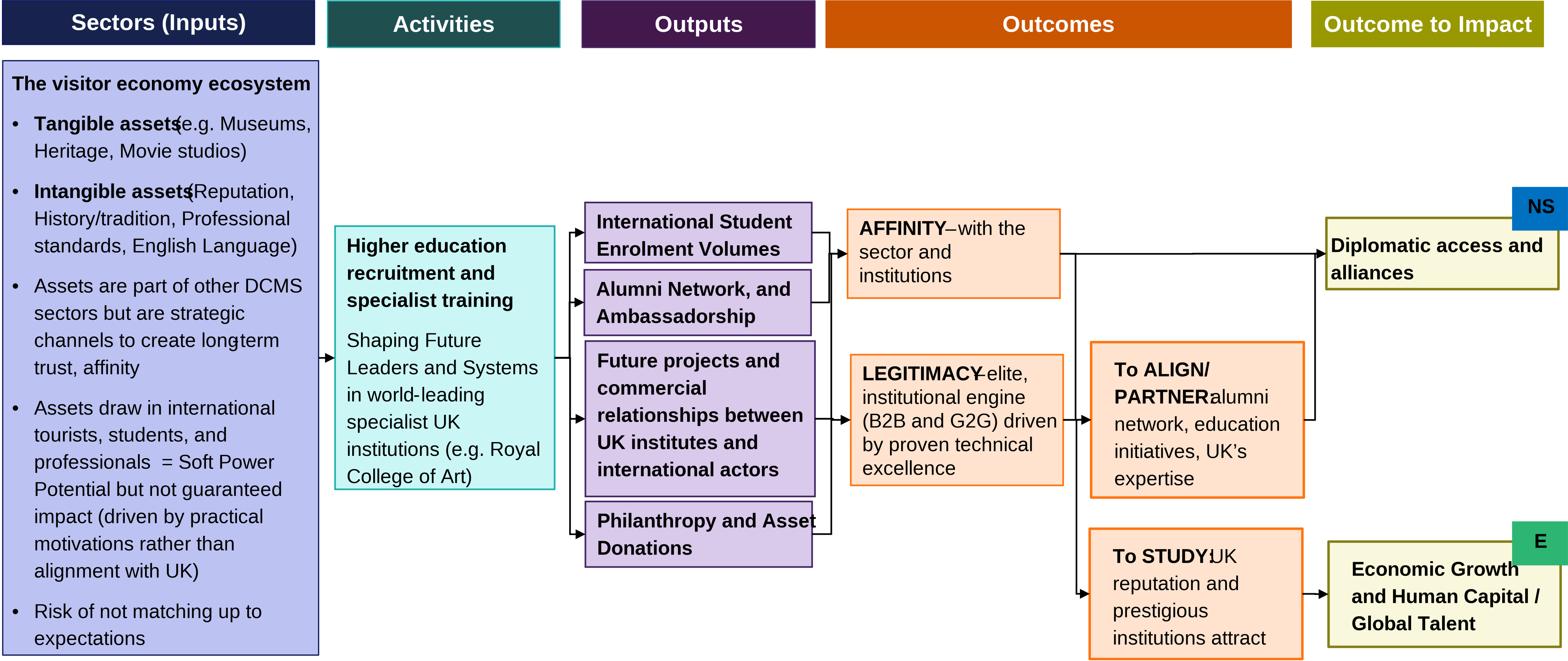
Figure 19: Utility pathway for Visitor Economy
The visitor economy generates influence through the UK’s higher education recruitment and specialist training. Qualitative interviews highlighted how world-leading specialist UK institutions, such as the Royal College of Art (RCA) and the Courtauld Institute of Art, actively shape future global leaders and systems by delivering high-quality, research-led education to international cohorts.
“They [International students at the Courtauld] are seen as delivering ‘very high quality’ education in art history, curating, art business, and conservation, which international audiences value.” Cultural Stakeholder
Because of the UK’s sustained reputation for education and specialist skills, the ecosystem generates outputs such as high international student enrolment, with institutions like the RCA recruiting from approximately 80 countries, which in turn creates an extensive global alumni network and ambassadorship footprint. This can lead to future projects and commercial relationships between UK institutes and international actors through alumni networks. And as international students bring UK-trained protocols and approaches that can help shape approaches in home countries. International alumni and donors advocate for UK institutions, contribute financially, and gift major assets, such as multi-million-pound artworks and collections, to the UK cultural sector.
“International students take UK-trained protocols and approaches back to their home institutions, shaping ‘home economies’ and ‘home knowledge systems’.” Educational Stakeholder
“International donors have made significant gifts (e.g. a Joan Mitchell work valued at c. £30m; parts of the Daskalopoulos collection), indicating attraction and esteem attached to a UK institution.” Arts Stakeholder
In this way, the visitor economy’s activities lead to two outcomes: generating affinity with specific institutions and specific institutions and legitimacy by proven technical excellence. Interviewees note that international students and partners often engage with a specific world-leading institution in its own right rather than explicitly seeking out a generic UK brand. Additionally, functioning as an elite, institutional engine (driving B2B and G2G connections) built on its legitimacy, the UK’s education system earns structural authority that serves as a tool for broader UK soft power.
“Partners are drawn to the Royal College of Art’s specific reputation and the benefits of associating with a top institution, rather than a generic ‘UK’ pitch.” Arts Stakeholder
Drawn by the global prestige and reputation of these institutions, foreign students actively choose to study in the UK. Furthermore, the qualitative evidence shows that alumni who move into senior leadership roles across global industries frequently seek to reconnect with their UK institutions. This alumni network helps to build long-term institutional links, research partnerships, and education initiatives that rely on the UK’s technical expertise.
“Many collaborations originate from alumni who move into senior roles and seek to reconnect, catalysing institutional links.” Cultural Stakeholder
The literature also highlights that the choice to study in the UK, creates the long-term relational capital, intercultural understanding, and elite networks required to secure future diplomatic access and alliances.[footnote 122] This is a long-term impact that benefits the UK’s national security. Additionally, this pathway also leads to a positive impact on economic growth. Nation branding evaluations estimate that international student expenditure contributes millions of pounds to the UK economy annually, while the sustained inflow and training of global talent ensures that UK-educated professionals continue to lead international industries, reinforcing the UK’s global competitive advantage.
“The UK standing is reinforced when UK-trained talent is visible in leading companies and on major international stages.” Arts Stakeholder
11.4 Pathway 3: Values
Core logic: Visitor Economy – Values
Direct, lived experiences through travel, study, and cultural exchange generate Moral Trust. When the reality of visiting the UK matches its projected narrative of openness and institutional quality, short-term visits develop into durable, trust-based networks.
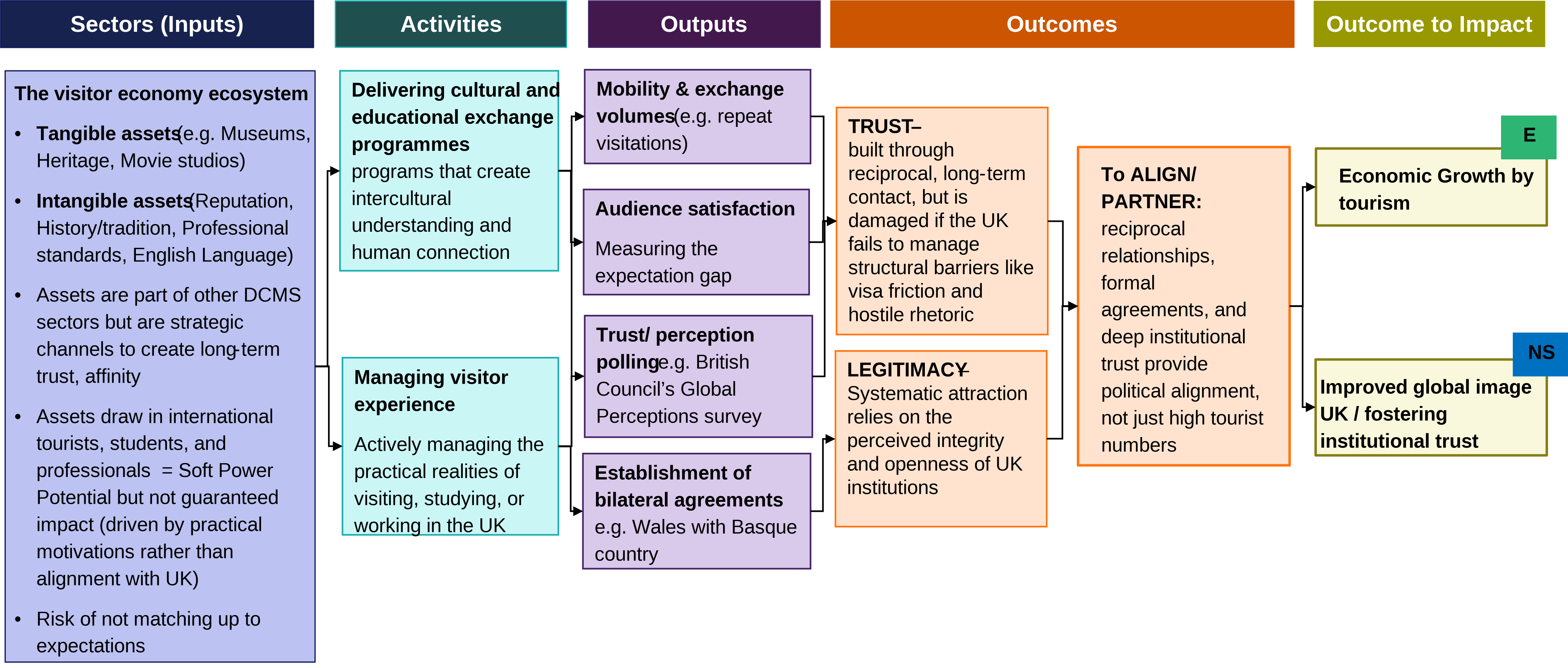
Figure 20: Values pathway for Visitor Economy
By delivering cultural and educational exchange programmes, the visitor sector creates intercultural understanding and human connection. The literature highlights that alongside these programmes, actively managing the visitor experience, specifically the practical realities of visiting, studying, or working in the UK, is essential for shaping international perceptions.[footnote 123]
These two activities help the ecosystem generate outputs such as sustained mobility and exchange volumes, including repeat visitations. Additionally, the sector tracks audience satisfaction by measuring the expectation gap between the UK’s branded image and the lived reality visitors encounter. The literature notes this is frequently evaluated through trust and perception polling, such as the British Council’s Global Perceptions survey.[footnote 124] Furthermore, these people-to-people exchanges translate into formal institutional outputs, including the establishment of bilateral agreements. Qualitative interviews demonstrate how long-term contact and shared heritage lead directly to formalised Memoranda of Understanding and bilateral agreements with international peers.
“We prioritise long-term, government-to-government relationships formalised via MOUs and bilateral agreements. These sustained ties are built on shared heritage or interests and evolve into modern cooperation, which deepens trust.” Government stakeholder
Our research links these outputs to two outcomes: trust and legitimacy. Empirical research demonstrates that trust is built through reciprocal, long-term contact; however, academic reviews and sector interviews explicitly warn that this trust is fragile. It is quickly damaged if the UK fails to manage structural barriers like visa friction, high living costs, or hostile political rhetoric, which can make international visitors and students feel unwelcome. The systematic attraction of international audiences also relies heavily on the perceived integrity, safety, and openness of UK institutions. These elements affect the UK’s legitimacy.
“Trust is undermined by factors outside the organisation’s control (e.g. visa restrictions, hostile rhetoric, cost of living), which can make students feel less welcome.” Educational Stakeholder
Furthermore, the qualitative evidence illustrates that reciprocal relationships, formal agreements, and deep institutional trust provide tangible political alignment and strategic cooperation, demonstrating that the visitor economy delivers diplomatic utility that goes far beyond just high tourist numbers. This sustained appeal of the UK and the active choice to visit impacts the economic growth by increasing tourism. More strategically, by actively fostering institutional trust and ensuring positive lived experiences, this pathway also secures an improved global image for the UK, cementing long-term diplomatic.
11.5 Specific limitations
The vulnerability of lived experience: Tourism is an embodied, lived experience that brings foreign publics into direct contact with the everyday reality of a country, exposing the UK to distinct reputational risks.
Geographic imbalance: The sector’s influence suffers from severe geographic imbalances. International audiences often perceive the UK as a single, undifferentiated entity, which benefits dominant hubs like London while obscuring the distinct identities and potential influence of constituent nations like Wales.
Overlooking audience motivation and reception: Analyses consistently overlook audience reception and motivation. A tourist might visit for a favourable exchange rate, cheap flight offers, or personal curiosity rather than any ideological affinity, meaning mere exposure to the UK does not guarantee admiration or diplomatic leverage.
12. Media
12.1 Ecosystem
The media ecosystem includes public service broadcasting, independent news brands and the screen industry. It includes institutions such as the BBC and its World Service, alongside brands such as the Financial Times and the Guardian, which produce and distribute independent journalism internationally.[footnote 125] The media sector is considered one of the UK’s most powerful soft power assets.
The screen sector produces and exports English-language content and globally recognisable intellectual property (IP), ranging from James Bond and Paddington to Harry Potter and Downton Abbey.[footnote 126] It also functions as a major centre for television and film production. Supported by skilled crews, studio infrastructures, post-production and VFX expertise, and tax incentives, the sector regularly attracts inward investment from global platforms.[footnote 127] Festivals and showcases, such as the BFI London Film Festival and pavilion presences at Cannes, serve as meeting points that facilitate international co-production and maintain the sector’s visibility internationally.[footnote 128]
Additionally, the sector develops structural frameworks, such as the Ofcom regulatory model and the BFI Diversity Standards, which frequently serve as practical examples for international media governance and inclusion practices.[footnote 129]
The media sector maintains strong structural links to other industries. It acts as a major driver for the visitor economy through ‘screen tourism’, where popular films and television shows inspire international travel to UK locations.[footnote 130] The production system also provides the essential broadcasting technology and distribution networks that support the sports industry, packaging live events for global audiences,[footnote 131] and extends into advertising, which exports over £10 billion in services each year.[footnote 132]
12.2 Pathway 1: Cultural Reach
Core logic: Media – Cultural Reach
High-quality film, television, and digital broadcasting capture global attention and generate emotional familiarity with international audiences. Culturally resonant narratives and visual storytelling create an emotional connection, leading audiences to consume media content and engage in screen tourism.
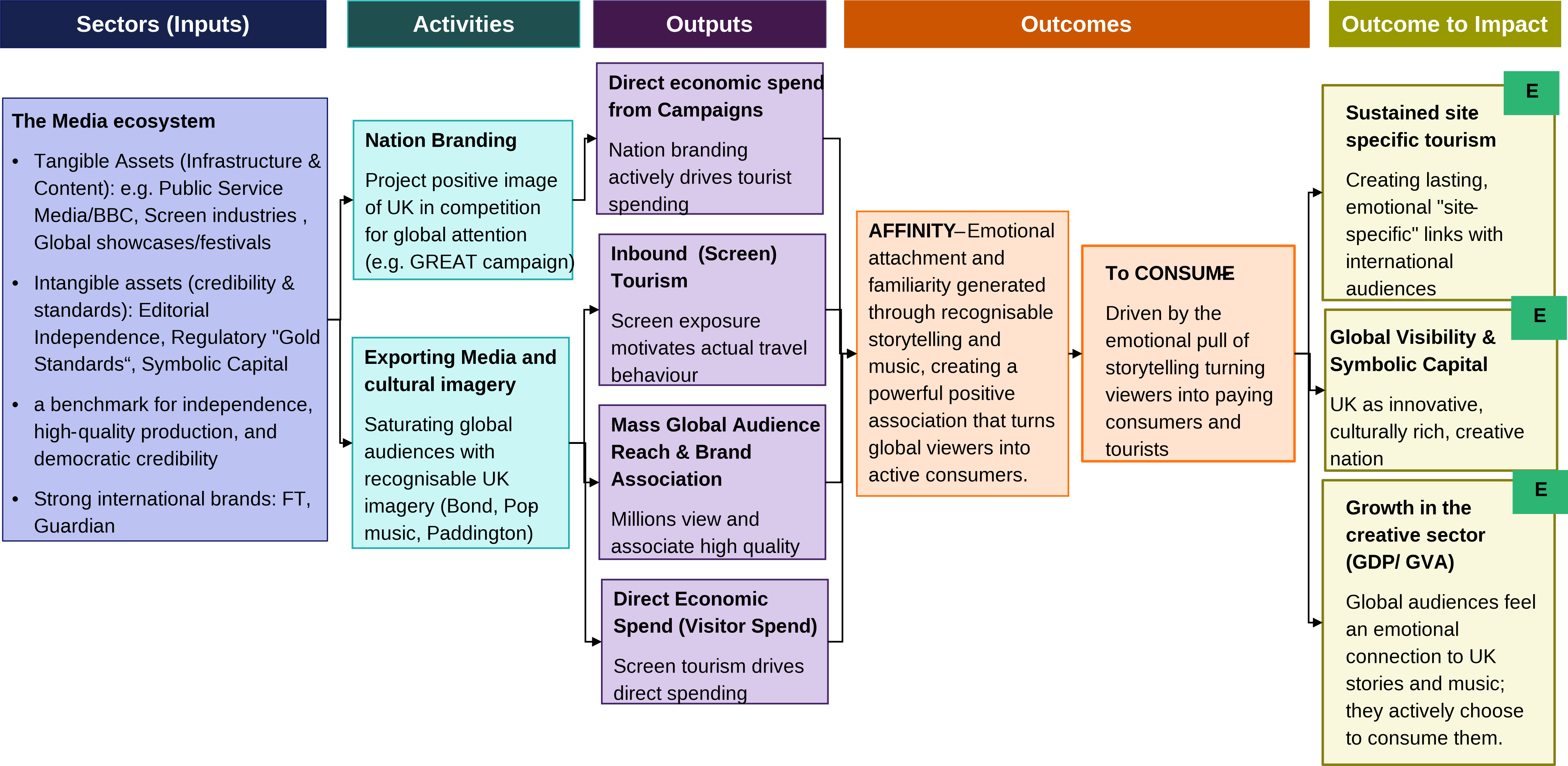
Figure 21: Cultural Reach pathway for Media
Through activities such as nation-branding efforts, the UK actively competes for global attention, deploying targeted, state-backed marketing to package and present itself to the world. Additionally, the media sector is a vessel for the UK’s creative industries to engage global audiences with iconic British media and cultural exports, ranging from film franchises like James Bond and characters like Paddington to world-leading pop music. These assets, belonging to the Creative Industries sector in Chapter 7, carry distinct British imagery and values, embedding the UK’s cultural footprint into the everyday lives of international audiences.[footnote 133]
“We’ve actually influenced and kind of in a way infiltrated the whole world via our cultural outputs in a way that people welcome into their homes.” Creative industries stakeholder
The breadth and quality of the media sector’s output reach a global audience. BFI research demonstrates that 70% of international audiences associate UK screen content with high quality.[footnote 134] Familiarity with recognisable storytelling and music creates an emotional attachment, or affinity. The affinity built through screen and audio content converts passive audiences into paying consumers and tourists, as they are driven by this emotional connection to purchase UK music, subscribe to content, and travel to experience the cultural landscapes they see on screen. For example, roughly two-thirds of international tourists to the UK report that film and television influenced their decision to visit.[footnote 135] This translates into direct economic spend; VisitBritain’s Starring GREAT Britain campaign alone is estimated to have generated £217 million in additional international visitor spending.[footnote 136]
“The UK origin functions as a perceived quality signal, and overall, it’s easier for them than for smaller or lesser-known countries.” Cultural Stakeholder
This created emotional bond leads, according to our research, to three economic impacts. Firstly, the emotional pull of UK stories and music creates lasting, site-specific links with international audiences, ensuring sustained site-specific tourism to heritage and cultural locations across the country. Furthermore, the export of these cultural products generates global visibility and symbolic capital, supporting the UK’s reputation as an innovative, culturally rich, and creative nation on the world stage. Finally, as international audiences actively choose to consume these products, it fuels growth in the creative sector’s GDP and GVA. The music industry alone contributed a record £8 billion to the UK economy in 2024,[footnote 137] while UK film and high-end television production spend reached £5.6 billion,[footnote 138] demonstrating how emotional connection translates into vast commercial value and national economic resilience.
“When these places feature in film or television, the Trust reliably sees sustained spikes in visits, including from international audiences. Social media can also forge site-specific international interest.” Heritage stakeholder
12.3 Pathway 2: Utility
Core logic: Media – Utility
The perceived independence and institutional strength of the UK media sector establish it as a credible global norm-setter. The BFI Diversity Standards inspire international institutions to adapt and align with UK normative practices. UK regulatory approaches to public service broadcasting, copyright, and artificial intelligence prompt overseas policymakers to seek direct engagement and emulate UK governance models.
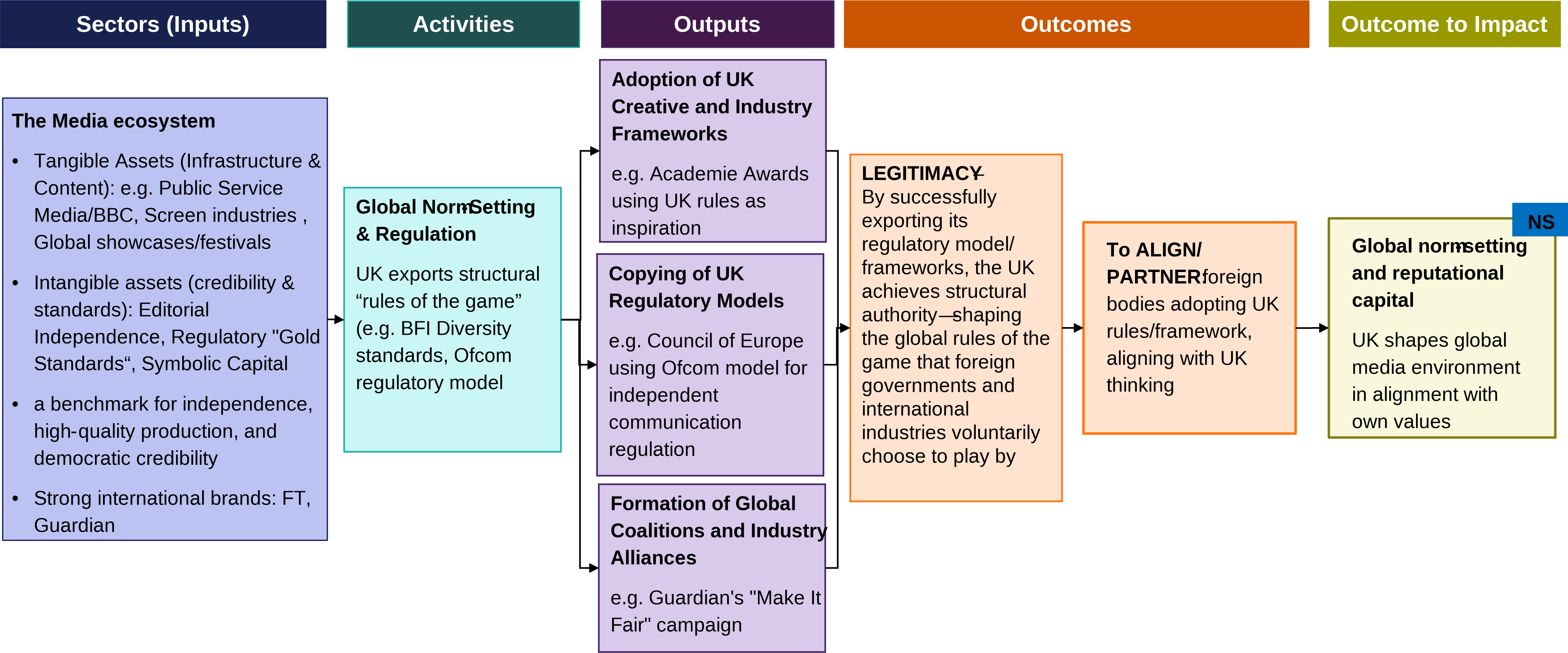
Figure 22: Utility pathway for Media
The UK media sector influences through the activity of global norm-setting and regulation. The literature and qualitative interviews highlight how the UK actively exports the structural ‘rules of the game’, establishing itself as a leader in media governance and creative standards. This is driven by the development of frameworks, such as the British Film Institute’s (BFI) Diversity Standards, alongside administrative structures like the Ofcom regulatory model for independent communications. The BFI Diversity Standards, which tie funding to inclusion thresholds, have explicitly inspired international adaptations, such as the Academy Awards (AMPAS) Representation and Inclusion Standards for Best Picture, and frameworks used by Screen Australia.
“UK media organisations are viewed as leading on AI, copyright and wider distribution issues.” Media stakeholder
Similarly, another outcome of this activity is the widespread adoption of UK regulatory models. For example, the Council of Europe and the European Audiovisual Observatory frequently cite and emulate the Ofcom model. Furthermore, the UK media sector proactively leading on key issues is driving the formation of global coalitions and industry alliances. For example, the Guardian’s “Make It Fair” campaign on AI and copyright highlights the sector’s regulatory leadership. By proactively addressing emerging global challenges, the UK media sector acts as a convening power, shaping international frameworks that overseas policymakers actively seek to emulate.
“The Guardian’s brand “opens doors”, enabling high-level engagement with regulators and policymakers across territories. UK media organisations are seen as high quality, which facilitates policy dialogue.” Media stakeholder
“High likelihood of delivering on time/to quality, reducing production risk versus other locations.” Media stakeholder
Additionally, by taking a proactive and convening role on emerging issues, leading independent UK media brands help shape the global media environment. Rather than acting as an extension of the state, these organisations leverage their editorial independence and perceived integrity to lead international conversations in ways that naturally reflect broader democratic, creative, and inclusive values.
“…internationally visible journalism projects values the participant associates with how the UK seeks to position itself: stability, tolerance, environmental concern and good global citizenship, underpinned by rule of law, democracy and a reputation for being broadly ‘balanced’.” Media stakeholder
12.4 Pathway 3: Values
Core logic: Media – Values
Media can generate soft power by operating independent, high-integrity journalism brands and delivering impartial international broadcasting. By projecting accuracy, editorial independence, and political neutrality, distinctly separate from state promotion, institutions establish themselves as credible global standard-setters. This commitment to trusted public service reporting helps build global information resilience, acting as a critical counterbalance to disinformation.
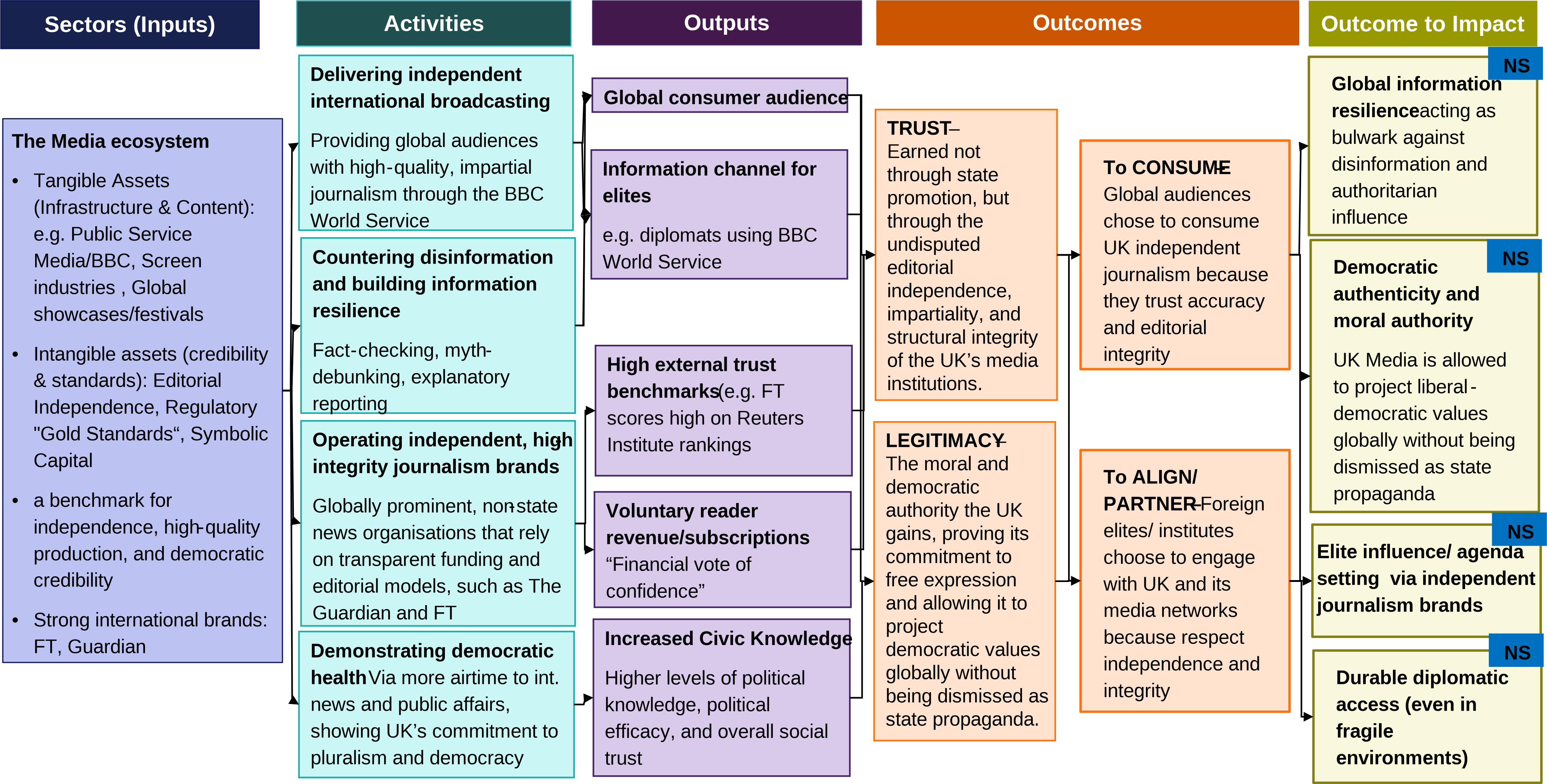
Figure 23: Values pathway for Media
The UK media sector generates values-led influence through delivering independent international broadcasting and countering disinformation. Institutions like the BBC World Service provide global audiences with high-quality, impartial journalism,[footnote 139] while actively building information resilience through factchecking, myth-debunking, and explanatory reporting.[footnote 140] The BBC World Service provides impartial news to a global audience while also serving as an important information source for world leaders and diplomats and security officials in countries with restricted media.[footnote 141]
“Media professionals in Mexico look to the BBC as a leading example, valuing its credibility and sense of responsibility to audiences.” Government stakeholder
The UK also has independent, high-integrity journalism brands. Globally prominent, non-state news organisations, such as the Guardian, Times, Telegraph and the Financial Times (FT), rely on transparent funding and editorial models rather than state promotion. The operation of independent journalism brands results in high external trust benchmarks; the FT, for instance, scores highly on Reuters Institute rankings for trust overall. This high trust score reflects international confidence in their independent, decision-grade journalism and reinforces the credibility of the brand overseas.
It’s [The Guardian] reader-funded, proprietor-free model is valued internationally as a signal of integrity and independence, which partners find trustworthy.” Media stakeholder
“They highlight the BBC as one of the most recognisable global brands synonymous with values such as trust, impartiality, and high quality, indicative of UK’s soft power.” Creative Industries stakeholder
The UK demonstrates democratic health by devoting significantly more airtime to international news and public affairs, showcasing a structural commitment to pluralism and democracy.[footnote 142] Domestically and internationally, the commitment to public service media leads to outputs like increased civic knowledge, resulting in higher levels of political knowledge, political efficacy, and overall social trust.[footnote 143]
“The FT is letting British identity show through the values embedded in its journalism (e.g. an outward-looking liberal-democratic tradition) rather than flag-waving.” Media stakeholder
These outputs lead to two outcomes: trust and legitimacy. The trust in the UK media is earned not through state promotion, but through the editorial independence, impartiality, and structural integrity of the UK’s media institutions.[footnote 144] Additionally, the media has legitimacy, a moral and democratic authority proving its commitment to free expression, allowing it to project democratic values globally without being dismissed as state propaganda.[footnote 145]
“Authors value the UK’s strong environment for freedom of expression, including on subjects they cannot address in their own countries.” Cultural stakeholder
This reputation leads to two behavioural outcomes: global audiences choose to consume UK media because they inherently trust the accuracy and editorial integrity of independent journalism. Foreign elites and institutes choose to engage with the UK and its media networks because they deeply respect this independence and integrity.
“Foreign organisations paying to license Guardian journalism is a concrete business choice to transact with a UK outlet.” Media stakeholder
Our research shows that this pathway can affect the UK’s national security. The sector’s independent media increases global information resilience, acting against disinformation and authoritarian influence.[footnote 146] By successfully establishing democratic authenticity and moral authority, the media can project values that align with the UK’s without being dismissed as state propaganda.[footnote 147] Additionally, independent journalism brands have substantial elite influence and agenda-setting power. Finally, the perceived impartiality of these networks secures durable diplomatic access, providing trusted communication channels for diplomats even in fragile or media-restricted environments where formal diplomatic communication is constrained or mistrusted.[footnote 148]
“The FT is regarded as “golden” overseas… The Britishness and 135+ year heritage aligns with perceptions of UK institutional depth, history and authenticity.” Media stakeholder
12.5 Specific limitations
Platform dependency and technological vulnerability: The media’s global reach is increasingly mediated by third-party, predominantly US-based, digital platforms and artificial intelligence models. News organisations and screen producers rely heavily on search engines, social media algorithms, and global streaming giants to distribute their content. UK media entities risk losing control over distribution, copyright protection, and monetisation, potentially weakening their independent global footprint.[footnote 149]
Authoritarian competition and information warfare: The global media landscape has become a highly contested, adversarial environment. Authoritarian states actively invest in state-backed international broadcasting (such as Russia Today and CGTN) and deploy disinformation campaigns designed to degrade shared realities and exhaust democratic deliberation. UK public service media must operate in a hostile information environment where trust is actively undermined and openness is weaponised.[footnote 150]
Domestic coherence and post-Brexit frictions: The sector’s international credibility relies heavily on domestic policy coherence and institutional stability. Post-Brexit regulatory shifts, such as the loss of access to the Creative Europe programme, have created practical frictions for international co-productions and reduced the UK’s ability to shape European audiovisual legislation from within. Domestic political volatility and hostile rhetoric directed at public service broadcasters erode the institutional independence and prestige that international audiences value.[footnote 151]
13. Conclusion and policy implications
13.1 Sector-specific attraction and mechanisms
The evidence supports the overarching Theory of Change model, demonstrating that audience responses fall into three distinct subjective categories, Affinity, Legitimacy, and Moral Trust, that serve as the core mechanisms of soft power. While the sectors and assets successfully attract international audiences, they do so in fundamentally different ways. The three broad pathways of Culture, Utility, and Values are therefore helpful in explaining these distinct routes to influence overall.
Visitor economy: Generates influence by serving as the physical environment where international expectations of the United Kingdom are tested against the reality of its hospitality and national infrastructure. Influence relies heavily on direct, lived experiences and people-to-people contact through tourism, alongside the structural authority generated by elite higher education institutions that recruit internationally and cultivate loyal global alumni networks.
Culture: Generates influence through a combination of emotional resonance from shared artistic experiences and the export of technical curatorial expertise. Influence is built on collaborative, peer-to-peer co-creation of exhibitions and performances, while the perceived independence of arts institutions allows them to maintain open cultural dialogues and diplomatic channels even during periods of geopolitical strain.
Media: Operates through three distinct mechanisms: exporting globally recognisable entertainment formats and storytelling to build cultural familiarity; providing editorially independent, public-interest journalism that earns international trust through its impartiality; and leveraging institutional strength to set global regulatory and normative standards, such as independent broadcasting and copyright frameworks.
Heritage: Builds relational capital through the expert stewardship of historic physical assets and the export of technical conservation expertise. The sector deploys “quiet diplomacy” to navigate contested histories and museum collections respectfully. While heritage institutions help set international preservation standards, their influence is highly contingent, as contested colonial legacies can generate reputational friction and alienation as easily as they create attraction.
Creative industries: Functions through the structural integration of British technical infrastructure, such as film studios, gaming developers, and advertising agencies, into global supply chains. Alongside the export of mass-market cultural products that generate global attention, the sector builds legitimacy by establishing global production and inclusivity standards, even though its commercial imperatives do not always align neatly with state diplomatic objectives.
Sport: Generates emotional affinity through the delivery of mass-market spectacles and elite leagues that capture global fan bases. Simultaneously, the sector attracts elite corporate investment and diplomatic convening through its highly competent event-hosting infrastructure and governance standards. However, empirical evidence demonstrating whether this commercial and sporting visibility consistently translates into broader geopolitical influence remains limited.
Civil society: Generates moral trust through the independent delivery of needs-based humanitarian assistance and the cultivation of long-term educational and volunteering networks within local communities. The sector also functions as a proxy for democratic values by convening open policy dialogues and holding power to account through charities and think tanks, though measuring its strategic impact beyond immediate beneficiaries remains challenging.
These sectors overlap significantly. The evidence highlights significant overlap and spillover between assets. For example, the global appeal of sporting events drives inbound tourism, and heritage sites frequently serve as filming locations, sustaining screen tourism. Soft power functions as an ecology, and the most effective approaches combine these strengths rather than treating assets as siloed entities.
13.2 Policy implications
Consistency between domestic policies and what is being projected internationally
Soft power depends on the audience’s lived experience aligning with the projected narrative. The literature and interviews highlight restrictive domestic policies, such as visa frictions for visiting artists and academics, complex post-Brexit customs rules governing the movement of art and touring productions, and hostile political rhetoric regarding immigration, that actively erode the UK’s soft power. The government cannot project an image of an ‘open, welcoming, and collaborative’ Britain internationally if its domestic policies create a hostile or highly bureaucratic environment for international students, workers, and partners. This evidence indicates that inconsistencies between domestic policy and international messaging can limit soft power effectiveness. Restrictive visa policies or complex post-Brexit regulations may contradict efforts to project openness, though the precise impact varies by sector and audience.
Independence vs a role for the state
The evidence illustrates that some sectors derive power from their independence, while for others, there is more scope for the state to leverage them.
Any strategy should account for the differences between the sectors. Notably, across the cultural and heritage sectors consistently avoided using the ‘UK’ brand or overt ‘Britishness’ in their international marketing or partnership strategies. Instead, they lead with their sector or institutional prestige, specific city identities (such as London or Manchester), or technical competence.
Attempts to attach overt national branding to organic cultural exchanges or instrumentalise these assets for geopolitical messaging can undermine trust. When the state dictates the message, the asset loses its authenticity, and the trust that generates soft power is diminished.
However, the state can act as a vital enabler. For sectors operating on the Values pathway (Civil Society, Media, Arts), international credibility relies on autonomy. Here, the state’s role is to fund, protect, and facilitate the ecosystem, such as by removing visa frictions or providing tax reliefs. Conversely, for sectors operating heavily on the Utility and Culture pathways (Sport, Creative Industry infrastructure), there is significant scope for active state involvement. Major sporting tournaments or studio infrastructure investments provide highly commercial, secure platforms. The state can actively leverage these assets for diplomatic convening, using events to secure business investments and high-level political access. However, there is no single rule for state involvement; each sector and asset needs to be considered separately to determine the most effective approach.
13.3 Developing the soft power model: scale of impact
To move beyond generic claims about soft power, policymakers could evaluate the potential soft power of assets through three interrelated lenses.
Who is the Audience and what is their perspective: Firstly, who are the audiences - foreign elites, regulators, and decision-makers, consumers or both. Secondly, what are their audience’s existing values?
The Potential Impact: While sport may achieve massive scale through billions of viewers (Affinity), heritage or media can achieve deep structural scale by having a small number of foreign governments adopt UK regulatory frameworks or governance models (Legitimacy/Alignment).
The Experience and comparative advantage: What is the actual experience provided, and how does the UK institution behave? Soft power often emerges from conduct (e.g., the BBC’s impartiality, the Heritage sector’s ‘quiet diplomacy,’ or the Premier League’s mass entertainment) rather than a message. Policymakers should ask: What international alternatives to this experience exist, and do the UK asset’s genuine, undeniable comparative strengths (e.g., historical prestige or infrastructural utility) make it stand out?
Example: The Museum and Heritage Sector
-
The Audience and their perspective: The primary audiences are international museum directors, foreign governments, and multilateral bodies (like UNESCO). In a multipolar global environment where international audiences are sensitive to how colonial history and heritage are managed, a non-directive and collaborative approach can help build trust.
-
The Potential Impact: While it does not reach billions of television viewers, the potential scale of impact is significant The sector achieves deep diplomatic access (using major reciprocal loans as backdrops for state-to-state relations) and global norm-setting (with 195 states in UNESCO influenced by UK technical standards and climate adaptation guidance).
-
The Experience and UK Conduct: The experience is one of peer-to-peer knowledge sharing and expert cultural stewardship. The UK’s conduct is characterised by ‘quiet diplomacy’ and political neutrality, particularly when handling sensitive or contested histories. Comparative strength: The UK’s Museum Accreditation and Government Indemnity Schemes are viewed internationally as ‘gold standards.’ The UK’s respectful, dialogue-led approach is more competitive than other, more top-down legislative approaches.
13.4 Areas for Further Research and policy work
Soft power is mainly measured by counting outputs (ticket sales, export value) rather than genuine influence or attitudinal shifts. Further research could focus on:
-
Longitudinal Research: Move away from short-term, output-based campaign evaluations. Commission longitudinal tracking to measure actual audience responses and assess whether exposure to UK assets creates durable behavioural changes over time.
-
Deeper Qualitative/Participatory research: Because soft power is relational, research needs to explore how different audiences filter and respond to assets. Deeper qualitative research could focus on understanding audience responses. Participatory approaches, such as deliberation, could help explore how audiences make sense of and create meaning when responding to assets.
-
Developing comparative advantage assessment: DCMS could benchmark UK sectors against international competitors. Without understanding relative strengths and weaknesses, claims about UK leadership remain untested. This work might examine specific subsectors where the UK holds genuine competitive advantage versus areas where historical reputation exceeds current capability.
For DCMS to understand the potential soft power of its sectors, it could:
-
Sector-Specific Applications of the Model: DCMS could apply this ToC model to conduct a deeper review of each sector and subsector. By systematically testing where assets possess genuine comparative strength and clear audience pathways, the department can make targeted, evidence-based cases for future investment and understand where and how to focus government levers.
-
Understanding Threats: The global landscape for soft power is becoming increasingly contested. The threats to UK comparative strengths need to be understood. For example, in Creative Industries and Media, the impact of AI and the impact on copyright.
14. Bibliography
Aalberg, T. and Curran, J. (eds.) (2012) How Media Inform Democracy: A Comparative Approach. New York: Routledge.
Abubakar, A. T. (2016) ‘BBC Hausa Service and British public diplomacy in Nigeria’, Cogent Social Sciences, 2(1), 1144235.
Abubaker, Y.W and Islam, N (2025) Diaspora Civil Society: The Nexus of Civil Society, Soft Power and Foreign Policy, Journal of Applied and Theoretical Social Sciences 7(4):362-378
ACE (Arts Council England) (2018) Contribution of the Arts and Culture Industry to the UK Economy. London: ACE.
ACEVO and NCVO (2024) A new partnership: building a Covenant for Civil Society and Government. Available at: https://www.acevo.org.uk/reports/a-new-partnership-building-a-covenant-for-civil-society-and-government/ (Accessed: 12 January 2026).
Advertising Association (2021) UK Advertising Exports Report 2021. London: Advertising Association.
Advertising Association (2024) UK Advertising Exports Report 2023. London: Advertising Association.; Ahlander, J (2025) Reuters, https://www.reuters.com/business/aerospace-defense/world-military-spending-hits-27-trillion-record-2024-surge-2025-04-27/; : https://www.reuters.com/business/aerospace-defense/world-military-spending-hits-27-trillion-record-2024-surge-2025-04-27/
Ang, I., Isar, Y.R. & Mar, P. (2015) ‘Cultural diplomacy: beyond the national interest?’, International Journal of Cultural Policy, 21(4), pp. 365–381. https://doi.org/10.1080/10286632.2015.1042474
Anholt, S. (2007) Competitive Identity: The New Brand Management for Nations, Cities and Regions. Basingstoke: Palgrave Macmillan.
Anholt, S. (2010) ‘Places: Identity, image and reputation’, Journal of Brand Management, 16(1–2), pp. 59–65.
Aref, S., Zagheni, E. and West, J. (2019) The demography of the peripatetic researcher: Evidence on highly mobile scholars. Paper presented at the International Conference on Computational Social Science (IC2S2), Amsterdam.
Aronczyk, M. (2013) Branding the Nation: The Global Business of National Identity. Oxford: Oxford University Press.
Arts Council England (2024) Arts Council England Annual Report and Accounts 2023/24. London: Arts Council England.
Bahurekso, P.R. (2025) ‘Video games as foreign policy tools: A comparative analysis of Japan and Poland’, Journal of Law, Policy and Humanities, 7(2), pp. 45–63.
Baker, C., Atkinson, D., Grabher, B. and Howcroft, M. (2024) Soft Power, Cultural Relations and Conflict through Eurovision and Other Mega-Events: A Literature Review. British Council / ICR Research.
Batty, D. (2025) ‘Desperate for change’ – but is UK gen Z really disillusioned with democracy? The Guardian, Feb 2025. https://www.theguardian.com/politics/2025/jan/12/one-in-five-britons-aged-18-45-prefer-unelected-leaders-to-democracy-poll-finds
Beeton, S. (2005) Film-Induced Tourism. Clevedon: Channel View Publications.
Beeton, S. (2016) Film-Induced Tourism, 2nd edn. Bristol: Channel View Publications.
Beeton, S. (2016) Film-Induced Tourism, 2nd edn. Bristol: Channel View Publications.
Bell, S. (2022) ‘Libraries, cultural diplomacy and soft power’, International Federation of Library Associations Journal, 48(3), pp. 201–214.
Belmonte, L.A. (2008) Selling the American Way: US Propaganda and the Cold War. Philadelphia: University of Pennsylvania Press.
BFI (2022) Official 2021 BFI Statistics Reveal a Record £5.64 Billion Film and High-End TV Production Spend in the UK. London: BFI.
BFI (2022) Official 2021 BFI Statistics Reveal Record Film and High-End TV Production Spend. London: BFI.
BFI (2025) Written Evidence Submitted by the British Film Institute (SFT0083). UK Parliament Soft Power Inquiry.
BFI (2025) Written Evidence Submitted by the British Film Institute (SFT0083). UK Parliament, Soft Power Inquiry.
BFI (British Film Institute) (2021) International Audience Perception: UK Global Screen Fund – Key Findings. London: BFI.
BFI (British Film Institute) (2021) International Audience Perceptions: UK Global Screen Fund – Key Findings. London: BFI.
BFI (n.d.) BFI Diversity Standards. London: BFI.
BFI (n.d.) Screen Culture 2033: BFI’s Ten-Year Strategy. London: BFI.
Bially Mattern, J. (2005) Ordering International Politics: Identity, Crisis, and Representational Force. London: Routledge.
Blondel, J., Sinnott, R. & Svensson, P. (1998) People and Parliament in the European Union: Participation, Democracy, and Legitimacy. Oxford: Clarendon Press.
BOP Consulting (2018) Global Cultural Networks: The Value and Impact of British Council International Showcasing. London: British Council.
Bound, K; Briggs, R; Holden J and Jones, S (2007) Cultural Diplomacy – Culture is a
Bound, K., Briggs, R., Holden, J. and Jones, S. (2006) Cultural diplomacy. London: Demos.
Bound, K., Briggs, R., Holden, J. and Jones, S. (2007) Cultural Diplomacy. London: Demos.
Brand Finance (2024) Global Soft Power Index 2024. London: Brand Finance.
Brand Finance (2024) Global Soft Power Index 2024. London: Brand Finance.
British Council (2013) Culture at the Heart of International Relations. London: British Council.
British Council (2016) The Power of Fashion. London: British Council.
British Council (2017) Arts, Cultural Relations and Soft Power: Developing an Evidence Base (interim report). London: British Council.
British Council (2017) The Value of Trust. London: British Council.
British Council (2018) Crafting Futures: Programme Overview. London: British Council.
British Council (2018) The Value of Trust: How trust is created and why it matters fir prosperity. London: British Council.
British Council (2019) Cultural Heritage for Inclusive Growth: Global Programme Summary. London: British Council.
British Council (2020) Cultural Heritage for Inclusive Growth: India and South Asia. London: British Council.
British Council (2020) Sources of Soft Power: How Perceptions Determine the Success of Nations. London: British Council.
British Council (2021) Global Britain: The UK’s Soft Power Advantage. London: British Council.
British Council (2021) Global Perceptions Survey. London: British Council.
British Council (2023) Global Perceptions 2023: How Young People View the UK. London: British Council.
British Council (2024) Written evidence to UK Parliament on soft power. London: British Council.
British Council (2025) Global Perceptions 2025: How 18–34-year-olds see the UK and the world. London: British Council.
British Council (2025) Global Perceptions Study. London: British Council.
British Fashion Council (2019) Positive Fashion: A Blueprint for Change. London: British Fashion Council.
Brumann, C. (2014) The best of the best: Positing, measuring and sensing value in the UNESCO World Heritage Arena, Journal of Cultural Heritage, 15(3), pp. 237–243.
Byrne, C. (2011) Australia’s International Education as Public Diplomacy: Soft Power Potential. Discussion Paper. The Hague: Netherlands Institute of International Relations “Clingendael”.
Campbell-Cree, H. & Lotten, M. (2018) The Value of Trust: How Trust in the UK and Its People Shapes International Engagement. British Council.
Carbone, F. (2017) ‘International tourism and cultural diplomacy: A new conceptual approach towards global mutual understanding and peace through tourism’, Tourism, 65(1), pp. 61–74.
Casado Claro, J., Bakker, M.H. and van der Velde, M. (2018) ‘Tourism as a soft power tool: The role of public diplomacy in Japan’s country and destination branding’, Journal of Destination Marketing & Management, 8, pp. 54–63.
Castro, D. (2018) ‘News media systems and political knowledge: A comparative analysis’, International Journal of Press/Politics, 23(3), pp. 345–366.
central component of international relations. It’s time to unlock its full potential, London: Demos.
Channel 4 (2025) Gen Z: Trends, Truth and Trust. January 2025, Channel 4.
Chitty, N. (2023) ‘Taking a measure of attraction-based influence’, in Chitty, N. et al. (eds.) The Routledge Companion to Soft Power. London: Routledge, pp. 3-5.
Chitty, N., Ji, L. and Rawnsley, G.D. (eds.) (2023) The Routledge Handbook of Soft Power. 2nd edn. London: Routledge.
Clarke, D. (2020) ‘Cultural diplomacy and power’, International Journal of Cultural Policy, 26(2), pp. 215–230.
Cohen, R. (2016) ‘Publishing as cultural diplomacy’, Place Branding and Public Diplomacy, 12(1), pp. 56–68.
Connell, J. (2012) ‘Film tourism – Evolution, progress and prospects’, Tourism Management, 33(5), pp. 1007–1029.
Conway, M. (2025) ‘Why publishing is central to the UK’s soft power’, Cambridge University Press Blog, 15 March.
Cooley, A and Dukalskis, A (2026) Dictating the Agenda: The Authoritarian Resurgence in World Politics, New York: Oxford University Press.; Coombs, N. (2013) ‘Architecture as cultural diplomacy: The British Council’s design and built environment projects’, Architectural Review, 233(1391), pp. 80–85.
Costa, R. and Moriconi, M. (2024) ‘Current political uses of sport revised: beyond public diplomacy and sportswashing’, Frontiers in Sports and Active Living, 6, doi: 10.3389/fspor.2024.1316732.
Council of Europe (2005) Framework Convention on the Value of Cultural Heritage for Society (Faro Convention). Council of Europe Publishing.
Council of Europe (2005) Framework Convention on the Value of Cultural Heritage for Society (Faro Convention). Strasbourg: Council of Europe Publishing.
Crafts Council (2018) Brexit and the Crafts Sector: Policy Briefing. London: Crafts Council.
Crafts Council (2020) International Impact of Brexit on Crafts. London: Crafts Council.
Crafts Council (2021) International Export Toolkit. London: Crafts Council.
Creative Industries Council (2023) About the Creative Industries Council. London: CIC.
Creative Industries PEC (2022) Submission to the DCMS Committee Inquiry “Promoting Britain Abroad”. London: Creative Industries Policy and Evidence Centre.
Creative UK (2017) Growing the UK’s Creative Industries. London: Creative UK.
Cull, N. (2008) Public Diplomacy: Taxonomies and Histories. Los Angeles: Figueroa Press.
Cull, N. (2009) Public Diplomacy: Lessons from the Past.
Cull, N. J. (2008) ‘Public Diplomacy: Taxonomies and Histories’, The ANNALS of the American Academy of Political and Social Science, 616(1), pp. 31–54.
Culligan, K., Dubber, J. & Lotten, M. (2014) As Others See Us: Culture, Attraction and Soft Power. British Council.
Curran, J., Iyengar, S., Lund, A. B. and Salovaara-Moring, I. (2009) ‘Media system, public knowledge and democracy: A comparative study’, European Journal of Communication, 24(1), pp. 5–26.
Cushion, S. (2012) ‘The democratic value of news: Why public service media matter’, in The Value of Public Service Media. Strasbourg: Council of Europe.
DCMS (Department for Culture, Media and Sport) (2021) Research into International Cultural Partnerships: Final Report. London: DCMS.
DCMS (Department for Culture, Media and Sport) (2024a) DCMS Sectors Economic Estimates: Gross Value Added 2023 (Provisional). London: DCMS.
DCMS (Department for Culture, Media and Sport) (2024b) DCMS Sectors Economic Estimates: Employment in DCMS Sectors. London: DCMS.
DCMS (Department for Digital, Culture, Media and Sport) (2022) Up Next: The Government’s Vision for the Broadcasting Sector. London: DCMS.
DCMS (Department for Digital, Culture, Media and Sport) (2023) Creative Industries Sector Vision: A Joint Plan to Drive Growth, Build Talent and Develop Skills. London: DCMS.
DCMS and BFI (2021) ‘New research shows 70% of international audiences view British film and TV as high-quality, as new brand ScreenUK launches’, Press Release, 9 December. London: DCMS/BFI.
DCMS and BFI (2021) ‘New research shows 70% of international audiences view British film and TV as high-quality, as new brand ScreenUK launches’, Press release, 9 December. London: DCMS/BFI.
Department for International Trade (2017) Exporting in Style: UK fashion exports top £10.7 billion: https://www.gov.uk/government/news/exporting-in-style-uk-fashion-exports-top-107-billion.
Dewi, N.P. and Wiranata, A. (2023) ‘Fashion diplomacy: The role of fashion in cultural exchange’, International Journal of Research and Innovation in Social Science, 7(1), pp. 312–320.
DFAT (Department of Foreign Affairs and Trade) (2014) Public Diplomacy Strategy 2014–16. Canberra: Australian Government, DFAT.
DFAT (Department of Foreign Affairs and Trade) (2017) 2017 Foreign Policy White Paper. Canberra: Australian Government, DFAT.
Diplofoundation (2025) Gaming and Esports in Digital Diplomacy: Emerging Trends. Geneva: Diplofoundation.
Donald, I. (2024) ‘Video games, historical representation and soft power’, Journal of War & Culture Studies, 17(3), pp. 245–263.
Easton, E. (2024) Keeping Creative: The Future of the UK’s Creative Industries. Creative Industries Policy & Evidence Centre (PEC).
ERS Ltd (2021) Evaluation of the Cultural Protection Fund 2016–2020 (Phase 1). London: British Council.
European External Action Service (EEAS) (2021) EU Approach to Cultural Heritage in Conflicts and Crises. Brussels: EEAS.
Fan, Y. (2008) ‘Soft power: power of attraction or confusion?’, Place Branding and Public Diplomacy, 4(2), pp. 147–158.
FCDO (2025) Written Evidence Submitted by the Foreign, Commonwealth & Development Office (UK Soft Power Strategy). UK Parliament.
FCDO and DCMS (2025) ‘Foreign Secretary launches UK Soft Power Council’, Press release, 17 January. London: FCDO/DCMS.
Fedyushina, A. (2024) ‘Brokering arts to build cross-cultural relations’, International Journal of Cultural Policy, 30(2), pp. 215–233.
Galeotti, M. (2023) The Weaponisation of Everything: A Field Guide to the New Way of War. Yale University Press.
Gillespie, M. and Webb, A. (eds.) (2013) Diasporas and Diplomacy: Cosmopolitan Contact Zones at the BBC World Service (1932–2012). London: Routledge.
Grincheva, N. (2020) Museum Diplomacy in the Digital Age. New York: Routledge.
Grix, J. & Brannagan, P.M. (2024) ‘Sports mega‑events as foreign policy: sport diplomacy, soft power, and sportswashing’, American Behavioral Scientist, 68(3), pp. 1–16.
Günek, A (2018) A New Type of Soft Power: Country Branding, International Journal of Cultural and Social Studies, 4(1), pp. 252-259.
Hall, T. (2010). ‘An Unclear Attraction: A Critical Examination of Soft Power’, The Chinese Journal of International Politics, 3(2), pp. 189–211.
Harrowell, E. (2022) Community-Based Heritage Indicators for Peace: A Tool for Measuring Peace. Brussels: European Union Institute for Security Studies (EUISS).
Harrowell, E. (2022) European Cultural Relations and the Politics of Peacebuilding. European Union Institute / related programme.
Hayden, C. (2012) The Rhetoric of Soft Power: Public Diplomacy in Global Contexts. Lanham, MD: Lexington Books.
Hesmondhalgh, D; Oakley, K; Leed, D and Nisbett, M (2015) Culture, Economy and Politics: The Case of New Labour, Basingstoke: Palgrave Macmillan.; Higson, A. (2020) ‘Soft power and national cinema: James Bond, “GREAT” Britain and Brexit’, in Dwyer, R. (ed.) Cinema and Soft Power: Configuring the National and Transnational in GeoPolitics. Edinburgh: Edinburgh University Press, pp. 210–235.
Historic England (2024) Heritage and the Economy 2024. Swindon: Historic England.
Holden, J. (2013) Influence and Attraction: Culture and the Race for Soft Power in the 21st Century. London: British Council.
Home Office (2024) Why do people come to the UK? To work. London: UK Home Office.
Hong, M. (2024) ‘Australia’s international alumni engagement strategy: an approach from soft power to knowledge diplomacy’, Studies in Higher Education, 49(3), pp. 1–17. (Online publication date 3 March 2024). https://doi.org/[journal DOI as per publisher record]; Horowitz, M., Cushion, S., Dragomir, M., Gutiérrez Manjón, S., & Pantti, M. (2022). A Framework for Assessing the Role of Public Service Media Organizations in Countering Disinformation. Digital Journalism, 10(5), 843–865.
House of Commons, 2025 Creative Industries Debate Pack: https://researchbriefings.files.parliament.uk/documents/CDP-2025-0017/CDP-2025-0017.pdf.
House of Lords Library (2022) BBC World Service: Soft Power and Funding Challenges. London: House of Lords Library.
Hudson, S. and Ritchie, J. R. B. (2006) ‘Film tourism and destination marketing: The case of Captain Corelli’s Mandolin’, Journal of Vacation Marketing, 12(3), pp. 256–268.
Hudson, S. and Ritchie, J. R. B. (2006) ‘Promoting destinations via film tourism: An empirical identification of supporting marketing initiatives’, Journal of Travel Research, 44(4), pp. 387–396.
ICCROM (2024) Training Guide for Post-Conflict Recovery of Cultural Heritage: ICCROM–UNESCO Capacity Building Project in Mosul, Iraq. Rome: ICCROM.
ICOM UK (2025) ‘Museums and their soft power’, ICOM UK Blog, 7 April.
Institute for Economics and Peace (2025) Global Peace Index, Sydney: IEP; Isar, Y.R. (2017) ‘Culture in conflict prevention and peacebuilding’, International Journal of Cultural Policy, 23(3), pp. 340–354.
Jin, D.Y. (2016) New Korean Wave: Transnational Cultural Power in the Age of Social Media. Urbana: University of Illinois Press.; Jureniene, V. and Jurene, A. (2019) ‘Impact of tourism on national soft power’, Public Policy and Administration, 18(4), pp. 5–18. (Note: year and volume corrected to align with journal publication records.)
Kapoor, I. (2013) Celebrity Humanitarianism: The Ideology of Global Charity. London: Routledge.
Kavaratzis, M. and Hatch, M.J. (2013) ‘The dynamics of place brands: An identity-based approach to place branding theory’, Marketing Theory, 13(1), pp. 69–86.
Kazakov, V. (2025a). ‘Sportswashing’ as mediated deceit: applying a critical disinformation model to address political (mis)communication through sports. International Journal of Sport Policy and Politics, 1–21.
Kazakov, V. (2025b). The normative trap of “sportswashing”: addressing the missing link between sports politics, journalism and media research. Sport in Society, 1–17.
Kelly, B. (2019) ‘Music and cultural diplomacy in Europe’, Journal of Musicology, 36(4), pp. 411–432.; Kim, Y. and Jin, D.Y. (2016) The Korean Wave: Korean Media Go Global. London: Routledge.
Kotler, P., & Gertner, D. (2002). Country as brand, product, and beyond: A place marketing and brand management perspective. Brand Management, 9(4–5), 249–261.
Lawes, D (2025) Building Bridges: Why Solidarity Between Young Leaders Matters More Than Ever. John Smith Trust. Available at: https://johnsmithtrust.org/building-bridges-why-solidarity-between-young-leaders-matters-more-than-ever/ (Accessed: 12 January 2026)
[Lewis, S.L. (2020) Soft Power and Civil Society in Myanmar: A Historical Case Study. Cultural Relations Collection. London: British Council. Available at: https://www.britishcouncil.org/sites/default/files/32959british_council_-_cultural_relations_collection-soft_power_and_civil_society_in_myanmar-an_historical_case_study_v4-_solas.pdf (Accessed: 12 January 2026)](https://www.britishcouncil.org/sites/default/files/32959_british_council-_cultural_relations_collection-soft_power_and_civil_society_in_myanmar-an_historical_case_study_v4-_solas.pdf)
Lie, J. (2015) K-Pop: Popular Music, Cultural Amnesia, and Economic Innovation in South Korea. Berkeley: University of California Press.; Lomer, S. (2017) Soft power as a policy rationale for international education in the UK: A critical analysis. PhD thesis. University of Manchester.
Lopes da Cunha, M.M.R., Shannon, J., Sørensen, S.M. and Danielson, V. (eds.) (2020) Music and Cultural Diplomacy in the Middle East: Geopolitical Re-configurations for the 21st Century. Cham: Palgrave Macmillan.
Lord, G.D. and Blankenberg, N. (eds.) (2015) Cities, Museums and Soft Power. Washington, DC: AAM Press.
Lorner, S. (2017) Soft Power as a Policy Rationale for International Education in the UK: A Critical Analysis.
Luce, E. (2017) The Retreat of Western Liberalism. London: Little, Brown.
MacDonald, A. (2018) Soft Power Superpowers: Global Trends and Future Possibilities. British Council.
MacDonald, A. (2019) Sources of Soft Power. British Council.
MacDonald, A. (2021) Global Britain and Soft Power: A Reassessment. British Council.
MacDonald, A. (2025) Global Perceptions 2025: How 18–34 Year Olds See the UK and the World. British Council.
MacDonald, S. & Murray, A. (2022) Soft Power and Cultural Relations: A Comparative Study. British Council.
MacDonald, S. & Murray, A. (2024) Soft Power at a Turning Point. British Council / University of Edinburgh.; MacDonald, S. and Murray, A. (2026) Trends in Soft Power 2020–2025. British Council. https://doi.org/10.57884/FS51-KF14
MacPherson, G. (2017) Tamsin Cox.
Maerz, S. F. (2019) ‘Simulating pluralism: the language of democracy in hegemonic authoritarianism’, Political Research Exchange, 1(1), pp. 1–23.
Manfredi-Sánchez, J. L. (2021) ‘Measuring Soft Power: Methodological Problems and Theoretical Implications’, Place Branding and Public Diplomacy, 17(1), pp. 1–12.
Mark, S. (2010) A Greater Role for Cultural Diplomacy. Clingendael: Netherlands Institute of International Relations.
Matzana, V., Tsekeris, T. and Kordomenos, T. (2022) ‘Tourism-led growth revisited: Economic effects and methodological challenges’, Journal of Tourism Futures, 8(3), pp. 312–326.
McClory, J. (2025) Charm Offensive: Resetting the UK’s Soft Power Approach for a More Dangerous and Competitive World. Labour Together.
McPherson, G. and McGillivray, D. (2017) Arts, Cultural Relations and Soft Power: Developing an Evidence Base. London: British Council.
McPherson, G. and McGillivray, D. (2017) Arts, Cultural Relations and Soft Power: Developing an Evidence Base. London: British Council/University of the West of Scotland.
Wielding soft power, Jan Melissen, 2005a) https://culturaldiplomacy.org/academy/pdf/research/books/soft_power/Wielding_Soft_Power_-_The_New_Public_Diplomacy_-_Jan_Melissen.pdf and interview with Nick Cull: https://placebrandobserver.com/interview-nick-cull).
Melissen, J. (ed.) (2005b) The New Public Diplomacy: Soft Power in International Relations. Basingstoke: Palgrave Macmillan.
Miazhevich, G. (2018). Nation branding in the post-broadcast era: The case of RT. European Journal of Cultural Studies, 21(5), 575-593.
Mirchandani, B. (2013) Britain’s International Broadcasting: The BBC and Soft Power. Los Angeles: USC Center on Public Diplomacy.
Moore, M. (2024) Keeping Democracies Alive: The Role of Public Service Media. The Political Quarterly, 95(1), pp. 108-112.
Moualla, Y. and McPherson, G. (2019) ‘Making change towards inclusive societies: The soft power of community archaeology in building cultural heritage in Mozan, Syria’, International Journal of Cultural Policy, 25(3), pp. 323–339.
Mozaffari, A. and Akbar, A.A. (2021) ‘Heritage diplomacy and soft power competition between Iran and Turkey: Competing claims over Rumi and Nowruz’, International Journal of Cultural Policy, 27(4), pp. 451–466.
Murray, Stuart. (2018). Sports Diplomacy: Origins, Theory and Practice (1st ed.) Routledge.
Naidu-Silverman, E. (2015) The Contribution of Art and Culture in Peace and Reconciliation Processes in Asia. Danish Centre for Culture and Development.
Nakano, R. and Zhu, Y. (2020) ‘Heritage as soft power: Japan and China in international politics’, International Journal of Cultural Policy, 26(7), pp. 869–881.
Naseem, N.A.M. (2022) ‘Tourism and economic growth in Saudi Arabia: Evidence from time series analysis’, Journal of Policy Research in Tourism, Leisure and Events, 14(3), pp. 385–401.
Nisbett, M (2011) New Perspectives on Instrumentalism: Stratagems, Subversion and the Case of Cultural Diplomacy. Doctoral Research.
Nisbett, M and Doeser, J (2017) Art of Soft Power: A study of cultural diplomacy at the UN Office in Geneva, London: King’s College London.
NMDC (National Museum Directors’ Council) (2014) Soft Power and the UK’s Cultural Sector. London: NMDC.
NMDC (National Museum Directors’ Council) (2018) Written Evidence: National Museum Directors’ Council (FPW0018). UK Parliament.
Nussbaum, M. (2011) Creating Capabilities. Cambridge, MA: Harvard University Press.
Nye, J. S. (2004) Soft Power: The Means to Success in World Politics. New York: Public Affairs.
Nye, J.S. (2002) Unilateralism vs. Multilateralism. Project Syndicate, 23 September. Available at: https://www.project-syndicate.org/commentary/unilateralism-vs–multilateralism-2002-09)
Nye, J. S. (2008) ‘Public diplomacy and soft power’, Annals of the American Academy of Political and Social Science, 616(1), pp. 94–109.
Nye, J. S. (2011) The Future of Power. New York: PublicAffairs.
Nye, J.S. (2004) Soft power: The means to success in world politics. New York: PublicAffairs.
Nye, J.S. (2004) Soft Power: The Means to Success in World Politics. New York: PublicAffairs.
Nye, J.S. (2004) Soft Power: The Means to Success in World Politics. New York: PublicAffairs.
Nye, J.S. (2004) Soft Power: The Means to Success in World Politics. New York: PublicAffairs.
Nye, J.S. (2004). Soft Power: The Means to Success in World Politics. PublicAffairs.
Nye, J.S. (2008) ‘Public diplomacy and soft power’, Annals of the American Academy of Political and Social Science, 616(1), pp. 94–109.
Ofcom (2019–2025) Media Nations (annual reports). London: Ofcom.
Ofcom (2024) Review of Public Service Media 2019–23. London: Ofcom.
Ofcom (2025) The Relationship between the Use of PSBs for News and Societal Outcomes: An Empirical Analysis. London: Ofcom.
Office for National Statistics (ONS) (2025a) Overseas travel and tourism: provisional estimates 2024. London: ONS.
Oliver, A. & Trood, R. (2015) ‘Public diplomacy and Australia’s middle power strategy in East Asia’, in Melissen, J. & Sohn, Y. (eds.) Understanding Public Diplomacy in East Asia. New York: Palgrave Macmillan, pp. 179–209.
Ostrom, E. (1998) ‘A behavioural approach to rational choice theory’, American Political Science Review, 92(1), pp. 1–22.
Pamment, J. (2014) New Public Diplomacy in the 21st Century. London: Routledge.
Papadopoulos, N., & Heslop, L. (2002). Country equity and country branding: Problems and prospects. Brand Management, 9(4–5), 294–314.; Park, G. (2025) W7.85tr budget set for 2026 cultural sector support, The Korea Herald. Available at: https://www.koreaherald.com/article/10629068 (Accessed: January 9, 2026).
Pratt, A. C. (2008) ‘Creative cities: The cultural industries and the creative class’, Geografiska Annaler: Series B, Human Geography, 90(2), pp. 107–117.
Pring, E.X., Olsen, K.N., Mobbs, A.E.D. & Thompson, W.F. (2024) ‘Music communicates social emotions: Evidence from 750 music excerpts’, Scientific Reports, 14, 27766. Publishers Association (2025) Publishing and Soft Power: Our Contribution to Knowledge Exchange and Cultural Collaboration. London: The Publishers Association.
Putnam, R. (2000) Bowling Alone. New York: Simon & Schuster.
Rawnsley, G. (2018) ‘Challenging the Snake-Oil Salesmen: A Critique of British Approaches to Soft Power’, The Journal of International Communication, 24(1), pp. 1–17.
Rawnsley, G. D. (2015) ‘To know us is to love us: Public diplomacy and international broadcasting in contemporary Russia and China’, Politics, 35(3–4), pp. 273–286.
Rawnsley, G. D. (2016) ‘International broadcasting and public diplomacy’, in Snow, N. and Cull, N. J. (eds.) Routledge Handbook of Public Diplomacy, 2nd edn. New York: Routledge, pp. 185–191.
Reichenberger, I. (2018) ‘Book review: Film-Induced Tourism by Sue Beeton (2nd ed.)’, Journal of Tourism Futures, 4(3), pp. 292–293.
RIBA (2025a) Future Business of Architecture. London: RIBA.
RIBA (2025b) RIBA Business Benchmarking Survey 2025. London: RIBA.
RIBA (Royal Institute of British Architects) (2024) International Agreements and Mutual Recognition: RIBA Policy Briefing. London: RIBA.
Ries, A. and Trout, J. (2001) Positioning: The Battle for Your Mind. New York: McGraw-Hill.
Riyanto, S. (2024) ‘Fashion diplomacy: The role of fashion in cultural exchange’, International Journal of Cultural Studies, 27(1), pp. 88–104.
Rodrik,; Rofe. J. S (2016) Sport and Diplomacy: A Global Diplomacy Framework, Diplomacy & Statecraft, 27(2), 212-230.
Romero, I. and Molina, J.A. (2013) ‘Tourism and economic growth: A review of empirical literature’, Tourism Management Perspectives, 8, pp. 28–41.
Rustad, S.A (2025) Conflict Trends: A Global Overview, 1946–2024. PRIO Paper. Oslo: PRIO.; Saberi, D. (2018) ‘Soft power and place branding in the United Arab Emirates’, International Journal of Diplomacy and Economy, 4(1), pp. 44–58.
Said, E. (1978) Orientalism. London: Routledge.
Schneider, C.P. (2006) ‘Cultural diplomacy’, Brown Journal of World Affairs, 12(1), pp. 191–200.
Schreiber, H. (2017) ‘Intangible cultural heritage and soft power: Exploring the relationship’, International Journal of Cultural Policy, 23(4), pp. 436–452.
Sen, A. (1999) Development as Freedom. Oxford: Oxford University Press.
Seong-Hun, Y (2018) An Overdue Critical Look at Soft Power Measurement, Journal of International and Area Studies, 25 (2), pp.1-20.; Simpson, A. (2015) ‘Soft power working spaces and First Nation voices: Museums and the power of attraction’, University Museums and Collections Journal, 7, pp. 17–29.
Singh, J. P. and MacDonald, S. (2017) Soft Power Today: Measuring the Effects. Edinburgh: University of Edinburgh / British Council.
Singh, J.P. and MacDonald, A. (2017) Soft Power Today: Measuring the Effects. London: British Council.
Singh, J.P., Kaptanoğlu, N. and Li, M.-H. (2019) ‘Taking a soft power approach to cultural heritage protection: Toward an empirical methodology’, International Journal of Cultural Policy, 25(4), pp. 519–534.
Smith, P. (2020) ‘Paddington Bear and the Erasure of Difference’, Children’s Literature Association Quarterly, 45(1), p. 25-42.
Snow, N. (2009) Rethinking Public Diplomacy. New York: Routledge.
Tandon, A., Harrowell, E. & Selter, E. (2021) Peacebuilding Assessment Tool for Heritage Recovery and Rehabilitation.
Tandon, A., Harrowell, E. and Selter, E. (2021) Peacebuilding Assessment Tool for Heritage Recovery and Rehabilitation. Geneva: International Alliance for the Protection of Heritage in Conflict Areas (ALIPH).
Thomas Ross Griffin, “Football in the Hands of the Other: Qatar’s World Cup in the British Broadsheet Press.” The Arab World Geographer. Summer/Autumn 2017, 20.2-3. 170-182.
Thussu, D. K. (2013) ‘The BRICS of world television: New trends in global television flows’, International Journal of Digital Television, 4(1), pp. 69–92.
UK Fashion & Textile Association (UKFT) (2023) London’s Fashion and Textile Industry: A Powerhouse of Economic Impact and Job Creation. London: UKFT.
UK Government (2025) The UK’s Modern Industrial Strategy: Creative Industries Sector Plan. Department for Culture, Media and Sport / Department for Business and Trade.
UK Music (2025a) This Is Music 2025. London: UK Music.
UK Music (2025b) ‘Cabinet Ministers recruit UK Music chief to new Soft Power Council’, Press release, 17 January. London: UK Music.
Uk Parliament (2017) Written Evidence submitted by the UK Fashion & Textile Association (SEI0014): https://committees.parliament.uk/writtenevidence/79152/html.
UK Parliament (2025) Written Statement: British Council Annual Report and Accounts 2023–24. London: UK Parliament.
Ukie (2015) The UK Video Games Sector: A Blueprint for Growth. London: Ukie.
Ukie (2021) Written Evidence Submitted by Ukie to DCMS Select Committee. London: Ukie.
Ukie (2025) Annual Review 2025, https://cms.ukie.org.uk/wp-content/uploads/2025/09/Annual-Review-2025-FINAL.pdf
UKSP Group Strengthening UK Soft Power.
UNESCO (2013) Creative Economy Report. Paris: UNESCO
UNESCO (2024) Revive the Spirit of Mosul: Technical and Vocational Education and Training Programme. Paris: UNESCO.
V-Dem Institute (2025) Democracy Report 2025: 25 Years of Autocratization – Democracy Trumped? Gothenburg: V-Dem Institute. Available at: https://www.v-dem.net/documents/54/v-dem_dr_2025_lowres_v1.pdf (Accessed: 12 January 2026).
Velez, L. (2019) ‘Soft Power Indexes: Limitations and the Illusion of Precision’, International Studies Review, 21(3), pp. 421–429.
VisitBritain (2022) Creative Industries Toolkit. London: VisitBritain.
VisitBritain (2023) Screen Tourism: The Role of Film and TV in Motivating Travel to Britain. London: VisitBritain
VisitBritain (2023a) Screen Tourism: The Role of Film and TV in Motivating Travel to Britain. London: VisitBritain.
VisitBritain (2025f) International Passenger Survey: UK total inbound update 2024. London: VisitBritain.
VisitBritain and Visit England (2025) 2024/25 Annual Report https://www.visitbritain.org/our-annual-performance-and-reporting.
Vuoskoski, J. K., Clarke, E. F., & DeNora, T. (2016). Music listening evokes implicit affiliation. Psychology of Music, 45(4), 584-599.
Wang, J. (2006) ‘Managing National Reputation and International Relations in the Global Era: Public Diplomacy Revisited’, Public Relations Review, 32(2), pp. 91–96.
Ward, S. (2025) ‘Soft power and fashion diplomacy in the 21st century’, International Journal of Fashion Studies, 9(1), pp. 33–52.
Winn, G (2025) Global Reach, National Impact: The Soft Power Impact of the BBC World Service to the UK. London: University College London, Institute for Global Prosperity.
Wojciuk, A. (2018) ‘Higher education as a soft power tool: Limits and conditions’, Globalisation, Societies and Education, 16(3), pp. 295–309.
World Bank (2020) Culture in City Reconstruction and Recovery (CURE) Framework: Technical Notes. Washington, DC: World Bank.
Wu, I. (2023) ‘Tools for measuring soft power: A review of recent quantitative analyses’, in Chitty, N., Ji, L., Rawnsley, G. and Hayden, C. (eds.) The Routledge Handbook of Soft Power. London: Routledge, pp. 337–352.
Xu, H., Wang, K. and Song, Y.M. (2019) ‘Chinese outbound tourism and soft power’, Tourism Management, 75, pp. 269–279.
Yuan, S. (2024) ‘China’s video games as instruments of soft power’, Pacific Review, 37(5), pp. 823–846.
15. Annex A: search terms by sector
Core soft power concepts:
-
“Soft power” AND [economic growth, trade, FDI, investment, tourism, national security]
-
“Cultural diplomacy” AND [influence, trust, attractiveness, preference shaping]
-
“Nation branding” AND [reputation, perception, international standing]
-
“Public diplomacy” AND [engagement, relationships, networks]
-
“Cultural relations” AND [exchange, cooperation, partnership, familiarity]
-
“Sports diplomacy” AND [Olympic Games, Sport Mega Events, Hosting, Premier League, legacy, competition]
Outcome-focused terms:
-
Economic: “Export growth”, “Foreign direct investment”, “Trade deals”, “Tourism revenue”, “International students”, “Creative exports”, “Broadcasting rights”
-
Deterrence by attraction: “International cooperation”, “Alliance building”, “Diplomatic influence”, “Conflict prevention”, “Democratic resilience”
-
Reputational: “National reputation”, “Trust index”, “Favourability ratings”, “Brand value”, “International perceptions”
Mechanism-focused terms:
-
“Preference shaping”, “Cultural affinity”, “Shared values”, “People-to-people connections”, “Track-two diplomacy”
-
“Cultural exchange”, “International partnerships”, “Global reach”, “International engagement”
Sector-related terms
-
Creative Industries: Film, TV, music, performing arts, visual arts, video games, computer games, gaming, virtual reality, augmented reality, mixed reality, extended reality, VR, AR, MR, ER
- Outcomes: Export, creative exports, employment, jobs, GDP, growth, international co-productions, Intellectual Property, IP, IP trade, inward investment, direct foreign investment, foreign investment, investment, creative exports, innovation, skills development, talent, employment, workforce, co-production, international collaboration, global reach, consultancy, regeneration, celebrity diplomacy, copyright, creativity,
-
Cultural Sector: Museums, galleries, opera, theatre, literature, libraries, music
- Outcomes: inbound tourism, tourist revenue, cultural tourism, capacity building, international partnerships, cultural exchange, discovery, preservation, conservation, economic impact, training, consultancy, collaboration, touring, international touring, cooperation, cultural stewardship, cultural diplomacy, celebrity diplomacy
-
Heritage: Heritage sites, artefacts, sites of historical, architectural, artistic and religious interest, religion, monarchy, royal, battlefields, re-enactment, castle, tourism, tangible, intangible, natural heritage, listed buildings, archaeological sites, stately homes, historic houses, monuments, folklore, language, traditions, ancient, ancient civilization
- Outcomes: inbound tourism, investment, cultural stewardship, global leadership in preservation, heritage diplomacy, preservation, conservation, capacity building, post-conflict, repatriation, restitution, restoration, cultural diplomacy
-
Sport: Euros, football, La Liga, Premier League, Bundesleague, “sports diplomacy” , “Olympics”, “World Cup” , “Commonwealth Games”, “sporting events”, sports tourism Mega-events, major events, champion, elite, medals, media, Sky, Crown Jewels of sport: Wimbledon, Royal Ascot, Open Gold, Silverstone F1, Sports leaders, British Olympic Association, British Paralympic Association, Grassroots sport, community sport, Sports Science, Sports Humanities.
- Outcomes: Revenue, regeneration, sponsorship, media rights, sports tourism, place-making, wellbeing, youth engagement, celebrity diplomacy, Feel Good Factor, community cohesion, sense of self, wellbeing, fitness and health benefits, intellectual contributions,
-
Civil Society: Charity, volunteering, development, aid, international aid, “civil society diplomacy” “public diplomacy”, NGO, non-governmental organization “development aid”, “humanitarian sector”, GONGO, government-organized non-governmental organization
- Outcomes: partnership leverage, NGO trade links, moral leadership, benevolence, moral authority, international cooperation, conflict prevention, people-to-people peacebuilding, “resilience”, “democratic values”
-
Visitor Economy: tourism industry, travel industry, hospitality, tourism, tourism sector, leisure industry, destination branding, placemaking, holiday, vacation, destination, nation branding, “hospitality industry”
- Outcomes: Tourism, economic growth, inbound tourism, tourism revenue, job creation, national pride, visitor economy,
-
Media: BBC, “BBC World Service”, “public service broadcasting”, “press”, “journalism”, “media”, “news credibility”, “information warfare”, “disinformation”, “social media”, “de-platform”, “shadow ban”, “TikTok”, “Douyin”, “Twitch”, “political influencer”, “political streamer”, “streaming”, RT, Russia Today, Xinhua News Agency, China Central Television, CCTV, People’s Daily, China Media Group, CMG, CNN, “BreadTube”, “Global Britain”
- Outcomes: Export of media formats, licensing agreement, TV rights, Intellectual property, copyright, IP ownership, IP trade, celebrity diplomacy, “perceptions of the UK”, “democratic resilience”, “media diplomacy”, regional presence, national media branding, cultural proximity, perceived media credibility, adoption of UK media practices, UK-linked creative/media ecosystems
Soft power Outcomes: Reputation, credibility, trust, influence, familiarity, imitation, copying, emulation, trustworthiness, capacity building, setting standards, appeal, cultural appeal, preference, preference shaping, identity, pride, national pride, reach, attractiveness, image, positive, perception, intercultural understanding, mutual understanding, credibility, reciprocity, leadership, political leadership, cultural leadership, cultural diplomacy, heritage diplomacy, heritage diplomacy, policy change, policy shift, policy transfer, prestige, visibility, favourability, perceptions of the UK, popularizing, knowledge exchange, knowledge diplomacy, people to people diplomacy, para diplomacy
National security outcomes: security, national security, diplomacy, diplomatic, relationships, bilateral, ties, partnerships, cooperation, collaboration, multilateral, diplomacy, track two diplomacy, track II diplomacy, conflict mitigation, counter-disinformation, democratic resilience, strategic alliance, conflict resolution, negotiation, long-term relationships, strategic partnerships, reciprocity, diplomatic engagement, global cooperation, international influence, foreign policy, preventing threats, soft security, hard power, arms industry/sector, espionage
Economic Growth outcomes: Economy, economic growth, prosperity, boost, revenue, income, income generation, job creation, employment, GDP, gross domestic product,
16. Our standards and accreditations
Ipsos’ standards and accreditations provide our clients with the peace of mind that they can always depend on us to deliver reliable, sustainable findings. Our focus on quality and continuous improvement means we have embedded a “right first time” approach throughout our organisation.
ISO 20252
This is the international specific standard for market, opinion and social research, including insights and data analytics. Ipsos UK was the first company in the world to gain this accreditation.
Market Research Society (MRS) Company Partnership
By being an MRS Company Partner, Ipsos UK endorse and support the core MRS brand values of professionalism, research excellence and business effectiveness, and commit to comply with the MRS Code of Conduct throughout the organisation & we were the first company to sign our organisation up to the requirements & self-regulation of the MRS Code; more than 350 companies have followed our lead.
ISO 9001
International general company standard with a focus on continual improvement through quality management systems. In 1994 we became one of the early adopters of the ISO 9001 business standard.
ISO 27001
International standard for information security designed to ensure the selection of adequate and proportionate security controls. Ipsos UK was the first research company in the UK to be awarded this in August 2008.
The UK General Data Protection Regulation (UK GDPR)
and the UK Data Protection Act 2018 (DPA)
Ipsos UK is required to comply with the UK General Data Protection Regulation (GDPR) and the UK Data Protection Act (DPA). These cover the processing of personal data and the protection of privacy.
HMG Cyber Essentials
Cyber Essentials defines a set of controls which, when properly implemented, provide organisations with basic protection from the most prevalent forms of threat coming from the internet. This is a government-backed, key deliverable of the UK’s National Cyber Security Programme. Ipsos UK was assessed and validated for certification in 2016.
Fair Data
Ipsos UK is signed up as a “Fair Data” company by agreeing to adhere to twelve core principles. The principles support and complement other standards such as ISOs, and the requirements of data protection legislation.
For more information
3 Thomas Squarer
London
E1W 1YW
t: +44 (0)20 3059 5000
www.ipsos.com/en-uk
http://twitter.com/IpsosUK
About Ipsos Public Affairs
Ipsos Public Affairs works closely with national governments, local public services and the not-for-profit sector. Its c.200 research staff focus on public service and policy issues. Each has expertise in a particular part of the public sector, ensuring we have a detailed understanding of specific sectors and policy challenges. Combined with our methods and communications expertise, this helps ensure that our research makes a difference for decision makers and communities.
-
House of Commons, Library (2025), Creative Industries Debate pack: https://commonslibrary.parliament.uk/research-briefings/cdp-2025-0017/ ↩
-
Department for Culture, Media & Sport (2025), DCMS Sectors Economic Estimates Definitions: https://www.gov.uk/government/publications/dcms-sectors-economic-estimates-methodology/dcms-sector-economic-estimates-methodology ↩
-
Department for Culture, Media & Sport, #OurCivilSociety Policy Paper (2019): https://www.gov.uk/government/publications/our-civil-society/ourcivilsociety#:~:text=Civil%20society%20includes%20any%20individual,social%20investors%20and%20private%20businesses. ↩
-
Nye, J. S. (2004) Soft Power: The Means to Success in World Politics. New York: PublicAffairs. ↩
-
Vuving, A. L. (2009) ‘How Soft Power Works’, paper presented at the American Political Science Association Annual Meeting, Toronto, 3–6 September; Layne, C. (2010) ‘The Unbearable Lightness of Soft Power’, in Parmar, I. and Cox, M. (eds.) Soft Power and US Foreign Policy: Theoretical, Historical and Contemporary Perspectives. London: Routledge, pp. 51–82; Nisbett, M. (2016) ‘Who holds the power in soft power?’, Arts and International Affairs, 1(1). ↩
-
Hall, T. (2010). ‘An Unclear Attraction: A Critical Examination of Soft Power’, The Chinese Journal of International Politics, 3(2), pp. 189–211 ↩
-
Snow, N. (2009) Rethinking Public Diplomacy. New York: Routledge. ↩
-
Ash, T. G., Krastev, I. and Leonard, M. (2023) Living in an à la carte world: What European policymakers should learn from global public opinion. Policy Brief, 15 November. ↩
-
Rawnsley, G. D. (2015) ‘To know us is to love us: Public diplomacy and international broadcasting in contemporary Russia and China’, Politics, 35(3–4), pp. 273–286. ↩
-
Hall, T. (2010). ‘An Unclear Attraction: A Critical Examination of Soft Power’, The Chinese Journal of International Politics, 3(2), pp. 189–211. ↩
-
Galeotti, M. (2023) The Weaponisation of Everything: A Field Guide to the New Way of War. Yale University Press. ↩
-
Miazhevich, G. (2018). Nation branding in the post-broadcast era: The case of RT. European Journal of Cultural Studies, 21(5), 575-593. ↩
-
Saberi, D. (2018) ‘Soft power and place branding in the United Arab Emirates’, International Journal of Diplomacy and Economy, 4(1), pp. 44–58. ↩
-
Byrne, C. (2016) ‘Australia’s New Colombo Plan: Enhancing regional soft power through student mobility’, International Journal, 71(1), pp. 107–131. ↩
-
Petrou, K. (2023) ‘Our “Pacific family”: Heroes, guests, workers or a precariat?’, Australian Geographer, 54(3), pp. 1–18. ↩
-
DFAT (Department of Foreign Affairs and Trade) (2025) Australia’s Sports Diplomacy Strategy 2032+. Canberra: Australian Government, DFAT. ↩
-
Kim, Y. and Jin, D.Y. (2016) The Korean Wave: Korean Media Go Global. London: Routledge. ↩
-
Park, G. (2025) W7.85tr budget set for 2026 cultural sector support, The Korea Herald. ↩
-
Lie, J. (2015) K-Pop: Popular Music, Cultural Amnesia, and Economic Innovation in South Korea. Berkeley: University of California Press. ↩
-
Jin, D.Y. (2016) New Korean Wave: Transnational Cultural Power in the Age of Social Media. Urbana: University of Illinois Press. ↩
-
Nisbett, M. and Rofe, J.S. (2021) ‘Soft Power Polls and the Fate of Liberal Democracy’, Global Perspectives, 3(1). ↩
-
Hall, T. (2010) ‘An Unclear Attraction: A Critical Examination of Soft Power’, The Chinese Journal of International Politics, 3(2), pp. 189–211. ↩
-
Pring, E.X., Olsen, K.N., Mobbs, A.E.D. & Thompson, W.F. (2024) ‘Music communicates social emotions: Evidence from 750 music excerpts’, Scientific Reports, 14, 27766; Vuoskoski, J. K., Clarke, E. F., & DeNora, T. (2016) ‘Music listening evokes implicit affiliation’, Psychology of Music, 45(4), pp. 584-599. ↩
-
SportBusiness (2024a) ‘Year in review – the Premier League in 2024’, SportBusiness. ↩
-
Advertising Association (2024) UK Advertising Exports Report 2023. London: Advertising Association. ↩
-
BFI (2024) Official 2021 BFI Statistics Reveal Record Film and High-End TV Production Spend. London: BFI. ↩
-
Hong, M. (2024) ‘Australia’s international alumni engagement strategy: an approach from soft power to knowledge diplomacy’, Studies in Higher Education, 49(3), pp. 1–17. ↩
-
VisitBritain (2025e) VisitBritain’s Business Events Growth Programme delivers…. London: VisitBritain. ↩
-
Office for National Statistics (ONS) (2025a) Overseas travel and tourism: provisional estimates 2024. London: ONS ↩
-
Factory International (n.d.) ‘Our Impact’, Factory International, https://factoryinternational.org/support/our-impact/ ↩
-
DCMS (2025) DCMS Economic Estimates: Monthly GVA (to December 2024) London: DCMS. ↩
-
Serpentine (n.d.), Serpentine Pavilion Beijing 2018, Serpentine Galleries: https://www.serpentinegalleries.org/whats-on/serpentine-pavilion-beijing-2018-0/ ↩
-
DCMS (2023) Creative Industries Sector Vision: A Joint Plan to Drive Growth, Build Talent and Develop Skills. London: DCMS. ↩
-
Creative Industries PEC (2022) Submission to the DCMS Committee Inquiry “Promoting Britain Abroad”. London: Creative Industries Policy and Evidence Centre. ↩
-
British Council (2021) Global Britain: The UK’s Soft Power Advantage. London: British Council; British Council (2017) Arts, Cultural Relations and Soft Power: Developing an Evidence Base. London: British Council. ↩
-
British Council (2021) Global Britain: The UK’s Soft Power Advantage. London: British Council. ↩
-
UK Music (2025a) This Is Music 2025. London: UK Music; Beaumont-Thomas, B. (2025) ‘British music industry adds record £8bn to UK economy’, The Guardian, 12 November 2025 ↩
-
BBC (2024) BBC Annual Report and Accounts 2023/24. London: BBC. [BBC global audience figure of 453 million]; BFI (2021) International Audience Perceptions: UK Global Screen Fund – Key Findings. London: BF ↩
-
Ukie (2025) Annual Review 2025. London: Ukie. ↩
-
Society of London Theatre (2024) Box Office Data Reports. ↩
-
SIX The Musical (2024) Official streaming data. ↩
-
DCMS and BFI (2021) ‘New research shows 70% of international audiences view British film and TV as high-quality’. Press Release, 9 December. London: DCMS/BFI. ↩
-
Ibid. ↩
-
DCMS (2025): DCMS Sectors Economic Estimates: Trade, 2022 and 2023 ↩
-
DCMS (2025): DCMS Sector Economic Estimates: Regional Gross Value Added 2023. https://www.gov.uk/government/statistics/dcms-sectors-economic-estimates-regional-gva-2023/dcms-sectors-economic-estimates-regional-gross-value-added-2023#creative-industries. ↩
-
DCMS ↩
-
VisitBritain and VisitEngland (2025) 2024/25 Annual Report. ↩
-
Creative Industries PEC (2022) Submission to Parliament. ↩
-
UK Music (2025a) This Is Music 2025. London: UK Music. ↩
-
BFI (2024) Production Statistics. London: BFI. ↩
-
BFI (2022) Official 2021 BFI Statistics Reveal Record Film and High-End TV Production Spend. London: BFI; BFI (2024) production statistics as cited in evidence review. ↩
-
House of Commons (2025) Creative Industries Debate Pack. ↩
-
Ukie (2015) The UK Video Games Sector: A Blueprint for Growth. London: Ukie; and Ukie (2025) Annual Review 2025. ↩
-
Ukie (2025) Annual Review 2025. London: Ukie. ↩
-
House of Commons (2025) Creative Industries Debate Pack ↩
-
Grincheva, N. (2020) Museum Diplomacy in the Digital Age. New York: Routledge. ↩
-
Nisbett, M. (2011) New Perspectives on Instrumentalism: Stratagems, Subversion and the Case of Cultural Diplomacy. Doctoral Research; British Council (2021) Global Britain: The UK’s Soft Power Advantage. London: British Council. ↩
-
Historic England (2024) Heritage and the Economy 2024. Swindon: Historic England. ↩
-
Bound, K., Briggs, R., Holden, J. and Jones, S. (2006) Cultural diplomacy. London: Demos. ↩
-
ERS Ltd (2021) Evaluation of the Cultural Protection Fund 2016–2020 (Phase 1). London: British Council. ↩
-
Visit Britain (2022), MIDAS: Perceptions of Britain overseas, Birmingham: Visit Britain, https://www.visitbritain.org/research-insights/perception-britain-overseas ↩
-
UK Parliament (2025).’Written evidence submitted by Historic England (SFT0090) to Foreign Affairs Select
Committee Inquiry on ‘Soft power: a strategy for UK success?’, London: UK Parliament, https://committees.parliament.uk/writtenevidence/138564/pdf/ ↩
-
Historic England (2024) Heritage and the Economy 2024. Swindon: Historic England. ↩
-
UNESCO (2024) Revive the Spirit of Mosul: Technical and Vocational Education and Training Programme. Paris: UNESCO. ↩
-
ICCROM (2024) Training Guide for Post-Conflict Recovery of Cultural Heritage: ICCROM–UNESCO Capacity Building Project in Mosul, Iraq. Rome: ICCROM. ↩
-
Bound, K., Briggs, R., Holden, J. and Jones, S. (2006) Cultural diplomacy. London: Demos.; ↩
-
NMDC (National Museum Directors’ Council) (2014) Soft Power and the UK’s Cultural Sector. London: NMDC. ↩
-
British Council (2024), Annual Reports, British Council, Cultural Protection Fund: https://cultural-protection-fund.britishcouncil.org/annual-reports ↩
-
DCMS (Department for Digital, Culture, Media and Sport) (2024b) Sport Satellite Account for the UK 2024: Research into a new measure for estimating the value of sport. London: DCMS. ↩
-
DCMS (Department for Culture, Media and Sport) (2025) DCMS Economic Estimates: Annual GVA 2023 (provisional). London: DCMS. ↩
-
DCMS (2024a) Sport Satellite Account for the UK 2024: Key findings. London: DCMS.; DCMS (2024b) Sport Satellite Account for the UK 2024: Research into a new measure for estimating the value of sport. London: DCMS. ↩
-
Cabinet Office (2023) Integrated Review Refresh 2023: Responding to a more contested and volatile world. London: HM Government.; FCDO and DCMS (2025a) Foreign Secretary launches UK Soft Power Council; FCDO and DCMS (2025b) UK Soft Power Council: Membership and terms of reference. ↩
-
DCMS (2023) Gold Framework. London: DCMS. ↩
-
FCDO and DCMS (2025a) Foreign Secretary launches UK Soft Power Council. ↩
-
Ernst and Young (2025) The Premier League and its clubs generated £9.8 billion in gross value added during the 2023/24 season, EY, 12 November. ↩
-
Premier League (2024) The numbers that show this has been a season like no other. ↩
-
SportsPro (2024) ‘WSL stays on Sky and BBC in five-year £65m domestic broadcast rights extension’, SportsPro; Wrack, S. (2024) ‘WSL agrees record £65m domestic five-year TV deal with Sky Sports and BBC’, The Guardian. ↩
-
Premier League/British Council (n.d.-a) Premier Skills. ↩
-
Premier League (2024) The numbers that show this has been a season like no other. ↩
-
Backrath, S.F. (2025) ‘Shirts and semiotics: How English Premier League…’, Journal of Political Marketing. ↩
-
Ernst and Young (2025) The Premier League and its clubs generated £9.8 billion in gross value added during the 2023/24 season, EY, 12 November. ↩
-
DCMS (2024b) Sport Satellite Account for the UK 2024: Research into a new measure for estimating the value of sport. London: DCMS. ↩
-
UK Sport (2024a) Value of Events Report 2023 launched.; UK Sport (2024b) Written evidence submitted by UK Sport. ↩
-
DCMS (Department for Digital, Culture, Media and Sport) (2024b) Sport Satellite Account for the UK 2024: Research into a new measure for estimating the value of sport. London: DCMS.
-
British Council (n.d.) International Inspiration; HM Government (2016) Inspired by 2012: The legacy from the Olympic and Paralympic Games – fourth annual report. London: HM Government. ↩
-
British Council (n.d.) International Inspiration.; City of London Corporation (2021) The impact of major sport events. London: City of London Corporation.; HM Government (2016) Inspired by 2012: The legacy from the Olympic and Paralympic Games – fourth annual report. London: HM Government. ↩
-
DCMS (Department for Digital, Culture, Media and Sport) (2024b) Sport Satellite Account for the UK 2024: Research into a new measure for estimating the value of sport. London: DCMS; UK Sport (2024b) Written evidence submitted by UK Sport. ↩
-
Wrack, S. (2024) ‘WSL agrees record £65m domestic five-year TV deal with Sky Sports and BBC’, The Guardian; SportsPro (2024) ‘WSL stays on Sky and BBC in five-year £65m domestic broadcast rights extension’, SportsPro. ↩
-
British Council (n.d.) International Inspiration; Premier League/British Council (n.d.-a) Premier Skills; HM Government (2016) Inspired by 2012: The legacy from the Olympic and Paralympic Games – fourth annual report. ↩
-
British Council (n.d.) International Inspiration; HM Government (2016) Inspired by 2012: The legacy from the Olympic and Paralympic Games – fourth annual report. ↩
-
Datta (2020) and Singh, J. P., et al. (2017) Soft Power Today: Measuring the Effects, as cited in Ipsos (2025) DCMS Soft Power ↩
-
Brannagan, P.M. and Giulianotti, R. (2018) ‘The soft power–soft disempowerment nexus: The case of Qatar’, International Affairs, 94(5), pp. 1139–1157; Grix, J. and Brannagan, P.M. (2016) ‘Of mechanisms and myths: Conceptualising states’ soft power strategies through sports mega-events’, Diplomacy & Statecraft, 27(2), pp. 251–272. ↩
-
Costa, R. and Moriconi, M. (2024) ‘Current political uses of sport revised: beyond public diplomacy and sportswashing’, Frontiers in Sports and Active Living, 6, doi: 10.3389/fspor.2024.1316732; Grix, J. & Brannagan, P.M. (2024) ‘Sports megaevents as foreign policy: sport diplomacy, soft power, and sportswashing’, American Behavioral Scientist, 68(3), pp. 1–16; Kazakov, V. (2025a). ‘Sportswashing’ as mediated deceit: applying a critical disinformation model to address political (mis)communication through sports. International Journal of Sport Policy and Politics, 1–21; Kazakov, V. (2025b). The normative trap of “sportswashing”: addressing the missing link between sports politics, journalism and media research. Sport in Society, 1–17. ↩
-
Oxfam GB (2025) Annual Report and Accounts 2024/25. ↩
-
VSO (2024) Our impact: VSO Impact Report 2023/24. ↩
-
V-Dem Institute (2025) Democracy Report 2025: 25 Years of Autocratization – Democracy Trumped? Gothenburg: V-Dem Institute; Freedom House (annual) Freedom in the World. ↩
-
ACEVO and NCVO (2024) A new partnership: building a Covenant for Civil Society and Government. ↩
-
CIVICUS (2024) State of Civil Society Report 2024. Johannesburg: CIVICUS. ↩
-
V-Dem Institute (2025) Democracy Report 2025. ↩
-
Charities Aid Foundation (CAF) (2017) Do as I Say, Not as I Do: UK Policy and the Global Closing Space for Civil Society ↩
-
Lewis, S.L. (2020) Soft Power and Civil Society in Myanmar: A Historical Case Study. Cultural Relations Collection. London: British Council. ↩
-
Lawes, D. (2025) ‘Building Bridges: Why Solidarity Between Young Leaders Matters More Than Ever’, John Smith Trust. Available at: https://johnsmithtrust.org/building-bridges-why-solidarity-between-young-leaders-matters-more-than-ever/ (Accessed: 12 January 2026). ↩
-
VSO (2024) Our impact: VSO Impact Report 2023/24. ↩
-
Oxfam GB (2025) Annual Report and Accounts 2024/25.; VSO (2024); Our impact: VSO Impact Report 2023/24 (Impact Report 2024). ↩
-
Oxfam GB (2025) Annual Report and Accounts 2024/25 ↩
-
Lewis, S.L. (2020) Soft Power and Civil Society in Myanmar: A Historical Case Study. Cultural Relations Collection. London: British Council. ↩
-
DCMS (Department for Culture, Media and Sport) (2021) Tourism Recovery Plan. London: DCMS. ↩
-
House of Commons Library (2025) Tourism: statistics and policy. Research briefing. London: House of Commons. ↩
-
VisitBritain (2023a) Screen Tourism: The Role of Film and TV in Motivating Travel to Britain. London: VisitBritain; VisitBritain (2025b) ‘VisitBritain launches global screen tourism campaign “Starring GREAT Britain”’. Press release. ↩
-
Office for National Statistics (ONS) (2025a) Overseas travel and tourism: provisional estimates 2024. London: ONS. ↩
-
DCMS (Department for Culture, Media and Sport) (2025) DCMS Economic Estimates: Annual GVA 2023 (provisional). London: DCMS. ↩
-
Higson, A. (2020) ‘Soft power and national cinema: James Bond, “GREAT” Britain and Brexit’, in Dwyer, R. (ed.) Cinema and Soft Power. Edinburgh: Edinburgh University Press; Beeton, S. (2016) Film-Induced Tourism, 2nd edn. Bristol: Channel View Publications; Connell, J. (2012) ‘Film tourism – Evolution, progress and prospects’, Tourism Management, 33(5), pp. 1007–1029. ↩
-
VisitBritain (2025b) ‘VisitBritain launches global screen tourism campaign “Starring GREAT Britain”’. Press release. ↩
-
Office for National Statistics (ONS) (2025a) Overseas travel and tourism: provisional estimates 2024. London: ONS. ↩
-
VisitBritain (2025f) International Passenger Survey: UK total inbound update 2024. London: VisitBritain. ↩
-
British Council (2012) Trust Pays: Cultural relations, trust and prosperity. London: British Council; British Council (2018) The Value of Trust: How trust is created and why it matters for prosperity. London: British Council. ↩
-
Xu, H., Wang, K. and Song, Y.M. (2019) ‘Chinese outbound tourism and soft power’, Tourism Management, 75, pp. 269–279. ↩
-
Historic England (2024) Heritage and the Economy 2024. Swindon: Historic England. ↩
-
Office for National Statistics (ONS) (2025a) Overseas travel and tourism: provisional estimates 2024. London: ONS. ↩
-
DCMS Soft Power Theory of Change ‘Chapter 5: The Interim Outcomes (The Behavioural Choices)’ analysis. ↩
-
British Council (2012) Trust Pays: Cultural relations, trust and prosperity; British Council (2018) The Value of Trust: How trust is created and why it matters for prosperity ↩
-
British Council (2025) Global Perceptions Study ↩
-
Winn, G. (2025) Global Reach, National Impact: The Soft Power Impact of the BBC World Service to the UK. London: University College London, Institute for Global Prosperity; Qualitative interview insights on the Financial Times and the Guardian, drawn from the DCMS Soft Power evidence review. ↩
-
Higson, A. (2020) ‘Soft power and national cinema: James Bond, “GREAT” Britain and Brexit’, in Dwyer, R. (ed.) Cinema and Soft Power: Configuring the National and Transnational in GeoPolitics. Edinburgh: Edinburgh University Press; Smith, P. (2020) ‘Paddington Bear and the Erasure of Difference’, Children’s Literature Association Quarterly, 45(1), pp. 25-42. ↩
-
BFI (2022) Official 2021 BFI Statistics Reveal a Record £5.64 Billion Film and High-End TV Production Spend in the UK. London: BFI. ↩
-
BFI (n.d.) Screen Culture 2033: BFI’s Ten-Year Strategy. London: BFI; BOP Consulting (2018) Global Cultural Networks: The Value and Impact of British Council International Showcasing. London: British Council. ↩
-
BFI (n.d.) BFI Diversity Standards. London: BFI; Ofcom (2019–2025) Media Nations (annual reports). London: Ofcom. ↩
-
VisitBritain (2023a) Screen Tourism: The Role of Film and TV in Motivating Travel to Britain. London: VisitBritain; Beeton, S. (2016) Film-Induced Tourism, 2nd edn. Bristol: Channel View Publications. ↩
-
DCMS (Department for Digital, Culture, Media and Sport) (2024b) Sport Satellite Account for the UK 2024: Research into a new measure for estimating the value of sport. London: DCMS. ↩
-
Advertising Association (2021) UK Advertising Exports Report 2021. London: Advertising Association; Advertising Association (2024) UK Advertising Exports Report 2023. London: Advertising Association. ↩
-
Higson, A. (2020) ‘Soft power and national cinema: James Bond, “GREAT” Britain and Brexit’, in Dwyer, R. (ed.) Cinema and Soft Power. Edinburgh: Edinburgh University Press; Smith, P. (2020) ‘Paddington Bear and the Erasure of Difference’, Children’s Literature Association Quarterly, 45(1), pp. 25-42. ↩
-
DCMS and BFI (2021) ‘New research shows 70% of international audiences view British film and TV as high-quality, as new brand ScreenUK launches’, Press release, 9 December. London: DCMS/BFI. ↩
-
BFI (British Film Institute) (2021) International Audience Perceptions: UK Global Screen Fund – Key Findings. London: BFI. ↩
-
VisitBritain (2025b) ‘VisitBritain launches global screen tourism campaign “Starring GREAT Britain”’. Press release; VisitBritain and Visit England (2025) 2024/25 Annual Report. ↩
-
UK Music (2025a) This Is Music 2025. London: UK Music; Beaumont-Thomas, B (2025) ‘British music industry adds record £8bn to UK economy, according to UK Music’, The Guardian. ↩
-
BFI (2022) Official 2021 BFI Statistics Reveal a Record £5.64 Billion Film and High-End TV Production Spend in the UK. London: BFI. ↩
-
Abubakar, A. T. (2016) ‘BBC Hausa Service and British public diplomacy in Nigeria’, Cogent Social Sciences, 2(1), 1144235. ↩
-
Horowitz, M., Cushion, S., Dragomir, M., Gutiérrez Manjón, S., & Pantti, M. (2022). ‘A Framework for Assessing the Role of Public Service Media Organizations in Countering Disinformation’. Digital Journalism, 10(5), 843–865; Moore, M. (2024) ‘Keeping Democracies Alive: The Role of Public Service Media’. The Political Quarterly, 95(1), pp. 108-112. ↩
-
Winn, G (2025) Global Reach, National Impact: The Soft Power Impact of the BBC World Service to the UK. London: University College London, Institute for Global Prosperity. ↩
-
Curran, J., Iyengar, S., Lund, A. B. and Salovaara-Moring, I. (2009) ‘Media system, public knowledge and democracy: A comparative study’, European Journal of Communication, 24(1), pp. 5–26; Aalberg, T. and Curran, J. (eds.) (2012) How Media Inform Democracy: A Comparative Approach. New York: Routledge. ↩
-
Ofcom (2025) The Relationship between the Use of PSBs for News and Societal Outcomes: An Empirical Analysis. London: Ofcom. ↩
-
Rawnsley, G. D. (2016) ‘International broadcasting and public diplomacy’, in Snow, N. and Cull, N. J. (eds.) Routledge Handbook of Public Diplomacy, 2nd edn. New York: Routledge, pp. 185–191. ↩
-
Gillespie, M. and Webb, A. (eds.) (2013) Diasporas and Diplomacy: Cosmopolitan Contact Zones at the BBC World Service (1932–2012). London: Routledge; Rawnsley, G. D. (2016) ‘International broadcasting and public diplomacy’. ↩
-
Horowitz, M., Cushion, S., Dragomir, M., Gutiérrez Manjón, S., & Pantti, M. (2022). ‘A Framework for Assessing the Role of Public Service Media Organizations in Countering Disinformation’. Digital Journalism, 10(5), 843–865; Moore, M. (2024) ‘Keeping Democracies Alive: The Role of Public Service Media’. The Political Quarterly, 95(1), pp. 108-112. ↩
-
Gillespie, M. and Webb, A. (eds.) (2013) Diasporas and Diplomacy: Cosmopolitan Contact Zones at the BBC World Service (1932–2012). London: Routledge; Rawnsley, G. D. (2016) ‘International broadcasting and public diplomacy’. ↩
-
Winn, G (2025) Global Reach, National Impact: The Soft Power Impact of the BBC World Service to the UK. London: University College London, Institute for Global Prosperity. ↩
-
Jin, D.Y. (2016) New Korean Wave: Transnational Cultural Power in the Age of Social Media. Urbana: University of Illinois Press. ↩
-
Cooley, A. and Dukalskis, A. (2026) Dictating the Agenda: The Authoritarian Resurgence in World Politics. New York: Oxford University Press; Galeotti, M. (2022) The Weaponisation of Everything. ↩
-
McClory, J. (2025) Charm Offensive: Resetting the UK’s Soft Power Approach for a More Dangerous and Competitive World. Labour Together. ↩