BDUK Hubs evaluation: connectivity outcomes in libraries
Published 10 September 2026

© Crown copyright 2026
This publication is licensed under the terms of the Open Government Licence v3.0 except where otherwise stated. To view this licence, visit nationalarchives.gov.uk/doc/open-government-licence/version/3 or write to the Information Policy Team, The National Archives, Kew, London TW9 4DU, or email: psi@nationalarchives.gov.uk.
Where we have identified any third party copyright information you will need to obtain permission from the copyright holders concerned.
This publication is available at https://www.gov.uk/government/publications/bduk-hubs-evaluation-connectivity-outcomes-in-libraries/bduk-hubs-evaluation-connectivity-outcomes-in-libraries
Authored by Belmana, an independent contractor commissioned to run this evaluation on behalf of Building Digital UK (BDUK). Study conducted by Belmana and GC Insight.
1. Summary
BDUK commissioned Belmana and GC Insight to conduct an economic evaluation of its Hub intervention, which was delivered through the BDUK Rural Gigabit Connectivity (RGC) Programme and Project Gigabit. The Hub intervention invested in connecting remote public buildings, such as schools, general practice surgeries and libraries, to gigabit-capable broadband.[footnote 1]
BOX 1: Key Findings
This report outlines and evaluates the connectivity impacts on Library Hubs. The key findings covered in this report include:
-
Operational benefits are the most immediate and measurable. Qualitative evidence linked improved connectivity to time savings, service continuity and efficiency gains.
-
Connectivity acts as a critical enabler of enhanced library services. This including access to digital public services, digital inclusion support and employment-related activities.
-
Service-level impacts are conditional on complementary inputs. Qualitative evidence shows that factors such as staff capacity, volunteer support and the presence of structured programmes (e.g. digital inclusion initiatives) shape contingent benefits.
-
Libraries play a key role as access points for digital public services. Improved connectivity reducing barriers to completing online transactions and potentially lowering demand on alternative service channels.
-
Connectivity can expand the role of libraries in supporting economic participation. Particularly by enabling job search, remote working and access to online opportunities for those without home connectivity.
-
Community-level impacts are broader and more diffuse. This includes health navigation support and partnership-based service delivery but are typically harder to quantify and attribute directly.
-
Scale of impact is highly dependent on local coordination and partnerships. The strongest outcomes observed where libraries work closely with local authorities and third-sector organisations.
-
Limited staffing, outdated hardware and shared network constraints constrain benefit realisation. Even where connectivity has improved, the extent of impact is shaped by complementary conditions.
-
Connectivity delivers the greatest value as a foundational enabler. It strengthens operational resilience and creates option value for service expansion, but its full impact is only realised when combined with service innovation, capacity and effective local coordination.
These findings draw on survey and qualitative evidence to provide insight into observed changes and the conditions under which impacts are realised and should be interpreted accordingly when considering their implications for service delivery and wider community outcomes.
An earlier phase of Hubs – the RGC funded connections – was evaluated by Belmana (2023). The recent GigaHubs programme started in 2022 as part of ‘Project Gigabit’, the UK Government’s £5bn national mission to deliver lightning-fast, reliable broadband for everyone in the UK.
This report evaluates the attributable impact of connectivity provided by GigaHubs in rural libraries using evidence from an online/phone survey of 26 libraries and depth interviews with library staff, volunteers and local authority officers. No library users were interviewed or surveyed. Surveys were not limited to Hub sites and covered both pre- and post-upgrade rural libraries. Depth interviews took place in Derbyshire, Dorset, Greater Manchester, Oxfordshire, Yorkshire and the Midlands. It parallels a process review that highlights the Theory of Change underlying GigaHubs (Belmana, 2026a, 2026b); there are also studies that look at other types of Hubs, such as primary schools and GP surgeries.
Improved connectivity has affected service delivery, staffing and public access to digital services at libraries. It has also enabled the greater use of new activities and technologies. This report explores the role of libraries in reducing the digital divide; libraries frequently fulfil a key function as sites of digital inclusion (BDUK, 2024). The findings discussed highlight both the progress achieved through GigaHubs as well as the ongoing challenges that must be addressed to fully realise the benefits of reliable high-speed broadband in libraries.
BOX 2: Evaluation Aims and Objectives
The overarching aim of the evaluation is to establish the connectivity impacts of Hubs. BDUK programmes have a standard set of overarching evaluation questions that must be assessed, in line with the Magenta Book and Green Book. Evaluation projects seek to answer or contribute to the overall understanding of these questions:
-
What are the outcomes of the Hubs product across Rural Gigabit Connectivity (RGC) and in Project Gigabit?
-
What has changed in individuals’/organisations’ behaviour for these outcomes to come about?
-
How effective and efficient has the delivery of the programme been?
-
What can we learn to improve future policy designs and implementation?
-
Was the investment cost-effective?
This evaluation report addresses the first four evaluation questions in relation to libraries (the question ‘Was the investment cost-effective?’ is covered in a separate, upcoming Value for Money report).
2. Introduction
Investment in improved broadband connectivity has delivered operational, service and community benefits for rural libraries, while also highlighting ongoing constraints that shape the extent of impact. Evidence from surveys and depth interviews indicates that faster and more reliable connections have reduced technical issues, enabled the effective use of cloud-based systems, improved staff efficiency and expanded access to digital services for the public, including online learning, remote working and digitally enabled social activities.
Improvements to libraries’ broadband connectivity are aligned with government strategies for the future development of libraries in England and the devolved nations. Recent promotion of the role of public libraries within government by the Department for Digital, Culture, Media & Sport (DCMS) has emphasised the utility of libraries as sites for digital support and access (DCMS, 2025), building “on the importance of libraries as rural community infrastructure” and in delivering digital by default government services (DCMS, 2025).
Baroness Sanderson’s independent review of English public libraries saw digital inclusion as being “a big part of what libraries do”. Moreover, for rural areas with a lack of digital access, libraries were described as “offer[ing] a lifeline if only as a place to work” (DCMS, 2024). The intended direction of libraries’ development is highly dependent on providing access to digital technology and services, and therefore reliant upon libraries having strong, reliable broadband connections. This report considers how Hub investments provide a foundational enabler of modern library services in upgraded sites, but impacts were maximised when upgrades were paired with wider investment in people, equipment and digital inclusion support.
BOX 3:
Rural libraries experienced the benefits of improved broadband in different ways, shaped by factors such as equipment, staffing, volunteer support, partnerships and strategic role.
These profiles are evidence-informed, not fixed categories. They reflect libraries’ roles as digital access points, learning spaces and community infrastructure. Differences in impact are driven by local capacity and readiness, not the inherent value of connectivity.
-
Connectivity-only sites: Broadband has improved, but limited staff, reliance on volunteers, outdated equipment or lack of strategy mean impacts remain minimal. Further support is needed to realise value.
-
Operationally stabilised sites: Connectivity strengthens core functions like Wi-Fi, management systems and staff digital tasks, improving resilience and service continuity.
-
Connectivity-enabled but capacity-constrained sites: Connectivity enables activities like remote work, online learning and digital support, but inconsistent delivery due to limited staff, equipment or coordination.
-
Strategically enabled community hubs: Connectivity is integrated into wider local strategies and partnerships, enabling the strongest community and user benefits (e.g. Dorset).
3. Outcomes and Impacts of the Hubs Product
The findings are structured as a layered evaluation of impact: the flow of infrastructure → organisation → user → system reflects the Hub theory of change. Improved broadband connectivity functions first as foundational infrastructure and a foundational enabler, supporting more reliable and higher-performing digital systems within libraries. These infrastructure improvements shape organisational operations and service delivery, which in turn influence user behaviour, digital participation and access. Finally, where connectivity gains are combined with local coordination, staffing capacity and partnership models, impacts extend beyond individual sites into wider community and system-level outcomes. This layered structure can also show the pathways to value for money, and Box 4 discusses this. It also ties into the functional roles identified in Libraries Deliver (DCMS, 2016) which provides a useful lens for interpreting the impacts of connectivity across the four themes in this evaluation. Rather than defining fixed institutional types, national policy frames libraries through a set of overlapping roles – such as digital access points, learning and skills centres, and community hubs – which can be mapped onto the layered progression from infrastructure to system-level outcomes.
BOX 4: Value for Money Pathways.
This evaluation report highlights evidence about the outcome and impacts of library GigaHubs, which then feed into the overall evaluation’s assessment of value for money. The outcomes and impacts span the range of service, user, staff, system and community impacts linked to the expansion and provision of gigabit connectivity in libraries. The evidence can substantiate the pathways to benefit and estimate the scale that might be attributed to the pathway. This will be explored further in the upcoming VFM report.
These benefits can be distinguished between direct benefit pathways realised to date and contingent benefit pathways enabled by improved broadband connectivity but reliant on other factors such as staffing, condition and availability of equipment and partnerships with local or national voluntary and civil society organisations. The pathways to the former may be the more direct effects at the library, such as library IT-dependent management systems operating more effectively, resulting in staff time savings, reduced service disruption and enabling online library services. This report indicates there was evidence of benefits more closely connected to improved connectivity in libraries such as staff time saved, reduced service disruption for patrons and increased access to digitised public services.
The rural library’s role as a community hub provides pathways associated with the contingent benefits of the Hub connection (digital inclusion, employment and economic inclusion, cloud-enabled printing services, health navigation support and community-level benefits via partnership scaling). These pathways could originate from better broadband but be strengthened through targeted additional support and investment. Here, the strength of evaluation evidence about the Hub impact may be lower, partly because the range of stakeholders involved is large and dispersed, and the pathway to impact is more complex and may require time. However, this report provides case study evidence to understand the mechanisms to impact, any barriers and the range of enablers.
The methodology for this study is detailed in the Annex. The findings of this report should be interpreted according to the strength of evidence available for each theme. The analysis draws on survey evidence and qualitative methods, including in-depth interviews, to understand how improved connectivity has affected library services and use. The balance between these approaches varies across themes due to differences in data availability, coverage and the nature of the outcomes being assessed. Findings therefore differ in the extent to which they provide evidence of observed change, compared to evidence that explains how impacts may occur and under what conditions. This distinction should be considered when using the findings to inform interpretation, wider evaluation work and future evidence development.
3.1 Theme 1: Connectivity enabling modern library infrastructure
This section examines broadband connectivity as foundational infrastructure within rural libraries. It considers changes in speed, reliability and performance following upgrades, and assesses how these technical improvements addressed pre-existing constraints. At the infrastructure level, national policy does not define detailed technical specifications for library IT provision, but it does establish a clear expectation that libraries function as access points for digital services to meet the demands of cloud-based systems, public Wi-Fi and digital service delivery. As DCMS (2016) expects libraries to “have the potential to deliver across a wide range of outcomes for individuals and communities” (p. 7), the extent to which rural libraries have the digital foundations is explored in this section.
Use of broadband connectivity for library activities
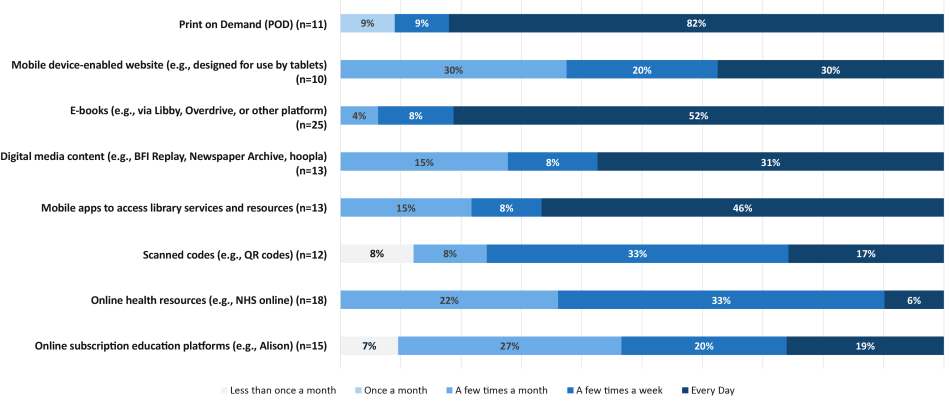
The speed and reliability of libraries’ broadband can shape many of their day-to-day activities. A survey of libraries was conducted for this report (detailed in the annex). Figure 1 presents survey responses about the regular and varied use of the internet in libraries, particularly for accessing digital resources and content. A range of common library activities are enabled by broadband connectivity, spanning from accessing e-book platforms to the use of print-on-demand (POD) services. Other popular uses of the internet included accessing library service and resources on mobile apps, accessing mobile device-enabled websites and viewing of digital media content.
Figure 1: Use of internet for activities
Source: Survey of Rural Libraries for the Hubs Evaluation
The pattern of use suggests the breadth of digital services supported within libraries, spanning core library functions, media access and wider public service use. Figure 1 also suggests activities at the library are part of patrons’ use of other public services, such as supporting interactions with health services.
Post-upgrade connectivity performance
Survey and interview evidence from rural libraries indicates that broadband upgrades led to improved connectivity performance, particularly in terms of speed, reliability and suitability for modern digital use. Just over half of surveyed libraries (52%) reported having received a broadband upgrade at the time of the survey, some of which were funded through the Hubs product.
Interviewees in upgraded libraries reported a noticeable reduction in connectivity problems, including during periods of peak usage. One cluster manager reflected on the impact of recent upgrades:
“It’s definitely improved at [one of the two upgraded libraries] when I was there just last week. It did have a few slow patches, but nowhere near what it was.”
(Library Cluster Manager)
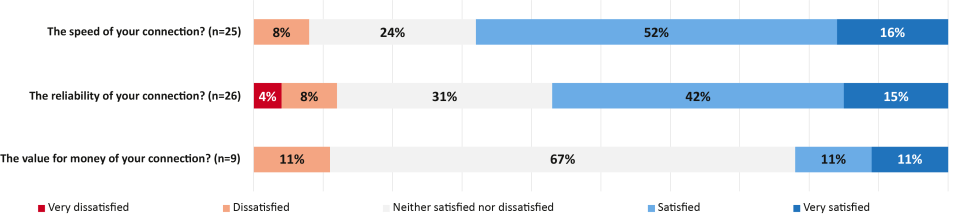
Survey respondents expressed moderate levels of satisfaction with their library’s broadband services, with results correlating with the partial roll out of upgrades. Concerning connection speed, the majority (68%) reported being either satisfied (52%) or very satisfied (16%). However, 32% were less positive, with 8% dissatisfied and 24% neutral, suggesting room for improvement within the surveyed sample. Satisfaction with connection reliability was slightly lower, with 57% expressing satisfaction overall (42% satisfied and 15% very satisfied), while 43% remained neutral or dissatisfied, including 4% who were very dissatisfied. Perceptions of value for money were more neutral: although 22% of the 9 respondents were satisfied or very satisfied, a full 67% neither agreed nor disagreed and 11% expressed dissatisfaction (Figure 2).
Figure 2: Satisfaction with broadband connection
Source: Survey of Rural Libraries for the Hub Evaluation
Interview evidence also linked improved broadband speed and reliability to the improved performance of public computers, kiosks and Wi-Fi services, supporting more reliable day-to-day use. A BDUK member of staff shared feedback from a local GigaHub library:
“The upgrade to [their] broadband services is having a noticeably positive benefit on service delivery, [they’re] seeing much faster speeds and public computers, self-service kiosks and public Wi-Fi.”
(BDUK Staff Member)
Connectivity as an enabling condition for modern systems
Libraries use cloud-based services and systems, and interview evidence highlighted that these systems placed significant usage load on connections, with performance varying noticeably between upgraded and non-upgraded sites.
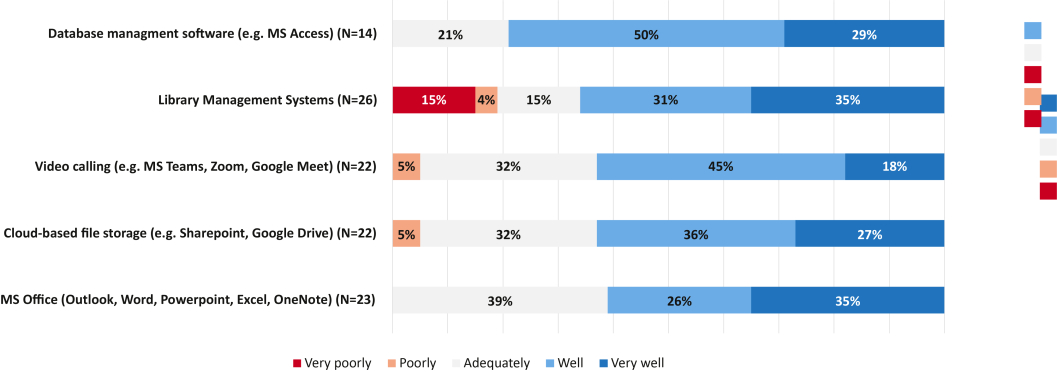
Survey results (Figure 3) echoed these observations: when library staff were asked whether their internet connection supported the effective use of common software types, they observed that library management systems (LMS), software that supports and automates library operations such as the inventory of collections and management of user records, showed the most pronounced issues. This included 19% of respondents who reported their connection as handling these poorly or very poorly, likely reflecting their reliance on cloud-based platforms. Libraries’ challenges with LMS may have also reflected issues with the systems themselves rather than the broadband connection as LMS performed much more poorly than other cloud-based services.
Responses varied depending on the demands of each application; tools like video calling and cloud storage were generally supported but not consistently reliable, with roughly one-third of respondents rating performance only as “adequate” and small percentages experiencing poor functionality. More basic software suites such as MS Office and database software (e.g., MS Access) were better supported, with few interviewees reporting problems. Overall, the results suggest that while many libraries could run essential software, more demanding or cloud applications may have caused strain to connections in some locations.
Figure 3: Library internet and meeting the needs of software
Source: Survey of Rural Libraries for the Hub Evaluation
Service disruption and pre-upgrade challenges
Prior to a fibre connection, surveyed libraries experienced internet complications at a higher frequency due to slow, unreliable broadband connectivity. For example, staff working in pre-upgrade libraries explained that there were limits on the number of people who could simultaneously use the library’s public Wi-Fi connection without affecting broadband speed.
“…we do promote our libraries as destinations for people to [work from home], but then on occasion, the Wi-Fi, it’s not operating to the full capacity because anyone can obviously do anything from streaming movies, Teams calls, Zoom calls, etcetera… so you do get complaints from residents”
(Pre-upgrade Library Cluster Manager)
In libraries operating a single shared connection, staff activity were also disrupted at peaks of public use:
“We’d notice a significant slowing down of service where we’d have to wait a little bit longer for things to connect or we’d lose our Teams access because we were in a meeting with somebody and we’d have to turn the camera off to try and help the speed and the capacity so that we weren’t getting chucked out all the time…”
(Library Cluster Manager)
Furthermore, unreliable connectivity was also noted to disrupt access to cloud-based systems central to day-to-day library operations and library management systems:
“…sometimes, our connection to Soprano [a web-based LMS] … can be down …[and it] just means that we can’t access anything, so we can’t help the public in the ways of, like, issuing books.”
(Senior Library Assistant)
Connectivity quality could affect the reliability of self-service and unstaffed access models. One service manager shared an incident linked to poor network connectivity during out-of-hours access:
“We had an instance where a resident got into a [library during non-staffed hours] through Openplus, and we had…very bad connectivity issues. So the resident came in, went outside for a smoke and then couldn’t get back in because the network then fell down [and]…there was no verification…That resident got very annoyed because they’d left all their stuff in the library, including their laptop that had their master’s dissertation on…”
(Library Cluster Service Manager)
In the context of libraries’ increasing digitisation and automation, unreliable connectivity disrupted service provision and limited patrons’ and staff’s ability to engage in digitally enabled activities.
Why connectivity improvements matter: pre-upgrade service constraints
Evidence indicates challenges and constraints associated with poor or unreliable broadband connectivity for rural libraries, including the disruption of operating procedures and single shared connections creating a knock-on effect on staff’s ability to complete digital tasks in periods of peak use. As libraries became more digitally dependent, weak or unreliable broadband increased the risk that routine service functions would be disrupted.
Following upgrades, improved broadband acted as a foundational enabler of more resilient digital infrastructure. Interview and survey evidence indicates improvements in speed, reliability and the performance of digital systems, reducing the likelihood that connectivity problems would interrupt core library functions.
However, the effects of improved connectivity were not uniform; heterogeneity appears to reflect differences in readiness, demand and shared system capacity, rather than differences in the intrinsic value of the connection itself.
3.2 Theme 2: Operational change within libraries
This section explores how improved connectivity reshaped internal library operations and service delivery. It examines changes in staff efficiency, the reliability of cloud-based systems, transactional services and the functioning of self-service models. While infrastructure upgrades reduced technical disruption and strengthened operational resilience, the analysis also considers how staffing capacity and resource constraints moderated the extent to which these gains translated into sustained service improvement. DCMS (2016) highlights “there is no single model for delivering public library services” (p. 14), with the scope for operational realisation of library functions depending on local need, as well as organisational capacity rather than infrastructure alone.
Post-upgrade service quality and operational efficiency
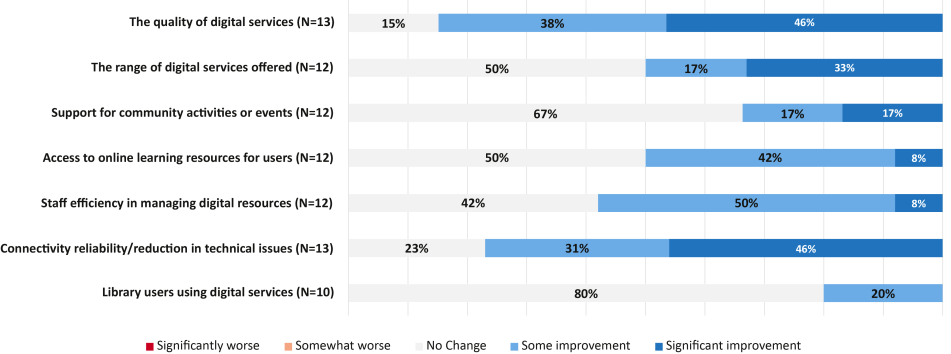
Surveys of libraries asked about the improvements in services at libraries as well as the introduction of any connectivity-enabled services after the upgrade. For the thirteen libraries which experienced a broadband upgrade, Figure 4 illustrates these effects. Survey results suggested that broadband upgrades had a broadly positive impact on several key functions within rural libraries. Nearly all respondents reported improvements in the quality of digital services, with 46% citing a significant improvement and another 38% noting some improvement. Similarly, connectivity reliability and reductions in technical issues saw strong gains, with 46% indicating significant improvement and 31% reporting some improvement.
Figure 4: Effects of broadband upgrade on library services
Source: Survey of Rural Libraries for the Hub Evaluation
Furthermore, improvements in staff efficiency managing digital resources were reported by more than half of respondents (8% significant improvement, 50% some improvement), while access to online learning resources improved for 50% of libraries. Library users using digital services saw the least improvement (20% some improvement). This may be explained by the respondents being librarians or library staff trying to gauge the impact of a broadband upgrade on library users.
Variation in the effects of broadband upgrade on library services would have likely been shaped by differences in pre-upgrade speeds in surveyed sites as well as differences in size of libraries and number of regular patrons. For example, larger libraries may require more bandwidth than smaller libraries; the same connection quality could produce different outcomes. This variation in outcomes appears to reflect broader differences in how library services are organised and delivered, with factors such as staffing capacity, service design and local demand influencing the extent to which connectivity improvements may translate into operational gains.
Printing and transactional services
Most of the interviewees stated that the libraries they work in or manage offered cloud or Wi-Fi printing, and that this was a popular service. Survey evidence showed that POD services were used frequently by patrons, with 89% of respondents indicating use of POD services at least a few times a week (Figure 1).
Staff at the pre-upgrade libraries did not mention the speed of their existing connections as a cause of issues with their ability to offer this service. However, the cluster manager responsible for two libraries that had been upgraded explained that the printing system was still often unable to meet demand because it was also used heavily by employees from the council:
“…now staff across the whole of … County Council can use libraries more to print out their material for their particular job…we’ve got an issue with that because they come and hold the machine up for 200 sheets…and we’ve got customers coming in who are paying for that service [and] have to wait.”
(Library Cluster Manager)
This suggests that while improved connectivity enhances service availability, it may also expose capacity constraints in shared systems and limited infrastructure.
Staff use of connectivity and cloud-based systems
Improved broadband connectivity enabled more reliable use of library management systems, video calling and other digital tools used by staff. Interviewees described how upgraded connections reduced service interruptions and delays, allowing staff to carry out routine tasks more efficiently.
A cluster manager responsible for multiple libraries contrasted the performance of a LMS in upgraded and non-upgraded sites following the rollout of a new cloud-based system:
“…we’ve just gone live with a new library management system, which is also cloud-based… When I’m at [the two upgraded libraries], it’s not too bad speed-wise, but some of the libraries… because they are on a slower speed, it just sometimes can take ages for things to load.”
(Library Cluster Manager)
This library cluster manager reflected on the differing capacity of upgraded vs non-upgraded libraries, sharing that in a non-upgraded library the new LMS was “completely useless in terms of speed” and “took… seven minutes to issue a book the other day”. Survey evidence supported this account. LMS were identified as the software type most sensitive to connection quality (Figure 3).
Following the upgrade, evidence suggests that libraries were better suited to operate cloud-based LMS. This reduced service interruptions, saved staff time and strengthened operational resilience. These gains were particularly significant in rural libraries, where limited numbers of full-time staff and reliance on volunteers meant that operational inefficiencies have a disproportionate impact on service delivery.
Ongoing staffing constraints on service improvement
Despite improvements in connectivity, interviewees consistently emphasised that staffing capacity shaped how far service quality gains could be realised. Substantial reductions in branch staff and increased reliance on volunteers limited libraries’ ability to fully exploit improved digital infrastructure. These constraints shaped how effectively improved connectivity could be translated into consistent service improvements across all sites, particularly in low-capacity rural settings.
For example, a cluster manager explained that the lack of people available to deliver assistance, following substantial cuts to the number of branch staff, would likely be a barrier to any digital inclusion initiatives that might be expected to follow from the upgrades to library connections in her cluster.
“…when I was a librarian in a previous role…I would regularly do one-to-one computer help in a number of libraries for customers. All of the librarians who were employed to do that have now gone, so the jobs don’t exist anymore.
So, when I started, there were 40 librarians developing the service, offering extra services…. We’ve got a regular volunteer who comes in once a week and offers one-to-one help using our public computers or using the Wi-Fi for them to access things on their tablet or whatever. But that is a significant loss, in my opinion, of [the] level of service.”
(Post-Upgrade Library Cluster Manager)
Limited staffing not only constrained libraries’ ability to realise the benefits of improved broadband connectivity but also created challenges throughout the upgrade process. One cluster manager found the connection process for the two libraries straightforward, requiring some preparatory visits followed by only a few hours of downtime of each library’s systems on connection day. However, she did mention difficulties scheduling the upgrade work, due to a lack of understanding from the contractor about the libraries only being staffed part of the week:
“…we had to have an engineer come and do some stuff in the main communication cabinet and…we got some quite firm emails from the people that were sorting that out, saying you’ve got to be there, we need this to be done. But of course, they’re not aware of the fact that we’ve had so many staff cuts and that if the library is closed, there’s nobody to go…[and] there isn’t staffing all of the time…”
(Library cluster manager)
Why connectivity improvements matter: post-upgrade service constraints
Following upgrades, libraries reported more reliable connections, improved service quality and a broader range of digital services. Operational impacts were clearest where improved connectivity reduced friction in routine staff tasks. In settings with limited staff or volunteer capacity, even small delays in issuing books, accessing systems or supporting public users could have a disproportionate effect on service quality.
Findings suggest that connectivity contributed to operational resilience, by reducing disruption and improving the consistency of day-to-day service delivery. However, interviewees also noted mediating factors, including staffing and infrastructure constraints.
Improved connectivity did not automatically translate into wider service development. The scale of operational benefits depended on complementary conditions, including staffing capacity, opening hours, equipment quality, and local service models.
3.3 Theme 3: Enhancing digital access and participation
This section considers the effects of improved connectivity on user access, behaviour, and participation. It assesses how faster, more reliable broadband enabled own-device use, remote working, job search activity, and access to online public services. The analysis also examines the role of targeted digital inclusion initiatives – notably Dorset’s Digital Doorway initiative – in converting infrastructure improvements into increased digital confidence and engagement. Evidence highlights that while connectivity was a necessary condition for participation, uptake depended on complementary support, equipment, and local capacity. These findings highlight how Hub investments align with the aim for libraries to “play a key role in supporting those who are digitally excluded” (DCMS, 2016, p. 10), but that this depends on functions outside access to digital infrastructure.
Improved user access and experience following connectivity upgrades
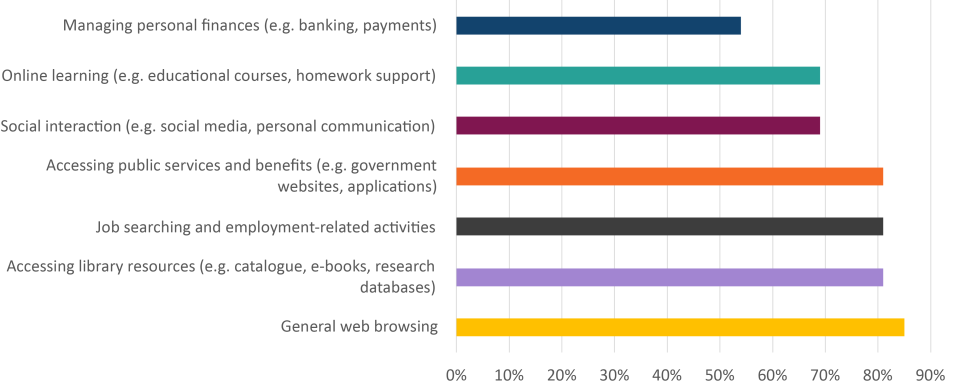
Survey findings indicate the breadth of patron activities supported by library internet access across both pre- and post-upgrade libraries (Figure 5).
The most common use of libraries’ internet access by patrons as reported by library staff surveyed was general web browsing, with nearly all (85%) respondents indicating this as a common online activity. This was closely followed by job searching and employment-related tasks, accessing public services and benefits and accessing library resources such as catalogues, e-books or research databases, all of which were indicated by 81% of respondents as being highly utilised. Social interaction, such as accessing and using social media, also featured prominently (indicated by 69% of respondents). Online learning was cited by a large majority of those surveyed (69%), highlighting the role of libraries in supporting digital education. While slightly less common, managing personal finances was still a significant use of library internet access by patrons, with 54% of respondents indicating it as a common activity.
Figure 5: Use of internet for activities
Source: Survey of Rural Libraries for the Hub Evaluation
Personal and public device use
Improved broadband connectivity was also linked, in interview and survey evidence, to greater own-device use by service users, reducing the access constraints derived from limited on-site devices. This change was part of a broader shift in digital access behaviour, such as the rise in remote work use due to reliable upload and download speeds derived from improved broadband connectivity.
When asked about the use of connectivity at libraries, library staff highlighted that the users were individuals with digital knowledge but limited access to the internet at home. Interviews with library staff confirmed that the most common use of public machines or Wi-Fi was to access email, social media, and streaming services, or to conduct job searches independently. Library staff described a mixture of public machines and personal devices enabled by the library’s Wi-Fi being used by the public. One service manager for a group of libraries observed how, as it was more common for people to have their own devices, his libraries responded by reducing their stock of public computers by around a third to create spaces where people could use their own machines. This change was also noted in an interview with a member of Dorset Council’s ‘Digital Place’ team: “[the Digital Champion Initiative] was in libraries because that is where public computers were. It can now be almost anywhere because 95% of people bring their own devices”.
Although the use of personal devices has become more widespread, there remained demand for public computers within libraries, whether this was because patrons do not have sufficient broadband connectivity or a device at home. A member of the ‘Digital Place’ Team in Dorset Council shared that:
“My feeling is that computers in the library get booked up a lot.”
(Project Officer)
She noted that a library she had recently visited was placing limits on computer use due to demand exceeding the number of available machines. Across the 26 libraries surveyed, 15% shared that, during a typical day, patrons experienced wait times to use the library’s public access computers or laptops.
While improved connectivity enabled greater flexibility and own-device use, persistent demand for public computers highlights ongoing difficulties in access to devices and home connectivity. For these users, libraries remained a critical point of digital access and the benefits of improved broadband were closely tied to the availability and quality of on-site equipment.
Hardware constraints and mitigation
In some sites, outdated hardware, including library-based computers used by staff members and patrons, also limited the impact of improved connectivity within libraries. A library cluster manager explained how, despite having old machines, there had not been any planned coordination of upgrades to equipment at the Hub sites and equipment was only being upgraded in the wider cluster following the announcement of Windows 10 support ending:
“We have got some very old kit that hasn’t been upgraded; all of our public system. In fact, we are just in the process now [where] the senior member of staff in the library service is looking into replacing all of our machines. [they are] going to have to be replaced because the computers we have are not compatible with Windows 11.”
(Post-Upgrade Library Cluster Manager)
The experience of one of the cluster managers in a non-upgraded area suggests a potential source of alternative funding that could help libraries in future Hub schemes upgrade their computer infrastructure. He explained how the libraries in his town had recently received a grant to upgrade their machines through the Libraries Improvement Fund (LIF). This was a fund administered by DCMS and the Arts Council to support upgrades of buildings and technology in libraries:
“We were fortunate to win LIF round one. So, we were proud to be sitting in one of the 26 local authorities [that] won funding from the five-million-pound pot. So that’s allowed us to update all of our public PCs, and we deliberately overspec’ed [them] so that they would comfortably run Windows 11 and also to get the longevity out of them so that we don’t have to look at replacing these PCs potentially.”
(Service Manager for a town-based cluster of pre-upgrade libraries)
Efforts to upgrade equipment were viewed as uneven and contingent, highlighting how the translation of connectivity improvements into user benefit may depend on factors like local capacity and access to complementary funding.
Learning, social connection and community participation
Prior to connectivity upgrades, poor broadband connectivity limited the use of libraries as events spaces or community hubs. Constraints to the range of externally hosted public events, particularly those aimed at children and young people, were noted by a cluster manager who was responsible for a pre-upgrade library. They mentioned how the speed of their library’ connection was a barrier to the library hosting external events for children and young people, as activities targeted at these age groups often required a fast connection.
“…we do a lot of work with the HAF [holiday activities and food] sessions, during the [school] holidays…It would have been nice to have done an event with the kids [who attend these sessions], with a private provider, but unfortunately, our connectivity speed was too low to run…a laser quest session that was actually online as well.”
(Service Manager for a town-based cluster of libraries)
Connectivity quality also shaped whether external partners could deliver digitally enabled activities and digital inclusion initiatives. This was most clearly articulated by representatives from Dorset’s Digital Champions Programme emphasising that good Wi-Fi was a prerequisite for engagement:
“We go where the energy is… but without good internet, we don’t go.”
(Project Officer)
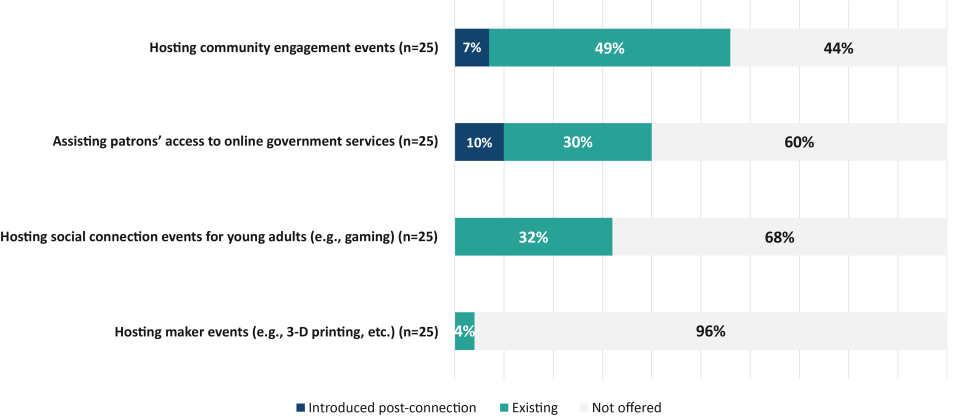
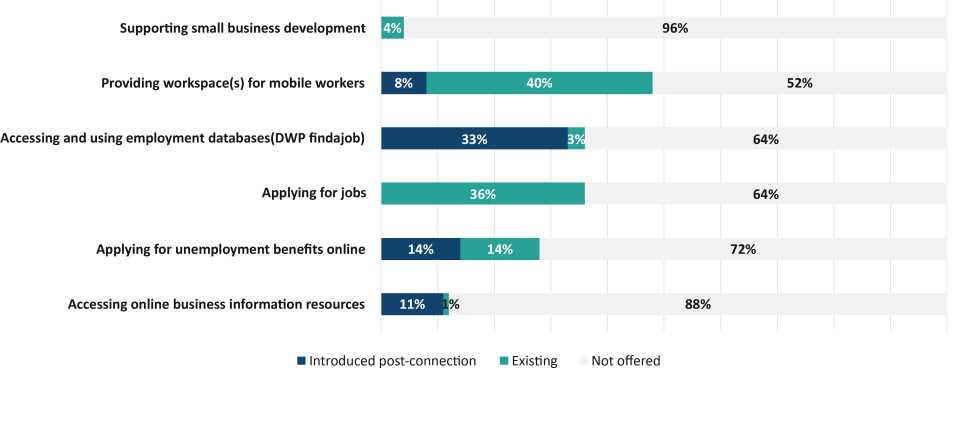
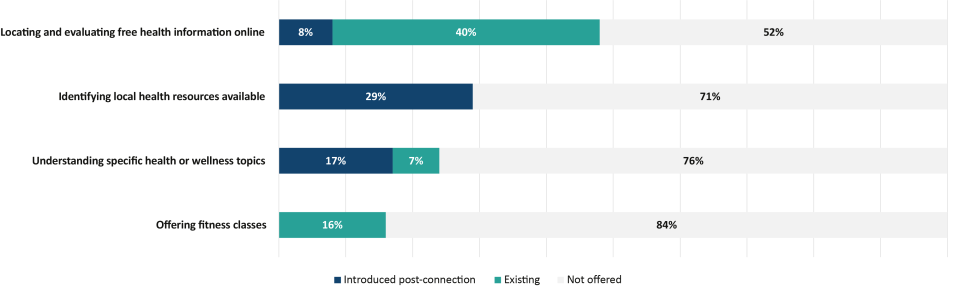
Connectivity constraints directly affected opportunities for participation and inclusion. Following upgrades, survey evidence indicates limited expansion of community events and activities overall (Figures 6–8). This suggests that while improved connectivity removed a key technical barrier, wider participation depended on additional factors such as staffing capacity, awareness among external organisations and local coordination.
These varied patterns of use and participation also reflect the wider role libraries play within their communities. Even when libraries are not formally co-situated within community hubs, they often perform equivalent functions by “providing a trusted, welcoming space where people can access information, support, try something new, and where inequalities in society might begin to be tackled” (Renaisi, 2017). The extent to which these outcomes are realised depends on how services are configured, how accessible they are to different groups, and how effectively they respond to local demand. The presence of infrastructure or co-location does not guarantee impact; outcomes are mediated by patterns of use, local demographics and the inclusiveness of delivery models.
Dorset case study: Partnerships for digital inclusion, confidence and uptake
The use of the internet and digitally enabled services varied depending on levels of digital access and inclusion. Dorset’s Digital Doorway[footnote 2] initiative exemplifies the importance of collaborative partnerships between local authorities, government bodies, and voluntary and civil society organisations in realising the benefits of multi-site delivery projects.
The initiative emerged as a strategic response to persistent digital exclusion in a predominantly rural county. Despite investment in broadband infrastructure through the Superfast Dorset programme, adoption remained low, particularly among older residents. This led to the development of a community-focused model providing digital access and upskilling support through libraries and other local spaces. Initially led by a broadband infrastructure team, the programme quickly shifted towards user adoption and digital literacy, recognising these as essential to meaningful inclusion. As one project officer noted:
“We were taking broadband to people, and they didn’t even know they wanted it, or what to do with it.”
(Project Officer)
This shift also aligned with wider pressures to digitise public services:
“We don’t have quotas, but the more we help people do things online, the more we free up council resources.”
(Project Officer)
The programme was delivered through Dorset Council’s Digital Place team, including a Skills and Adoption subgroup, and expanded from a small team to a broader cross-service function spanning IT, library services, customer services, NHS partners and community networks. While non-statutory and not directly centrally funded, the initiative drew on learning from the Local Government Association Digital Inclusion Network and explored partnerships such as private sponsorship for device reuse. As one interviewee reflected:
“The idea is that they can help in a five-minute interaction or know where to send someone who needs more.”
(Project Officer)
Support includes helping residents set up and use devices, access online services such as NHS platforms and banking, and develop digital skills tailored to individual needs. Sessions are delivered both one-to-one and in groups, often within library settings.
Within libraries, the programme also contributed to improving staff confidence and capability, enabling them to support users more effectively. As a Dorset Council project manager noted, “particularly where we’ve enabled things like libraries, we have digital champions who go in and run sessions to help upskill people with their digital skills.” Over time, delivery expanded beyond libraries into a wider network of community locations, including cafés, art centres and sheltered accommodation, reflecting a flexible, place-based model of provision. Activities were often tailored to user interests to encourage engagement:
“The way to hook people is football scores, recipes, or old photos; not NHS apps…”
(Project Officer)
Reliable, high-speed connectivity was identified as a critical enabler of these activities. Strong connections made sessions more effective and reduced barriers to engagement: “So good internet and good Wi-Fi just make [the] process more streamlined. It almost encourages someone to use it or does not create a barrier to discourage someone from using it.” Conversely, poor connectivity undermined participation:
“We are trying to encourage them to be digital but patchy Wi-Fi or bad connectivity is a big disincentive to people.”
(Project Officer)
The importance of early user experience was also emphasised: “If that first experience goes wrong, they may never try again. So, we make it right from the start.”
Libraries also played a key role in widening access to devices. In partnership with the Good Things Foundation, Dorset Council distributed smartphones during the pandemic, with libraries acting as access points for device handover and setup support. This has since evolved into a sustainable model using refurbished council IT equipment redistributed to residents in need.
The programme has generated a range of individual and community-level outcomes. Case studies include a profoundly deaf resident using a donated smartphone to reconnect socially, a resident rediscovering personal interests through online content, and a homeless individual accessing job resources through a supported digital access point. More broadly, the initiative has supported the development of coordinated local ecosystems for digital inclusion. As one library cluster manager explained, partnership working started with the library service, a local housing provider and the Department for Work and Pensions, but then brought together over 40 organisations to support residents, with:
“Digital volunteers in five of our libraries… deliver[ing] sessions with everything from one-to-one to groups.”
(Library Cluster Manager)
Why complementary conditions matter: Constraints to uptake and uneven participation
In contexts where libraries were serving people without reliable home broadband, suitable devices, or the confidence to access digital services independently, libraries provided an important access point for job search, remote working, online learning, public services and digital inclusion support.
Surveyed libraries were sites of digital access and activity, with a mix of own- and public-device use. In pre-upgrade libraries, weak and unreliable connectivity constrained library services and limited their use as community hubs and event space. Following upgrades, improved broadband connectivity increased the option value of library sites by enabling a wider range of digitally enabled services and activities. Where structured digital support was in place, such as Dorset’s Digital Doorway initiative, this capability was observed to have converted into greater digital confidence, engagement and uptake.
While improved connectivity reduced technical barriers, user-level impacts depended on more than improved broadband connectivity. Complementary conditions such as high digital confidence, awareness of services, availability of public devices, staff or volunteer support and the presence of local inclusion programmes shaped whether improved connectivity led to meaningful participation. Evidence indicates that connectivity enables access with the heterogeneity of contingent impacts reflecting readiness rather than the intrinsic value of the connection.
3.4 Theme 4: Community impacts with service expansion and diversification
This section examines the extent to which connectivity upgrades supported and enabled the expansion and diversification of services and strengthened libraries’ role as community access points. A key desire for libraries, observed in DCMS (2016) and Arts Council for England work, is that a library “brings together a range of services and activities to meet local needs” (Renaisi, 2017, p. 4). Libraries are understood as flexible, place-based modes of delivery, with impacts varying according to local partnerships, capacity and community context. The analysis also identifies the constraints – including staffing limitations, uneven coordination and hardware gaps – that shaped uneven expansion and long-term sustainability.
Expansion of digital services and community engagement
Survey evidence indicates that improved broadband connectivity enabled some expansion in the range of digital and community-facing services offered by rural libraries, although the scale and consistency of change varied across service types. After improvements in broadband connectivity, the range of digital services offered expanded in many libraries: 33% saw significant improvement and 17% some improvement (Figure 6).
Despite these gains, survey findings also showed that expansion was uneven. For several service areas, most libraries reported no change following broadband upgrades, indicating that connectivity improvements alone did not automatically translate into broader service growth.
Evidence suggested that the introduction of improved broadband connectivity supported the expansion of some general library activities, although the degree of uptake varied across service types. Community engagement events – covering a range of related topics beyond digital or IT – were the most widely established service, with 49% of libraries already offering them and a further 7% introducing them following recent broadband upgrades.
Notably, maker events (e.g., 3D printing) were only offered in one of the libraries surveyed. This limited provision may have been due to technological or resource constraints; however, it may also reflect that the introduction of events centred around maker technologies is not currently a strategic priority for the libraries surveyed. Figure 6 indicates responses.
Figure 6: Expansion of general library activities after connection
ReallSource: Survey of Rural Libraries for the Hub Evaluation across 25 responses
Cluster managers in pre-upgrade libraries noted poor connectivity as a barrier to hosting community events and activities:
“…we have an approach from an organisation that works with young people, and they wanted to do some digital arts work between different sites, and we couldn’t do that because of the connectivity. We also have somebody wanting to set up young people to access radio, like broadcasts and stuff, and we couldn’t do that in the library, so they went somewhere else in the end.”
(Pre-Upgrade Library Cluster Manager)
However, looking across Figures 6-8, removing the IT barriers was not sufficient to increase activities, suggesting that there may have been other constraints on community uptake of broadband connectivity benefits. For example, wider community benefits were likely to be dependent on the range of external organisations making use of the library. In comparison to other managers and senior staff interviewed, another cluster manager described a more limited range of external organisations and groups using the libraries. While an NHS/Council programme to monitor blood pressure was mentioned, the interviewee did not mention the types of public and voluntary organisations addressing the needs of socio-economically disadvantaged groups described by other interviewees as using their libraries, such as Adult Social Care, the Citizens Advice Bureau, Adult Community learning providers and Family hubs.
The cluster manager also explained that no new groups or organisations had started to use the library following the connection upgrades in two of the libraries within her cluster. This suggests that there may be a need to alert local voluntary and public organisations once a library is connected to ensure that the potential community benefits are realised. Notably, limited staffing and a reliance on volunteer staff at these library sites may have inhibited this.
Taken together, these findings suggest a need to interpret library impacts within a broader conceptual framework. The library as ‘community hub’ is best understood not as a discrete institutional type, but as a mode of service delivery that is realised to differing degrees across places. Across the literature, community hubs are consistently framed as flexible, place-based models whose effectiveness depends on local context, partnerships and integration, rather than on infrastructure or co-location alone (Arts Council England, 2020; DCMS, 2016; Renaisi, 2017). In this sense, the impacts associated with libraries as community hubs are inherently contingent, with similar forms of provision generating different outcomes depending on the conditions in which they are implemented.
Employment, business support services
Some interviewees mentioned that their libraries were often used by people working remotely. Activities ranged from solo working to holding job interviews or meetings at the library. One interviewee explained how the libraries in his cluster had become integral to opening remote work opportunities to people who lack adequate space or broadband connectivity in their own homes.
The survey findings suggest that improved broadband connectivity contributed to expanded employment and business support services in some rural libraries, though overall provision remained limited. The most common activity, providing workspace(s) for mobile workers, was already offered by 40%, with an additional 8% introducing it after their connectivity was improved. Providing support to patrons with job applications (e.g. CVs, job applications, or interview skills) was already offered by 36% of libraries, and no further expansion of support was reported post-upgrade. Figure 7 indicates responses.
However, across business support areas, a large proportion of libraries continued not to offer these services. While broadband upgrades enabled some new services, especially around job-seeking assistance, there remains scope for libraries to expand their role in supporting local economic development.
Figure 7: Business and employment support introduction
Source: Survey of Rural Libraries for the Hub Evaluation across 25 responses
Health-related services and public service access
Broadband improvements enabled some rural libraries to expand their support for health-related services, though these remain relatively limited in scope. The most offered activity was locating and evaluating free health information online, which was already provided by 40% of libraries, with a further 8% introducing it after improving their connection.
Identifying local health resources saw the most significant increase post-upgrade, with 29% of libraries adding this service – a promising sign of growing health navigation support in communities. Understanding specific health or wellness topics was newly introduced by 17% of libraries, but overall, 76% still do not offer this support, indicating that provision remains limited overall. Fitness classes, which could potentially benefit from digital platforms or streamed sessions, were introduced by 16% but remain largely absent, with 84% of libraries not offering them.
Similarly, assisting patrons with access to online government services saw a modest increase, with 30% of libraries offering this service pre-upgrade and 10% introducing it post-upgrade (see Figure 6). Survey data showed that online health resources (like NHS Online) were used regularly, with 33% of libraries utilizing them a few times a week. 22% used them once a month and 6% used them every day. This indicates that digital resources have become an increasingly important tool for library patrons, particularly for accessing trustworthy health-related information. Figure 8 indicates responses.
Figure 8: Expansion after connection in health-related services
Source: Survey of Rural Libraries for the Hub Evaluation across 25 responses
Interview evidence suggested that libraries increasingly function as access points for digitised local authority services. For example, an interviewee at a small library explained how, after the council introduced a fee for garden waste collection, her library experienced a surge in requests from members of the public who needed help to set up these online payments.
Why complementary conditions matter: Limits to service expansion
The broader community effects of connectivity upgrades were contingent, with improved broadband creating opportunities for service expansion but not automatically generating new activity or partnerships. Connectivity removed an important barrier to digitally enabled activities, partner-led services and libraries’ ability to serve as flexible community access points.
Following upgrades, some libraries reported expansion in digital services, employment-related support and health-related activities. Improved connectivity created option value for libraries to act as community hubs and service platforms, particularly where local authorities, voluntary civil society organisations were engaged.
Heterogeneity in the expansion of services appears to reflect differences in local readiness, staffing, equipment, partnership capacity and service coordination. Improved connectivity created option value by giving libraries the capacity to support new activities, but this value depended on complementary conditions. As a result, community-level impacts are likely to vary across places according to local capacity and partnership readiness. Achieving scale and consistency in service delivery requires aligned investment in staffing, skills, equipment and partnership models.
3.5 Remaining evidence gaps and data collection priorities for libraries
Further evidence is needed to better understand how widespread and persistent the impacts of improved connectivity in libraries are. These data gaps are particularly important for distinguishing between direct and contingent benefit pathways, as well as assessing the scale and certainty of impacts. Addressing these evidence gaps would also help to better monetise benefit pathways. Remaining evidence gaps include but are not limited to the download speeds in pre- and post-upgrade libraries; the share of patrons using online public services; average transaction times for issuing and returning in pre- and post-upgrade libraries; the number and type of programmes delivered in libraries (particularly if they have a digital dimension); and the attendance rates for digital inclusion sessions. Future research on broadband connectivity could explore what factors shape variation in outcomes and uneven impacts of connecting libraries. This would help to better tease out the linkage from output to outcomes in the Theory of Change and allow for a framework which systemises variation to be developed and applied within any future larger-scale studies. Baroness Sanderson’s recommendations for an assessment of the Wi-Fi network across libraries and the development of a national data hub to “better evidence the role libraries play in our society” would support the closing of broader data-based evidence gaps (DCMS, 2024).
BOX 5: Implications for roll-out.
The evidence suggests that improved broadband connectivity creates two broad types of benefit for rural libraries.
Realisable benefits: operational resilience. Improved connectivity supports more reliable use of library management systems, public Wi-Fi, public computers, self-service kiosks, cloud-based systems and staff digital tasks. These benefits are closest to the broadband upgrade and are therefore the most directly attributable, although their scale may vary by baseline connection quality, site size and demand.
Contingent benefits: service expansion and community impact. Wider benefits, including digital inclusion, employment support, remote working, public service access and partner-led community activities, are dependent on complementary conditions such as staff or volunteer capacity, suitable equipment, local coordination, user awareness and partnership activity.
Broadband should be treated as a foundational enabler rather than a standalone intervention. It can reliably strengthen operational resilience, but wider option value is realised when connectivity upgrades are paired with staffing, equipment, digital inclusion support and local partnerships.
4. Interpretation and Use of Evidence
The findings in this report should be interpreted in line with the methods used to generate them (details in the Annex) and the extent to which the available data supports attribution, comparison and generalisation.
-
Evidence in this report is primarily based on survey responses from libraries and qualitative insights from interviews and case studies. Survey findings provide evidence of reported changes in connectivity performance, service delivery and operational conditions across a sample of rural libraries. These findings should be interpreted as evidence of observed change and contribution within the surveyed sample, rather than as a definitive measure of programme-wide impact.
-
Qualitative evidence, including in-depth interviews and case studies, is used to explain how changes may have occurred and the conditions under which impacts are realised. This provides insight into mechanisms, local context and the role of complementary factors such as staffing capacity, equipment, service design and partnership activity. These findings are not designed to demonstrate scale or uniformity of impact, but to support interpretation of the survey results and identify enabling conditions and constraints.
-
Across themes, differences in evidence strength reflect the nature of the sector and the availability of consistent datasets, rather than the value of the findings. The report therefore combines evidence of observed change in library services and operations with evidence that explains how connectivity may contribute to wider user and community outcomes under different conditions.
The findings should be used in a complementary way within the wider evaluation. Survey-based evidence can inform the identification of benefit pathways and support future value for money analysis where further data is available. Qualitative evidence supports interpretation, identifies barriers and enabling conditions, and informs programme learning, including where additional support may be required to realise benefits more fully.
Taken together, the evidence supports that improved connectivity is a necessary enabling condition for modern library services. The extent to which this translates into wider user and community outcomes depends on factors beyond connectivity alone and should be considered when applying the findings in policy, programme design and further analysis.
5. Conclusions
The findings demonstrate that broadband upgrades functioned as a critical enabling condition for modern rural library infrastructure. Improvements in speed and reliability reduced technical disruption and strengthened the performance of cloud-based systems and digital services. The analysis uses a thematic structure aligned with the policy framing (DCMS, 2016) and Arts Council England’s place-based approach. Across the four themes, libraries are understood as flexible service platforms, spanning digital access, learning, participation and community engagement.
At the organisational level, the Hub investments enhanced service reliability, improved staff efficiency and supported more consistent delivery of public-facing services. However, the extent to which operational improvements translated into broader service development depended on staffing capacity and local resource availability.
At the user level, improved connectivity expanded opportunities for remote working, job search activity, access to public services and digitally enabled learning. Where complemented by structured digital inclusion initiatives – such as Dorset’s Digital Doorway programme – connectivity gains were more clearly converted into increased digital confidence and reduced exclusion. In the absence of such support, uptake was more limited.
At the system level, the greatest impacts were observed where local authorities and partner organisations coordinated efforts to scale benefits beyond individual sites. Expansion into health navigation, employment support and community-based digital inclusion was uneven and contingent on partnership models and sustained capacity, reflecting the flexible, place-based nature of library service delivery.
Overall, the evaluation demonstrates that gigabit connectivity is a foundational enabler and a necessary but not sufficient condition for inclusive digital transformation in rural libraries. Infrastructure upgrades create the conditions for change, but sustained and equitable impact depends on complementary investment in staffing, equipment, skills and cross-sector coordination, with outcomes varying according to how services are organised, integrated and delivered within local systems.
6. Annex: Methodology
This section of the annex explains the qualitative approach to explore the impact of the Library Hub connections. It involved a survey of library Hubs and depth interviews covering staff at Hubs, suppliers, officers and community stakeholders. Both instruments, survey and interviews, capture conditions prior to the broadband upgrade and the subsequent changes following the intervention with a focus on how fast broadband is being used at the Hub, changes in public services, technology adoption or upgrade, and wider community benefits.
The aim of the qualitative evidence gathering is to understand the processes and pathways by which Hubs deliver impacts and provide a picture of the key impacts. Questions cover the challenges faced at each of the stages both to draw learnings and to test the logic of impact. Since many kinds of public buildings were connected, a key aim is to explore the impact on public services and compare them across projects.
The sampling for each instrument differed:
-
The survey was designed for all English libraries in rural/remote settings, contacting administrative staff at Hub sites and at libraries not connected using the BDUK product.
-
Depth interviews utilised interview frameworks designed for libraries and the associated policy and local authority staff. These interview frameworks covered perspectives of stakeholders and deepened the understanding of how Hubs were delivered and impacts achieved.
6.1 Approach to depth interviews
The aim of the qualitative evidence gathering is to understand the processes and pathways by which Hubs deliver impacts and provide a picture of the key impacts. Questions cover the challenges faced at each of the stages both to draw learnings and to test the logic of impact. Since many kinds of public buildings were connected, a key aim is to explore the impact on public services and compare them across projects.
Interview recruitment
The depth interviews were conducted continuously over the study period using a variety of routes to recruit interviewees. The focus of the depth interviews ranged from delivery and process matters to the achieved impacts at Hubs and understanding the outcomes across different kinds of Hubs and projects.
The interviews started with the BDUK evaluation team and the core BDUK officials involved in RGC and GigaHubs. Early interviews were with BDUK local delivery leads, officers that cover relationships with local authorities and liaison with projects. Officials were formally interviewed on more than one occasion during the study and workshops with several officials also helped to provide understanding.
Interviews with RGC and GigaHub project managers initiated the main qualitative evidence gathering about impacts. Some projects were led by central government departments and some by local authorities. The project managers referred the study team to contacts at Hubs, suppliers, officers working in areas related to online delivery, such as the local authority digital officers or those involved in education, health or library service at local authority level. The interviews at Hubs usually involved either the staff member responsible for site IT or taking a delivery role using connectivity. Interviewees sometimes covered a few different locations, such as the head of IT across a school trust.
Three strands of the qualitative evidence gathering recruited individuals that had been involved in one of the telephone surveys conducted for the study. During the fieldwork, surveys have been conducted with English schools, libraries and recipients of broadband voucher. Some of these surveys were for other studies, but all contained questions asking survey respondents whether they would be willing to be recontacted for a depth interview.
Methodology
The focus of the depth interviews at Hubs and Hub projects was on achieved impacts and understanding the outcomes across different kinds of Hubs and projects. They gathered in-depth evidence on the process of connecting public buildings, broadband use, need for faster broadband, broadband performance and the impacts of improved connectivity. Questions were designed to attribute where possible impacts to Hub investments, discussing context, needs as well as challenges.
The interviews typically took place online and lasted between 30-40 mins. Interviewees were asked for permission to record the interviews. Depth interviews utilised interview frameworks designed for the interviewee with around half a dozen different frameworks employed. These varied primarily by the type of interviewee.
Overall, by April 2026, 60 interviews were conducted with stakeholders, including around ten with libraries and those involved in library services.
6.2 Library survey
An online survey of English libraries was conducted supported by the DCMS libraries team, with the survey instrument drawing upon insights from other library surveys, conducted in the United Kingdom and in the United States that gathered data from libraries and the general public.
Developing the survey
A short review of seven existing library surveys conducted in the US and the UK highlighted relevant themes for building a survey of GigaHubs. Typically, the surveys collected organisation data, such as address and staff strength, and questions covered infrastructure, such as digital services offered in the facility, access and performance of broadband, use of internet by library staff and patrons, impact of broadband and change in use of digital services.
One of the key learnings from discussions with experts was the difference between services managed by library branches and those by a Library Service at the local authority level. Upgrading the broadband and consequently enable internet-based technology such as cloud-based system management is more likely decided by the Library Service. However, the survey is aimed at library branches to capture library service provision in the rural/remote setting.
Discussions with experts helped fill in the knowledge gaps about library services and prioritise questions. For example, it was highlighted that libraries are used extensively for job searches in rural areas. Technology and infrastructure questions asked about whether the library has a website and availability of different technology infrastructure such as computers, firewalls or cloud-based server management.
-
Broadband at the library. This covers satisfaction with the speed, reliability, and value for money of broadband at the library. The questions are similar to those conducted for school Hubs. The respondents rated their satisfaction on a 7-point qualitative scale.
-
Tech-based services/ resources: Covering the digital resources available in the library and digital devices that users have access to. A list of questions asked how frequency internet was used for technology-enabled services or resources such as job hunting, printing and accessing online health resources.
The survey included questions about what internet is used for by patrons and how frequently. List of internet uses and digital services are provided and respondents are asked to rate how frequently internet is used for each of the activities on a 7-point scale.
-
Patrons’ Use. Questions about library patrons using online catalogues, publications etc, but also about accessing wider social, health and business online services through the library IT.
-
Meeting the needs. These questions have some Hubs survey adapted questions that ask about the quality of internet access.
-
Library Use: Questions about how the library is utilising broadband for management and its impact on sustainability.
The library survey draft was piloted with a small sample of libraries. A researcher filled out the survey with library staff members to sense check the survey as well as note feedback. The survey was revised after the pilot, and a refined version of the survey was launched.
Responses to the library surveys
Survey responses largely came from employed staff; librarians (40%), library management (28%), or head librarians (4%). There were also responses from volunteer librarians (20%). Overall, libraries reported being staffed by a mix of employed staff and volunteers, with five being the median staff complement. Notably, none of the surveyed libraries – and rural libraries were targeted – reported employing full-time paid library staff, with only 20% (5 out of 25) employing any paid staff. Instead, many libraries rely on volunteers: 52% (13 libraries) reported engaging volunteers to carry out essential library functions. Among the 18 libraries that provided specific figures, the average number of volunteers was 14, but this involved significant variation, ranging from 0 to 100 individuals.
The rural libraries reported offering a foundation of technology and public access services:
-
96% provide at least one public access computer.
-
92% have printers, scanners, or photocopying machines, enabling users to complete administrative and personal tasks.
-
40% offer public laptops or tablets, showing an emerging trend toward more mobile and flexible technology options.
-
Only 16% maintain a dedicated on-site computer lab, likely due to spatial and budgetary limitations.
A small number (4%) offer other types of technology or facilities not listed in the survey.
7. References
Arts Council England (2020). Let’s Create: Strategy 2020–2030. Manchester: Arts Council England. https://www.artscouncil.org.uk/lets-create
BDUK (2024). What Happens Next? Mapping the Route from Digital Infrastructure to Digital Inclusion. https://www.gov.uk/government/publications/from-digital-infrastructure-to-digital-inclusion/what-happens-next-mapping-the-route-from-digital-infrastructure-to-digital-inclusion
Belmana (2023). BDUK Rural Gigabit Connectivity Hubs Evaluation. Report to Building Digital UK authored with Hatch and Winning Moves. https://www.gov.uk/government/publications/bduk-rural-gigabit-connectivity-hubs-evaluation
Belmana (2026a). BDUK Gigabit Hub Evaluation: Process Review. Report to Building Digital UK authored with GC Insight. GovGigaHubs Process Review
Belmana (2026b). BDUK Gigabit Hub Evaluation: Theory of Change. Report to Building Digital UK authored with GC Insight. GovGigaHubs Process Review Theory of Change
DCMS (2016). Libraries Deliver: Ambition for Public Libraries in England 2016–2021. Report to DCMS and the Local Government Association by the independent Libraries Taskforce. London: Department for Digital, Culture, Media & Sport. https://www.gov.uk/government/publications/libraries-deliver-ambition-for-public-libraries-in-england-2016-to-2021
DCMS (2024) An Independent Review of English Public Libraries. https://www.gov.uk/government/publications/an-independent-review-of-english-public-libraries-report-and-government-reponse/an-independent-review-of-english-public-libraries
DCMS (2025). Annual Libraries Report 2024 to 2025. http://www.gov.uk/government/publications/annual-report-to-parliament-on-public-libraries-activities-from-april-2024-to-march-2025/annual-libraries-report-2024-to-2025
Renaisi (2017). Libraries as community hubs: Case studies and learning. Report to Arts Council England. https://www.artscouncil.org.uk/sites/default/files/download-file/Libraries-CommunityHubs-Renaisi.pdf
-
A gigabit-capable connection is a wired connection capable of download speeds of at least 1 gigabit-per-second, equivalent to 1,000 megabits per second. ↩
-
The Digital Doorway initiative distributed free laptops/tablets to people in digital need as well as additional free data if needed. It also provided free training and support from volunteer Digital Champions. ↩